


Collectors and numismatists usually see only the finished, struck coin, while the demanding process that precedes coinage mostly remains hidden to them. Italian coin designer and sculptor Sandra Deiana it recorded the creation of the original model for the Luxembourg 5-euro collector coin dedicated to the red squirrel. Weeks of research, drawing, modeling, and correction were summarized into a video lasting approximately 90 seconds.
Red squirrel on the 5 euro coin
In 2026, the Central Bank of Luxembourg continued its series of commemorative coins dedicated to native fauna with an issue featuring the motif of the red squirrel, with the Latin name Sciurus vulgaris. This recognizable inhabitant of European forests is also important for seed dispersal and the restoration of the forest ecosystem.
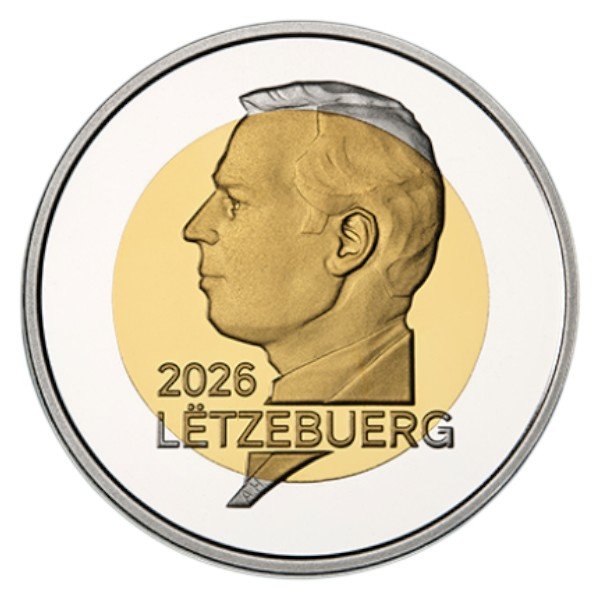
The face of the coin depicts Grand Duke Guillaume, alongside the year 2026 and the country name LËTZEBUERG. The portrait was designed by Austrian designer Helmut Andexlinger.
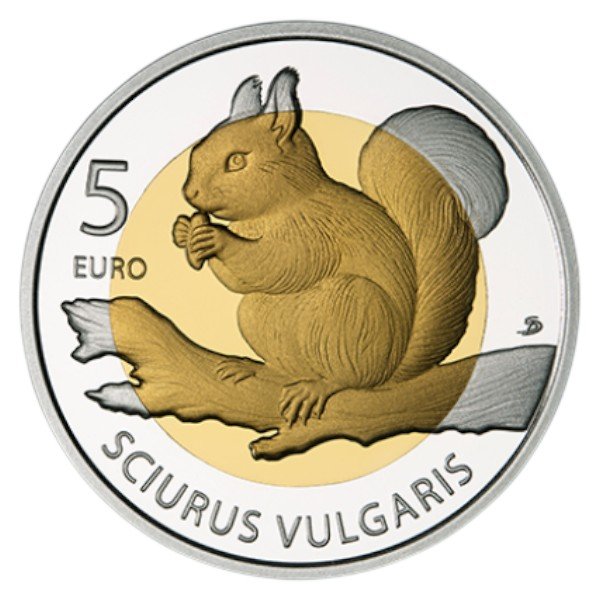
The reverse shows a squirrel on a branch holding a seed in its front paws. Next to the motif are the face value of 5 euros, the scientific name of the species and a stylized signature. Sandra Deiana.
The coin is bimetallic. The core is made of a alloy known as "Nordic Gold" (89.1% Cu, 5.1% Al, 5.1% Zn, and 11% Sn). The ring is made of .925 fine silver. The coin's diameter is 34 millimeters, and it is struck using the polished plate technique. The mintage is 2,000 pieces, and it was struck at the Royal Dutch Mint. It is supplied in special packaging with an illustrated booklet.
From the first sketch to the plaster model
According to Sandra Deiane's explanation, the creation of a coin begins long before working with plasticine and plaster. The artist first studies the client's requirements, researches the theme, collects reference materials, and develops multiple sketches. The chosen solution must be harmonious and legible within a small circular space, while already during the drawing process, consideration is given to inscriptions, empty surfaces, the height of the relief, and the effect of light on the metal.
After the visual design is approved, the motif is manually shaped in a positive relief in plastiline, at a significantly larger scale than the final coin. Then, multiple plaster molds and casts, negatives and positives, are made and gradually refined. Even the slightest change in depth, shape, or texture can become important after reducing the model to a diameter of just 34 millimeters.
Creating the impression of volume in a very shallow relief is one of the greatest challenges of the art of the medal. The squirrel, its tail, paws, fur, and the branch must remain clearly separated, while at the same time suitable for transfer into a tool and minting. Because of this, the artist constantly checks the relationships between surfaces, shadows, and the legibility of details.
A work week in a minute and a half
The featured video shows only a summarized part of a much longer process. Behind the finished coin lie research, drawing, discussions with the client, modeling, mold making, corrections, and constant evaluation of how the motif will behave after being transferred into metal.
Sandra Deiana operating in Eindhoven, Netherlands, their work connects traditional drawing and manual modeling with contemporary digital processes. The video about the „Red Squirrel” provides a rare glimpse into a part of numismatic production that collectors almost never see. At the same time, it shows how much thought, knowledge, patience, and precise work can be built into an object just a few centimeters in diameter.
You can follow the work of this talented artist on the page www.sandradeiana.com, you Facebook, Instagram's, LinkedIn i YouTube.
Author: Zlatko Viščević with AI assistance
Photos and video: www.sandradeiana.com, Central Bank of Luxembourg
Did you notice an error in the text or a linguistic inconsistency? Please report it to us via the page for Contact how we could fix it. Thanks in advance!