


On September 5, 1923, Zorka (Zora) Livančić was born in Zlosela near Kupres, as the fifth and final child of Ilija and Kata (née Milorad). Because her father was a blacksmith, Zora had the permanent nickname Kovačuša. Zlosela was the largest Croatian village in the Kupres region, which at the time had more inhabitants than the town of Kupres itself. It consisted of several scattered hamlets, and a similar situation remains today.
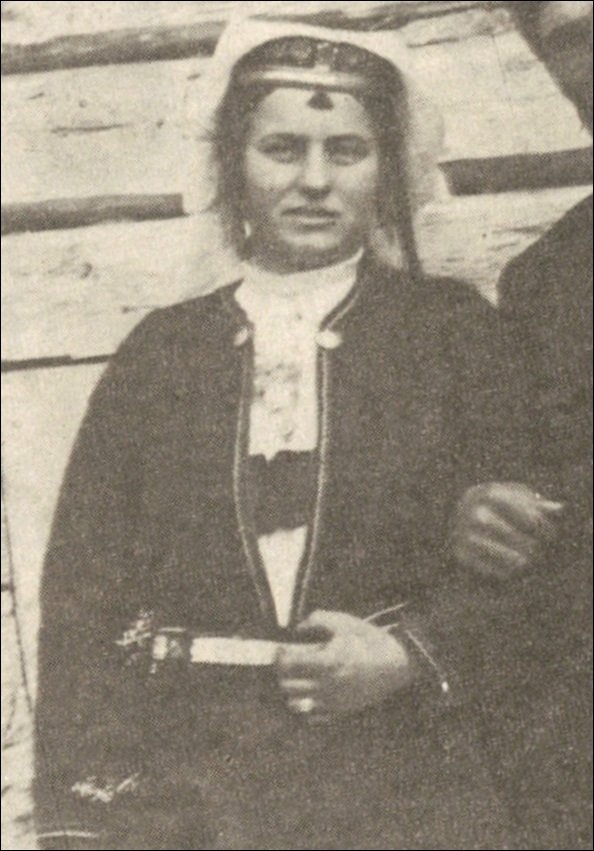
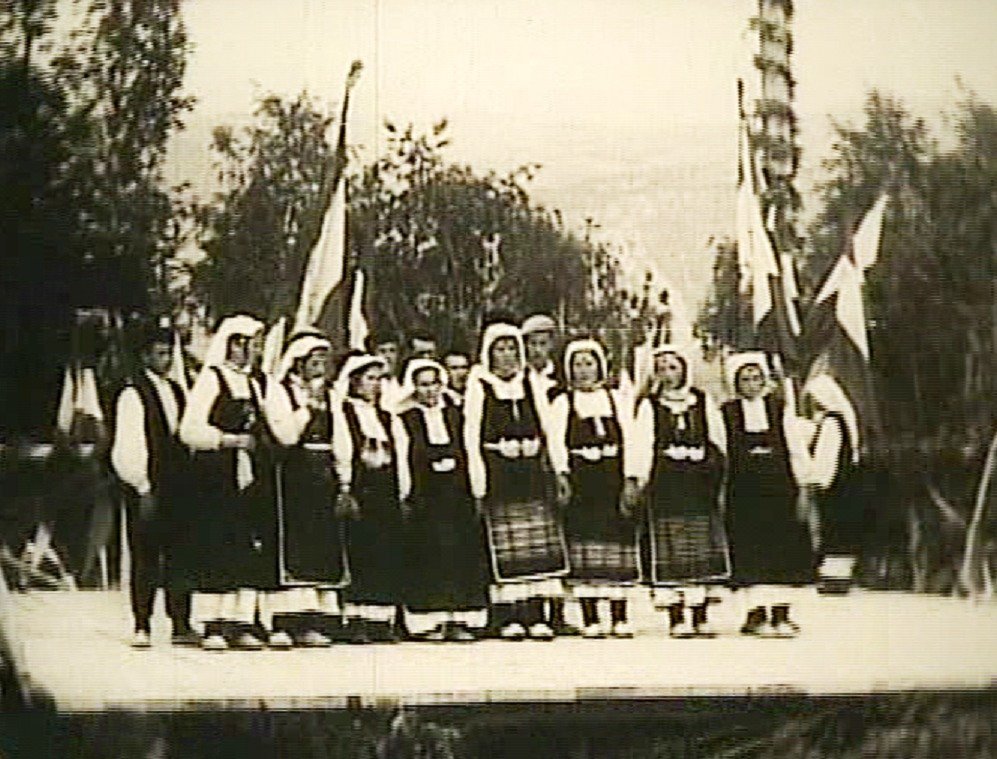
On August 11, 1940, at Slimena near Travnik, a major interregional (all-Croatian) festival of peasant creativity was held, organized by Seljačka Sloga, with the participation of as many as 26 folklore groups. Representing the folklore group from Zlosela, Zora also performed at not-yet 17 years of age. The combination of her charm, youth, slenderness, height, and beautiful authentic folk costume resulted, according to her own words, in the flattering title of the most beautiful girl in the most beautiful costume at the festival (a questionable claim, as there is no record in available documents related to that festival of such a contest or anything similar having taken place). She caught the eye of many photographers who attended this folklore event and captured the beautiful costumes and interesting participants. The circumstances of this event would significantly influence her life and shape it in an unexpected way a few years later.
Shortly after the review, on October 13, Zora married Franjo Šarić in Begovo Selo near Kupres. The year 1941 arrived and, in the spring, the beginning of the war in these areas. Franjo joined the army as early as April, specifically the Kupres Battalion unit. Zora gave birth to a son, Marko, in July of the same year, and a daughter, Nevenka, in April 1943.
In October 1943, the partisans captured Kupres and the surrounding area, expelling the entire Croatian population, including Zora and her two small children. Under those wartime circumstances, they ended up in Hrvatski Karlovci (today Sremski Karlovci). In December of the same year, during the systematic burning of houses in Kupres by the partisans, Zora's family home in Zlosela was also burned down.
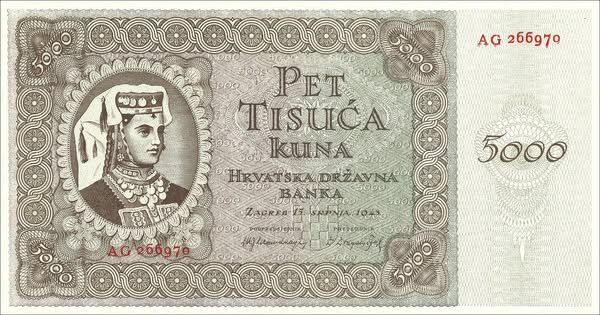
At the time of the release of the 5000 Kuna banknote in late May 1944, Zora was still in exile with the other residents of Kupres. Members of her family, as well as most of her fellow villagers who were familiar with the story that Zora had been photographed in traditional folk costume at a pre-war festival in Slimena, and because of her physical resemblance to the figure of the girl on the banknote, had no doubt whatsoever that the person depicted on the banknote was none other than their Zora.
Franjo was in military service until the end of the war, and he was aware of the situation that he would not be able to return to a normal life. Along with about a hundred other home guards and Ustaše, he hid in the surrounding forests for a long time.
Upon returning to her devastated house in Begovo Selo in 1946, Zora was forced to support her children and mother-in-law on her own, as well as take care of the household. In the post-war period in the economically ruined Kupres region, it was difficult to find any job at all. Moreover, she was often rejected because during the war her husband had been a Ustaše, and in some situations also due to the knowledge that she had graced the banknote of the former state. She did what was the only honorable thing she could do at that moment, which were mostly men's physical jobs. Her husband Franjo would sometimes secretly drop by under the cover of night.
Franjo, along with the rest of his surviving comrades-in-arms, surrendered only in early 1948, following (false) promises from the new authorities that nothing would happen to them if they had not committed any crimes during the war. However, upon surrendering, all of them were arrested and taken to prisons. Franjo did not know that, in a staged trial based on false testimonies as early as May 1945, a military court had sentenced him in absentia to 15 years of strict imprisonment for a specific crime he did not commit. According to family members, during the trial he bore the stigma of being the husband of the woman whose image was featured on the Ustaše banknote. In September of the same year, Zora gave birth to a son, Božo.
After her mother-in-law died in 1958, Zora, by agreement with Franjo, sold the house and, in search of a better life, permanently left the Kupres region with her children. She continued her life's journey in Bilje, taking a job at Mesokombinat.
Franjo served his sentence in most of the infamous Partisan prisons and camps. Due to his poor state of health resulting from various forms of torture and poor hygienic conditions, he was released in December 1959. At Franjo's insistence, the reunited family moved to Vinkovce, where his relatives had settled earlier. In 1961, they bought land and began building a house, and Zora took a job at the brickyard.
Franjo's permanently impaired health was getting worse and worse, and he died as early as 1969. Zora lived until the end of her life in the built family home together with her son Božo and his family. She died on February 11, 1997, and was buried in the Vinkovci cemetery next to her husband. The family will remember her as an honorable, honest, and hardworking woman, for whom family was always in first place. (The biographical data used in the text were obtained from Anka Šarić, Zora's daughter-in-law)
*****
When this banknote appeared in circulation, speculations began among the people of Kupres about who that girl might be. Almost every village had its own candidate, judging solely by the physical resemblance of “their girl” to the girl on the banknote, but without any factual basis for the claims made. Only two women possessed additional arguments that would support this thesis. One of them is precisely Zora.
Due to her physical resemblance to the girl's figure on the banknote and the fact that she was a favorite face of photographers at the pre-war exhibition in Slimena, an awareness was created among the people of Zloselo that she was precisely that girl and that some photograph from that exhibition featuring her had served as a template for creating the drawing on the banknote. Zora and her family were equally convinced of this. Because of the stigma of being “the girl who graced the Ustasha banknote,” which the whole family bore after the war and long after, and because of which Franjo received a heavier prison sentence, this conviction only further solidified. Zora died believing that she was the very person whose maiden likeness was depicted on the 5000 Kuna banknote.
No, what Zora couldn't know was this...
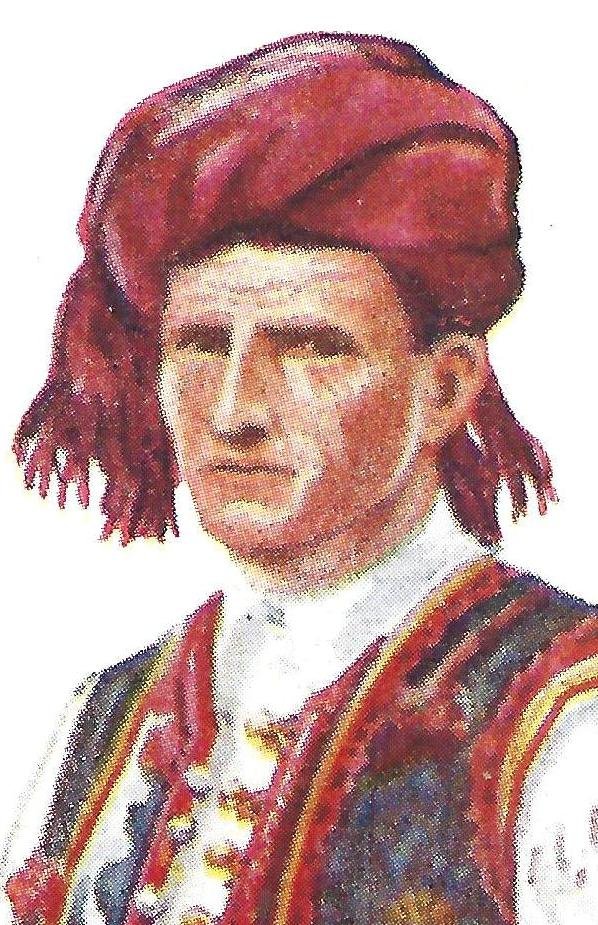
As templates for creating postcards from the Croatian Folk Costumes series, their author Vladimir Kirin used photographs by Tošo Dabac, taken mostly at festivals of Croatian peasant culture in Zagreb in the second half of the 1930s. For the creation of the character drawings on the banknotes of the Independent State of Croatia (NDH), of which he was also the author, he used his own earlier works from those postcards as templates. The postcard he used when designing the motif on the 5000 Kuna banknote is titled Bosnia (Zlosela) and is numbered 40. It was published in late 1939 or early 1940, therefore, before Zora's performance at the festival in Slimena. It features a man and a girl in Croatian folk costume from the Kupres region. The photograph that served as Kirin's template for the drawing on that postcard was taken at the Festival of Croatian Peasant Culture in Zagreb on June 11, 1939, and is featured in my book NDH Banknotes: Untold Stories, which is coming out this November.
Two more arguments further dispute Zora's story. There is film footage from the festival at Slimena on August 11, 1940, in which Zora participated with the Zloselo folklore group, and in which the performance of that group is visible. During the performance, the girls did not wear the aljina, but only the shirt and jelek as the upper parts of the costume. The girl in the photograph from the festival in Zagreb is wearing a formal aljina, and is shown in such an outfit combination on a postcard and a banknote.
And finally, the second person who still had arguments in favor of maybe being the girl depicted on the banknote, attended the review in Zagreb on June 11, 1939, and later had the opportunity to see Dabac's original photographs from that review and recognize herself in them.

Author: Vedran Krušelj
Source: Facebook group “SALE AND EXCHANGE – coins, banknotes, decorations and badges”
Vedran Krušelj covers the topic of NDH banknotes in his book: “Banknotes of the NDH: Untold Stories“.
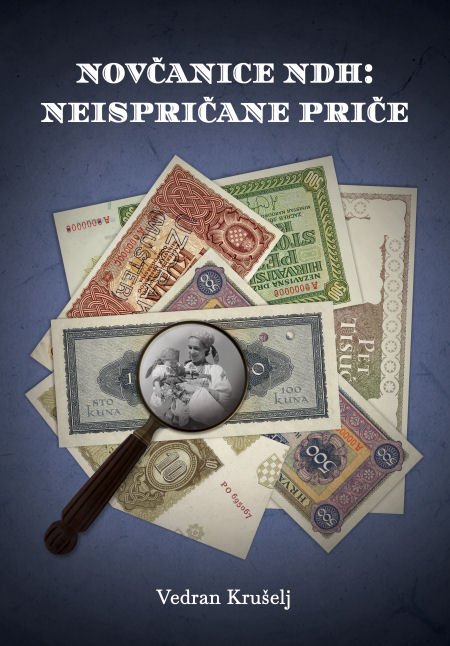
This book is the result of the author's multi-year persistent and systematic research into the aforementioned subject matter, and it represents a complete and comprehensive overview of the numismatic history of the Independent State of Croatia (NDH), with an emphasis on banknotes. For the first time in literature, all the data necessary for professional analysis are gathered in one place, described in context and supported by numerous original documents, newspaper articles, and photographs. The technical, symbolic, and iconography features of the banknotes are well-founded and explained, and the ‘stories’ of the individuals whose portraits are depicted on them are told.
In the book, among other things, a sketch of the 50,000 Kuna banknote from 1945 is presented for the first time, and every buyer receives as a gift a separately numbered reproduction of its graphic reconstruction.
More textual details from the book can be found on the author's social media profile: https://www.facebook.com/vedran.kruselj
Hardcover, A4 format, 392 pages, color illustrations.
The planned book release is in the month of in December of this year.
Regular price books will be taken out 90 EUR + shipping costs.
It is possible to order it now on presale at a price of 80 EUR + shipping costs.
Take advantage of this purchase benefit that will last only until mid-October.
You can place your order via:
Email: vedran.kruselj@gmail.com
To phone or WhatsApp: +385 91 506 9477