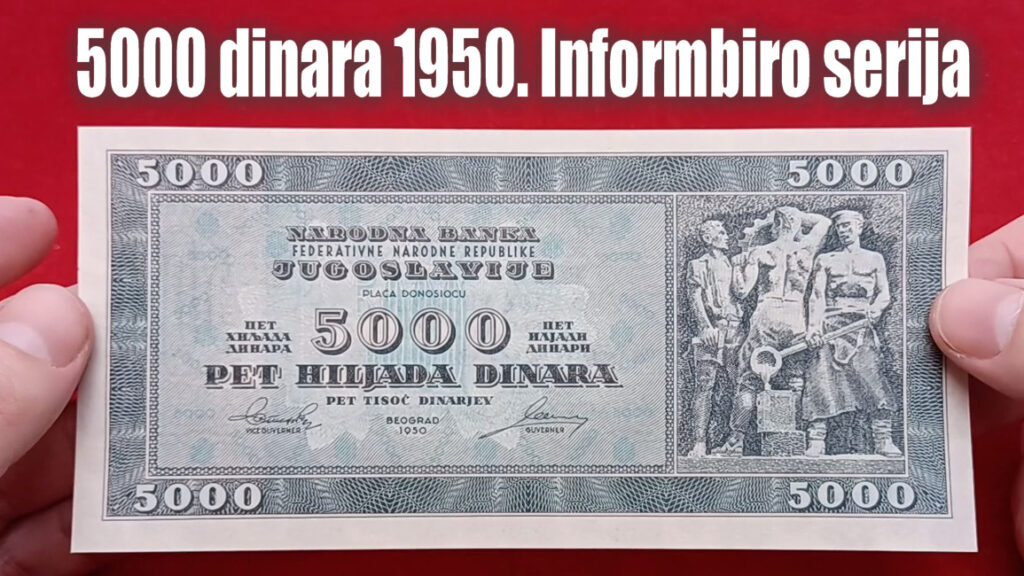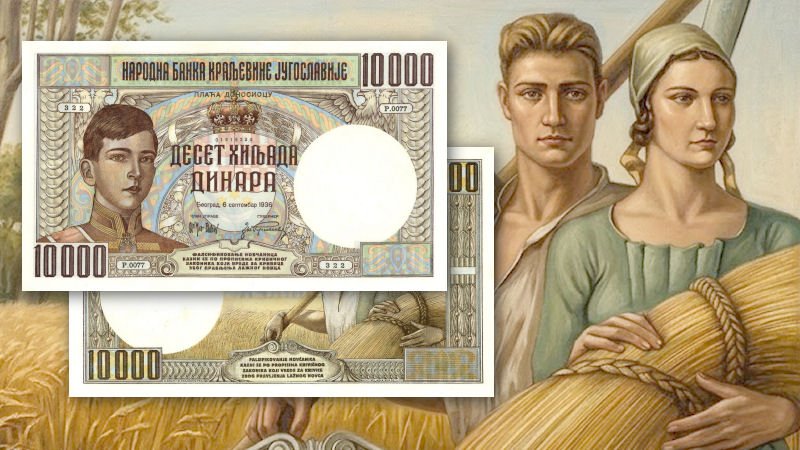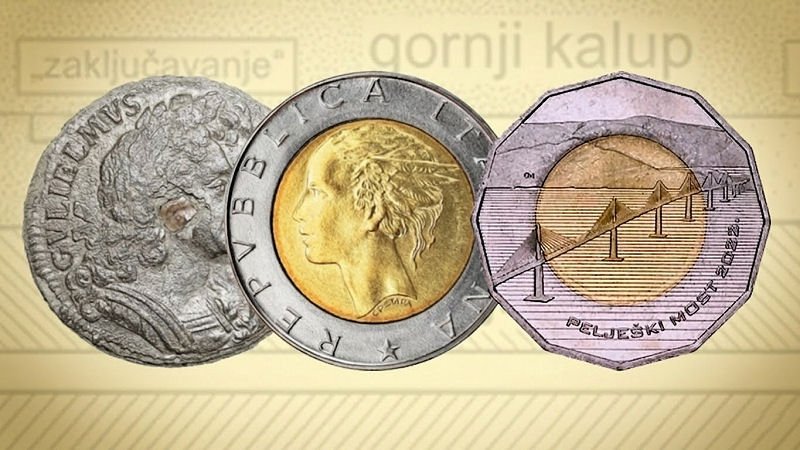




We are once again witnessing inflation and the gradual loss of the value of money. Until recently, a 100-kuna banknote still represented „something,” whereas today 13 euros is practically „nothing.” It is not uncommon for a round of drinks at a café to cost that much. Even a 100-euro banknote, which until recently was „something,” is spent very quickly today. It is practically enough for a full tank of gas and two coffees.
Let's see just how much the red 100 Yugoslav dinar banknote, the so-called „horse,” was actually worth 40 years ago.
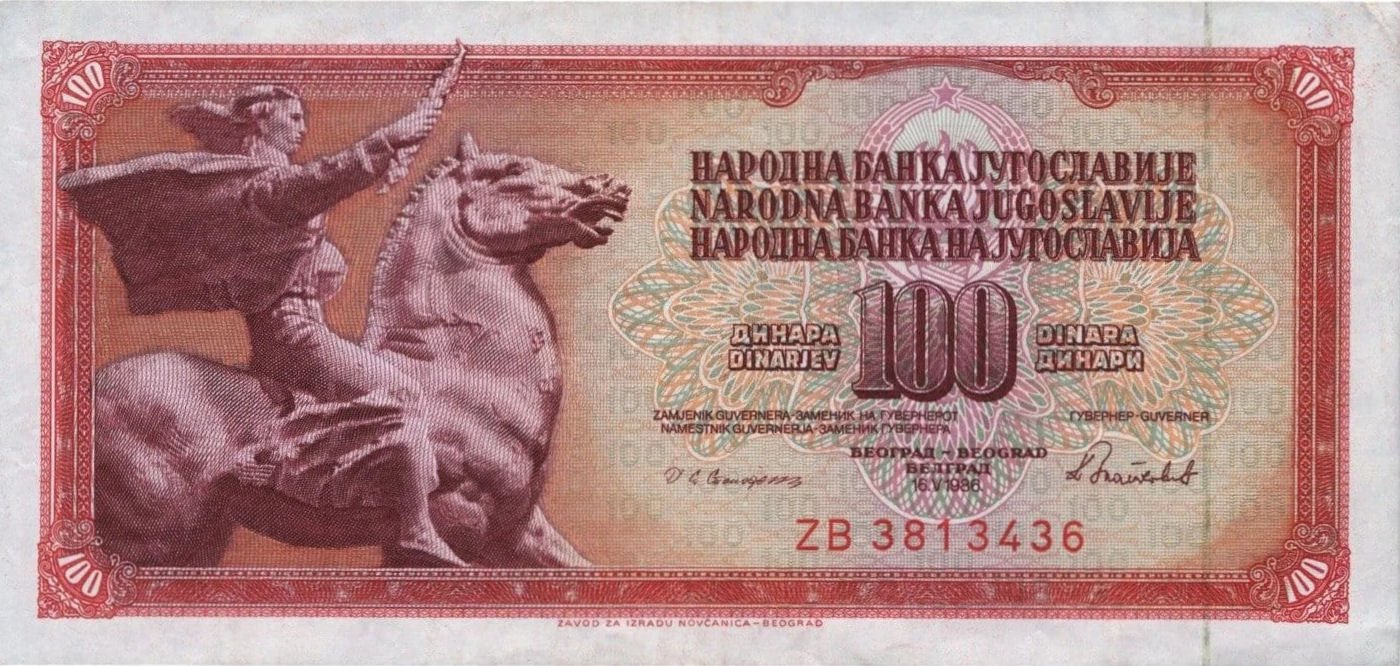
This is, by the way, a banknote featuring the depiction of Augustinčić's famous monument „Peace”, which has already been discussed on this portal in the text „Horses inside out”.
Digitized archives and modern AI tools now enable significantly more efficient searches of old newspapers, magazines, and statistical publications. That is why we investigated what the actual purchasing power of a „horse” was in 1986.
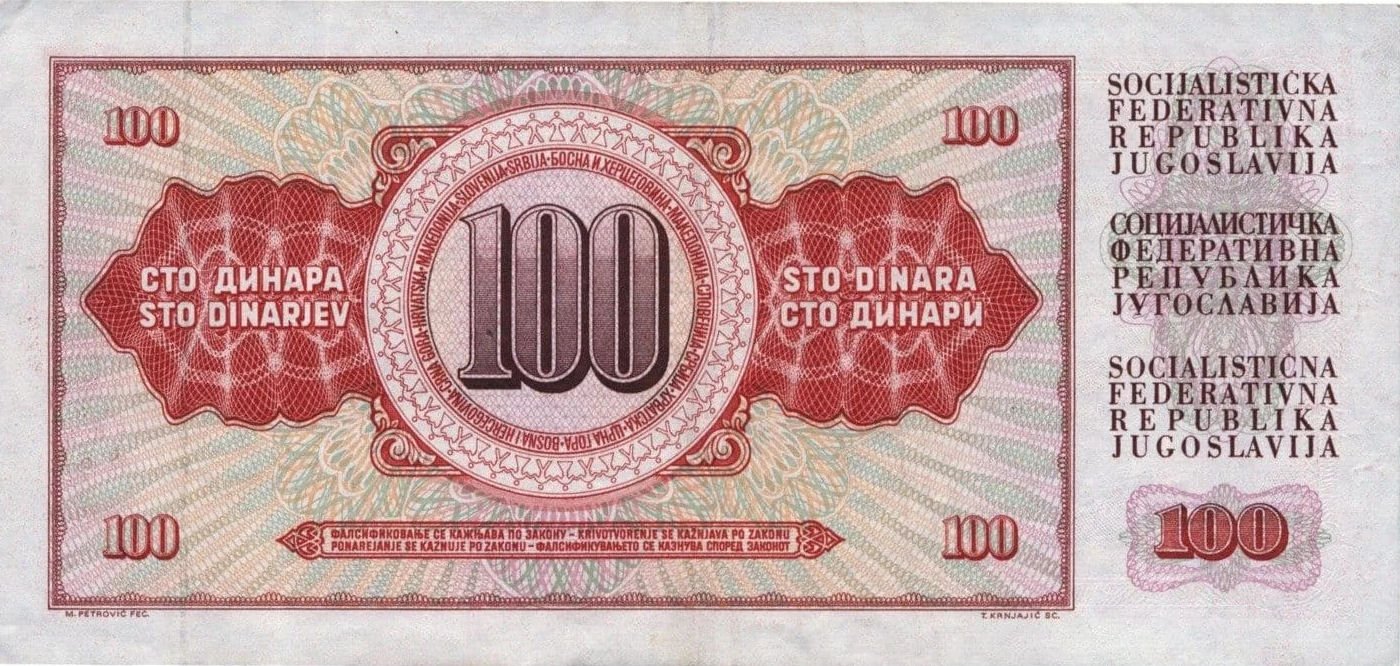
The results will probably not fit into nostalgic notions of the former value of money. A 100-dinar banknote was enough for some basic groceries or small daily expenses, but even back then it did not represent a particularly large amount.
Why did 100 dinars not have the same value at the beginning and the end of 1986?
When comparing prices from 1986, one must first take into account the very high inflation.
According to data from the Federal Bureau of Statistics, the average level of retail prices in 1986 was as much as 88.1 percent higher than in 1985, while the cost of living increased by 89.1 percent.
This means that 100 dinars in January and 100 dinars in December 1986 did not have approximately the same purchasing power. Therefore, the prices from the official statistical tables are listed as annual averages, while individual prices from newspapers and magazines are marked with the publication date.
Attention should also be paid to the difference between official and so-called old dinars. In everyday speech, people often calculated in old dinars even during the 1980s, although the official denomination had already been carried out in 1966.
The relationship was: 100 old dinars = 1 (new) dinar
Therefore, the official (new) 100 dinars, or one „horse,” was worth 10,000 old dinars in everyday speech (as they would say in the popular TV series „Gruntovčani” – ten thousands).
What could be bought for 100 dinars?
The Federal Statistical Office published the average retail prices for the whole of SFR Yugoslavia. These are annual averages for 1986, not prices from a specific store or a single month.
The quantities in the last column were mathematically calculated. For products sold by the piece, such as eggs or bottles of beer, it was not possible to purchase a fraction of a product in actual shopping.
| Product: | Average price in 1986: | What could you get for 100 dinars? |
|---|---|---|
| Wheat flour bread, type 850 | 97 dinar/kg | 1.03 kg |
| Wheat flour bread, type 500 | 156 din/kg | 641 g |
| Wheat flour, type 500 | 147 RSD/kg | 680 g |
| Rice | 557 RSD/kg | 180 g |
| Macaroni | 362 din/kg | 276 g |
| Potato | 79 din/kg | 1.27 kg |
| Grah | 741 din/kg | 135 g |
| Red onion | 117 din/kg | 855 g |
| Carrot | 244 din/kg | 410 g |
| Apples | 244 din/kg | 410 g |
| Beef | 1.003 din/kg | approximately 100 g |
| Veal | 1.387 din/kg | 72 g |
| Pork | 1.295 din/kg | 77 g |
| Mutton | 919 dinar/kg | 109 g |
| Slaughtered chicken | 732 din/kg | 137 g |
| Cured pork | 2,260 din/kg | 44 g |
| Cured pork bacon | 1.469 din/kg | 68 g |
| Hello | 1.528 din/kg | 65 g |
| Carp | 707 din/kg | 141 g |
| Sardines in oil | 1.446 din/kg | 69 g |
| Egg | 39 RSD/pc. | 2 pieces, with a change of 22 dinars |
| Milk | 131 RSD/l | 0.76 l |
| Homemade soft white cheese | 810 din/kg | 123 g |
| Butter | 1.784 din/kg | 56 g |
| Pork lard | 501 dinar/kg | 200 g |
| Edible oil | 483 RSD/L | 207 ml |
| Margarine | 711 din/kg | 141 g |
| Sugar | 230 din/kg | 435 g |
| Roasted coffee | 5.782 din/kg | 17 g |
| Table salt | 124 din/kg | 806 g |
| Chocolate | 2,360 din/kg | 42 g |
| Wine | 442 din/l | 226 ml |
| Strong brandy | 1.078 din/l | 93 ml |
| Light beer, 0.5 L bottle | 241 days | There wasn't enough for a single bottle |
| Vinjak | 1.327 din/l | 75 ml |
Source: Statistical Yearbook of Yugoslavia 1987, pp. 225–226
Enough for bread, but not for beer
Based on the official Yugoslav average, for 100 dinars one could buy a little more than a kilogram of cheaper type 850 bread. However, for a half-liter bottle of pale beer, one had to set aside an average of 241 dinars.
In other words, the "horse" accounted for only about 41 percent of the price of a bottle of beer.
For the same amount, you could buy approximately 100 grams of beef, 77 grams of pork, 137 grams of chicken, 17 grams of roasted coffee, or 42 grams of chocolate.
Prices in the cities of the SR Croatia
The Yugoslav average does not show major differences between individual republics and cities. The federal yearbook therefore also presents average retail prices in Zagreb, Karlovac, Osijek, Rijeka, and Split.
| Product or service: | Zagreb | Karlovac | Osijek | Rijeka | Split |
| Bread flour type 850, kg | 148 | 108 | 123 | 95 | 77 |
| Bread flour type 500, kg | 189 | 197 | 148 | 197 | 146 |
| All-purpose flour, kg | 171 | 142 | 164 | 146 | 150 |
| Rice, kg | 538 | 490 | 648 | 609 | 598 |
| Macaroni, kg | 363 | 332 | 369 | 395 | 393 |
| Potato, kg | 89 | 84 | 81 | 76 | 94 |
| Grah, kg | 837 | 880 | 724 | 922 | 944 |
| Red onion, kg | 133 | 143 | 120 | 128 | 148 |
| Apples, kg | 233 | 280 | 241 | 269 | 268 |
| Pork, kg | 1.371 | 1.211 | 1.283 | 1.308 | 1.283 |
| Slaughtered chicken, kg | 739 | 753 | 692 | 742 | 721 |
| Egg, piece | 38 | 41 | 35 | 47 | 40 |
| Milk, liter | 122 | 125 | 127 | 142 | 139 |
| Homemade soft white cheese, kg | 815 | 624 | 617 | 783 | 725 |
| Cooking oil, liter | 456 | 470 | 497 | 489 | 455 |
| Roasted coffee, kg | 5.864 | 5.882 | 6.275 | 6.096 | 5.903 |
| Wine, liter | 354 | 403 | 508 | 391 | 414 |
| Light beer, 0.5 L bottle | 221 | 224 | 250 | 266 | 263 |
| Electric energy, kWh | 22,2 | 22,4 | 21,0 | 21,0 | 21,0 |
| Toothpaste, tube | 201 | 188 | 215 | 208 | 143 |
| Haircut | 470 | 417 | 493 | 561 | 517 |
| Movie ticket | 182 | 188 | 173 | 153 | 152 |
| Theater ticket | 408 | 408 | 500 | 360 | 425 |
| Public transport | 163 | 81 | 98 | 103 | 90 |
| Household water, m³ | 56 | 45 | 49 | 71 | 38 |
Source: Statistical Yearbook of Yugoslavia 1987, p. 732
The differences were very pronounced. For 100 dinars, one could buy:
- about 676 grams of type 850 bread in Zagreb
- about 926 grams in Karlovac
- about 813 grams in Osijek
- approximately 1.05 kg in Rijeka
- ready 1.30 kg in Split
Milk was cheapest in Zagreb, where a liter cost an average of 122 dinars. In Rijeka, it cost 142 dinars. For a „horse,” therefore, one could get about 0.82 liters of milk in Zagreb or about 0.70 liters in Rijeka.
A single city public transport ride in Zagreb cost an average of 163 dinars, so 100 dinars was not enough. In Split, the ride cost 90 dinars, and in Karlovac 81 dinars.
Household supplies, medicines and services
For 100 dinars, a certain number of quite small necessities could be bought. However, that amount was not enough for a school notebook, a light bulb, a movie ticket, or a haircut.
| Product or service: | Average price in 1986.: | What could you get for 100 dinars? |
| 60 W light bulb | 141 days | It was not enough |
| Laundry soap | 331 din/kg | 302 g |
| Toilet soap | 943 din/kg | 106 g |
| Toothpaste, 60 g tube | 194 days | about half a tube |
| School notebook | 107 din | It was not enough |
| Black pencil | 51 days | one pencil, with 49 dinars change |
| Acetisal, 20 tablets | 60 days | one package |
| Fenalgol, 10 tablets | 63 days | one package |
| Cough syrup | 257 din | It was not enough |
| Vitamin C, 20 tablets | 106 days | six dinars were missing |
| Water glass | 108 din | It was not enough |
| Deep porcelain plate | 452 din | It was not enough |
| Enamelled pot of about three liters | 1.391 din | It was not enough |
| Men's low shoes | 11,322 dinars | 100 dinars made up less than 1 percent of the price |
| Women's low shoes | 9,307 din. | approximately 1.1 percent of the price |
| Men's poplin shirt | 6,114 din. | approximately 1.6 percent of the price |
| Men's socks | 513 RSD/pair | approximately one fifth of the price |
| Men's shoe repair | 1,243 dinars | approximately 8 percent of the price |
| Haircut | 408 din | approximately a quarter of the price |
| Shaving | 268 din | approximately 37 percent of the price |
| Cold permanent wave | 2,388 din | approximately 4 percent of the price |
| Movie ticket | 195 din | approximately half the price |
| Theater ticket | 340 dinars | approximately 29 percent of the price |
Electricity, firewood and construction material
| Bet: | Average price in 1986: | What could you get for 100 dinars? |
| Household electricity | 19.7 din/kWh | 5.08 kWh |
| Engine lubricating oil | 370 din/kg | 270 g |
| Firewood | 10.081 din/m³ | 0.0099 m³ |
| Lignite | 16.501 din/t | 6.06 kg |
| Brown coal | 22.479 din/t | 4.45 kg |
| Cement | 31 lei/kg | 3.23 kg |
| Brick | 44 per day/piece. | two bricks, with a change of 12 dinars |
| Rent | 49 din/m² | rent for approximately 2.04 m² |
| Apartment heating | 125 din/m² | heating approximately 0.8 m² |
The official table of average retail prices does not list the absolute prices of gasoline and diesel fuel. Therefore, we will not uncritically accept frequently repeated internet data that is not supported by a precisely dated price list.
It is reliably known that on December 26, 1986, the Federal Executive Council approved a new increase in fuel prices. UPI, citing Tanjug, reported that motor gasoline went up in price by an average of 23.7 percent, and diesel fuel by 21.5 percent.
Borba announced the following day that petroleum products as a broader category had risen in price by an average of 8.2 percent and that part of the revenue from the price increases would be earmarked for road construction, especially the Brotherhood and Unity motorway.
Sources: UPI, December 26, 1986. i Borba, December 27–28, 1986, p. 1
Coffee and a toilet paper roll for one „horse”
We can compare official annual averages with specific prices from newspapers and magazines of that time.
In the magazine Nothing In May 1986, an article by journalist Ljiljana Matejić-Vučković was published about price increases and the cost of living in Yugoslavia. The interviewees cited a series of specific prices:
| Product or service: | Published price: |
| Toilet paper roll | 100 dinar |
| Coffee in a café | 100 dinar |
| A small pack of paper tissues | 50 days |
| Apples in Zagreb | 500 din/kg |
| The first two seasonal tomatoes | 400 dinars |
| Roman | 2,500–3,000 RSD |
| Kindergarten | price increase from 6,000 to 9,000 RSD |
For one „horse”, therefore, one could drink a coffee in a café or buy one roll of toilet paper. One could also buy a single pack of facial tissues, and 50 dinars would still be left over.
On the other hand, for 100 dinars you could only get 200 grams of apples at the price quoted by the official from Zagreb. For the first two seasonal tomatoes, one had to shell out as many as four „horses.”.
These data are not official annual averages, but specific prices provided by citizens to a journalist in May 1986. That is precisely why they clearly show how much prices varied depending on the month, city, store, and season.
Source: Text from the magazine Nada, May 1986.
At the end of the year, it wasn't even enough for a newspaper.
Daily newspapers provide an additional illustration of the rapid drop in the value of the dinar.
Double issue Borbe for December 27 and 28, 1986, it cost 150 dinars. Therefore, at the end of the year, a 100-dinar banknote was not enough even for a single copy of that daily newspaper.
This shows particularly well why the month must be specified when comparing prices from 1986. The annual statistical average concealed very rapid changes that were taking place during the year.
How much were the salaries?
The official statistical name for the net salary was „net personal income per worker”.
The average monthly amounts for 1986 were:
- SFR Yugoslavia: 84,670 dinars
- SR Croatia: 90,995 dinars
- gross personal income in SR Croatia: 123,917 dinars
The 100-dinar banknote represented only 0.11 percent of the average monthly net personal income in the SR of Croatia. The average Croatian salary comprised approximately 910 100-dinar banknotes.
Average personal incomes by activity in the SR Croatia
The following data represent monthly averages of certain economic and social activities. These are not necessarily the salaries of every teacher, doctor, construction worker, or shop assistant, but rather the averages of those employed in the respective sectors.
| Activity: | Average monthly net personal income: |
| All activities in SR Croatia | 90.995 din |
| Industry and Mining | 87,552 dinars |
| Electric utility | 109,094 din. |
| Coal production | 128,553 dinars |
| Oil and gas production | 121.575 din |
| Shipbuilding | 118,970 dinars |
| Food manufacturing | 83.646 din |
| Manufacture of made-up textile articles | 71,652 dinars |
| Agricultural production | 82,106 dinars |
| Fishing | 104,183 din |
| Forestry | 97,379 din. |
| Construction | 81.773 dinar |
| Road traffic | 93.128 din. |
| Maritime traffic | 122,088 din. |
| City traffic | 95.860 dinars |
| PTT | 93.794 din |
| Retail trade | 85,167 din. |
| Wholesale | 100,859 dinars |
| Foreign trade | 143,847 dinars |
| Catering and hospitality | 84.146 din |
| Tourist intermediation | 105,465 dinars |
| Personal services | 65,645 dinars |
| Banking | 107,928 dinars |
| Design and related services | 124.396 din |
| Basic education | 91.464 din |
| Secondary education | 96.359 din |
| Higher education | 115.030 din |
| Higher education | 122,080 RSD |
| Scientific research activity | 122,948 dinars |
| Culture, art and information | 104,015 din. |
| Healthcare | 93,974 din. |
| Social welfare | 82.099 dinars |
| Socio-political communities and organizations | 103.022 din |
Source: Statistical Yearbook of Yugoslavia 1987, pp. 469–471
Actual salaries of individual citizens
The official average does not mean that all employees received approximately 90,000 dinars.
In the previously mentioned text from the magazine Nothing concrete examples are provided:
- a driver from Belgrade earned around 30,000 dinars
- his wife, employed in a loss-making company, less than 20,000 dinars
- supermarket manager in Mostar around 60,000 dinars
- a pensioner in Slavonski Brod was receiving about 30,000 dinars
- A three-member family in Prokuplje lived on the father's pension of approximately 60,000 dinars
A driver with a salary of 30,000 dinars stated that his family sets aside about 15,000 dinars a month just for rent, electricity, and the telephone, which is half of his salary.
These examples show how much actual personal incomes differed from the official average.
How much was 100 dinars worth in foreign currencies?
The exchange rate of the dinar changed rapidly during 1986. The following table shows the value of 100 dinars according to the official exchange rates of the National Bank of Yugoslavia on December 31, 1985, and December 31, 1986.
The first date roughly represents the beginning and the second the end of the observed year.
| Currency: | 100 dinars at the beginning of 1986. | 100 dinars at the end of 1986. |
| Austrian Schilling | 5.49 ATS | $2.99 USD |
| Belgian franc | 16.03 BEF | 8.86 BEF |
| French franc | 2.39 FRF | 1.41 FRF |
| Dutch guilder | 0.75 NLG | 0.48 NLG |
| Italian lira | 530.22 ITL | 297.18 ITL |
| West German Deutsche Mark | 0.77 DEM | 0.42 DEM |
| Swiss franc | CHF 0.66 | 0.35 CHF |
| Swedish krona | 2.42 SEK | 1.49 SEK |
| British pound | £0.22 | £0.14 |
| Japanese yen | 64.16 JPY | 34.99 JPY |
| US dollar | $0.32 USD | $0.21 USD |
Source: Statistical Yearbook of Yugoslavia 1987, p. 219
It is evident that the value of the dinar fell sharply over the course of just one year. At the beginning of the year, one hundred dinars were worth approximately 0.78 West German marks, and by the end of the year only 0.43 marks.
How much would 100 dinars from 1986 be worth today?
There is not just one mathematically correct answer to this question. The result depends on whether we are comparing the prices of basic goods, the share of the average salary, or the exchange rate at the time.
Comparison by basic foodstuffs
If we calculate how much the quantities of food that could be bought for 100 dinars in 1986 cost in Croatia today, we get very different results.
For example:
| Quantity bought for 100 dinars in 1986. | Approximate value in 2026. |
| 1.03 kg of semi-white bread | about €2.22 |
| 680 g flour | about €0.51 |
| 180 g rice | about €0.36 |
| 276 g of pasta | about €0.47 |
| 1.27 kg of potatoes | about €0.86–1.43 |
| 2.56 eggs | about €0.77 |
| 0.76 l of milk | around 0.83 € |
| 207 ml of edible oil | around €0.31 |
| 17 g of roasted coffee | about €0.35 |
| 123 g of fresh cheese | around €0.92 |
Retail prices verified in Croatian stores in August 2026 were used for this calculation. The median value of the results for the selected food products is approximately 0.64 euros, while their simple average is about 0.82 euros.
This is not an official consumer price index, but an illustrative comparison. Bread stands out in particular, as it is relatively more expensive today compared to most other basic foodstuffs.
Comparison to the average salary
The average monthly net personal income in the SR of Croatia in 1986 was 90,995 dinars. One hundred dinars accounted for 0.1099 percent of the average salary.
The average net salary in Croatia in May 2026 was 1,552 euros.
When the same share is applied to today's average salary, the result is:
100 dinars from 1986 = approximately 1.71 euros from 2026.
Source for current salary: Croatian Bureau of Statistics, May 2026.
Comparison via the German mark
According to the official exchange rate, 100 dinars was worth:
- in early 1986 approximately 0.779 German marks
- at the end of 1986 approximately 0.427 German marks
The German Bundesbank estimates that the purchasing power of one Deutsche Mark from 1986 corresponds to approximately 1.10 euros in 2025 prices.
On that basis, 100 dinars from 1986 would correspond to an amount between approximately 0.47 and 0.86 of today's euros, depending on whether the exchange rate from the beginning or the end of the year is taken.
Source: Deutsche Bundesbank, purchasing power of historical German currencies
So, how much would that be today?
| Comparison method: | Approximate current value: |
| According to the prices of basic food | about €0.60–0.80 |
| Through the German mark and inflation | about 0,50–0,90 € |
| According to the share in the average salary | about €1.70 |
| A reasonable, single, comprehensive assessment | about €1 |
It is fairest to conclude that the purchasing power of 100 Yugoslav dinars from 1986 would roughly correspond to one euro today. Depending on the method applied, a wider range of approximately 0.60 to 1.70 euros is obtained.
That does not mean that 100 dinars was always worth exactly one euro today. Certain subsidized products, such as bread, could be bought in larger quantities for that amount than today. With other products, especially imported ones, the purchasing power was significantly weaker.
Small amount in a time of high inflation
The 100 dinar banknote from 1986 was not worthless. According to the Yugoslav average, one could buy slightly more than a kilogram of cheaper bread, approximately a kilogram of potatoes, two eggs, or less than a liter of milk with it.
One could drink a coffee in a café or buy one roll of toilet paper. However, it was not enough for a bottle of beer, a cinema ticket, a haircut, a school notebook, or, by the end of the year, even a copy of a daily newspaper Borba.
Compared to the average salary in the SR of Croatia, it represented just over one-thousandth of the monthly income.
„The horse” was, therefore, a recognizable and favorite banknote at the time of its introduction, but by 1986 it no longer represented a large amount of money. 100 dinars was approximately what a one-euro coin is today: a useful denomination for small, everyday purchases, but insufficient for most serious expenses.
Main sources
- Statistical Yearbook of Yugoslavia 1987, Federal Statistical Office
- Magazine Nada, May 1986, text by Ljiljana Matejić-Vučković
- Borba, December 27-28, 1986.
- UPI, fuel price hike report from December 26, 1986.
- State Statistical Office, average net wage in May 2026.
- Deutsche Bundesbank, purchasing power of historical German currencies
Note: The amounts and prices shown here are the result of AI analysis based on available statistical and other data for the year 1986. In reality, it is very likely that there was a large fluctuation in prices depending on location and time. Therefore, the displayed results should be taken with a grain of salt. The idea of the article and analysis is to roughly evoke the value of the banknote that is the subject here.
Author: Zlatko Viščević (introductory part), and the analysis was done by AI
Photos: Numex – Coins, Banknotes & Militaria Store [www.numex.hr]