
where

Official exchange rates of the NDH for November 1942: the ratio of the kuna to foreign currencies and gold coins

In „Narodne novine”, the official gazette of the Independent State of Croatia, issue number 248 of November 2, 1942, published the exchange rate list for the month of November 1942. At first glance, this is dry administrative data, but for numismatists such a document is extremely interesting. It shows how

Official exchange rates of the NDH for November 1942: the ratio of the kuna to foreign currencies and gold coins Read more »

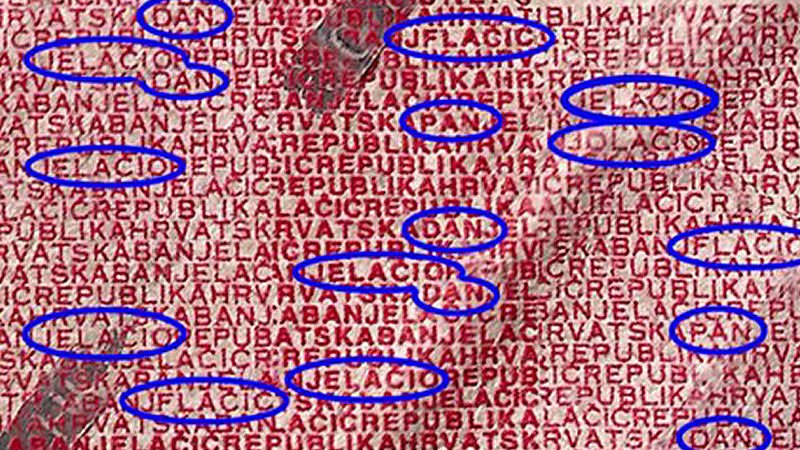
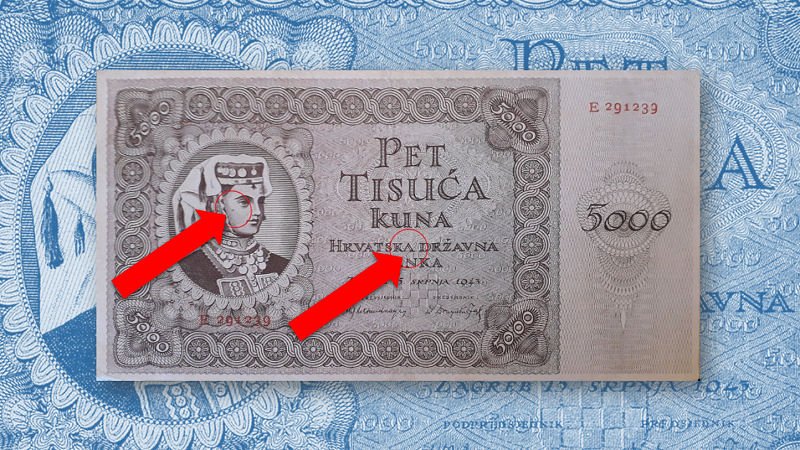
Security features or grammatical errors on Croatian kuna banknotes?

Detailed observation of the 5, 20, and 50 kuna banknotes leads to interesting discoveries. Namely, the microtext printed on the obverse of the banknotes repeatedly repeats one and the same text, but upon careful reading of that text, we find grammatical errors. The question arises here whether these are accidental grammatical

Security features or grammatical errors on Croatian kuna banknotes? Read more »

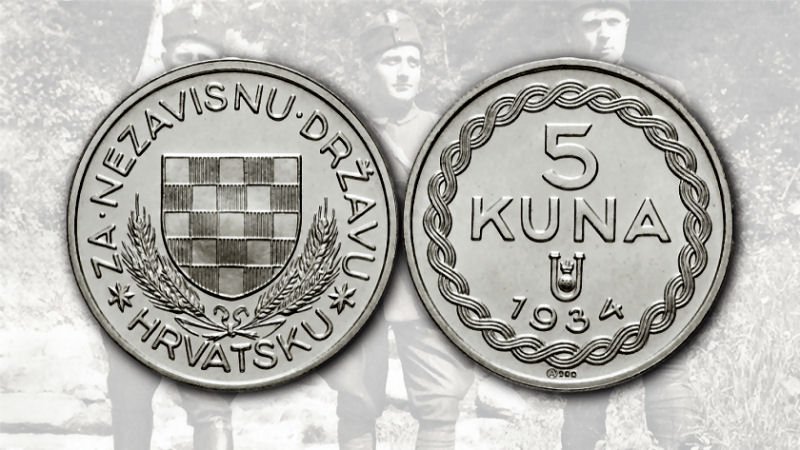
On the planned introduction of the kuna as the official currency in the Ustaše emigration in 1934

The 5-kuna silver coin minted in 1934 has been written about on several occasions, and a number of sometimes contradictory conclusions have been reached regarding it. Original documents from Belgrade, available in the form of microfilms in the Croatian State Archives, shed light on many details about the activities of the Ustasha movement in Italy, to which

On the planned introduction of the kuna as the official currency in the Ustaše emigration in 1934 Read more »

The Chemistry of Money

Here we broadcast a recorded lecture in which Assoc. Prof. Tomislav Portada, PhD, talks about the chemistry of money. Although the appearance of coins and banknotes, their issues, circulations, and preservation are often discussed, here we look at money from a different angle – a chemical perspective. In the lecture you will find out: The lecture combines

The Chemistry of Money Read more »

Replacement banknotes

Replacement banknotes represent a special and often insufficiently known segment of notaphily, which interestingly connects the technical process of money printing with collecting practice. Although at first glance they do not differ from regular specimens, their role in the monetary system and the way they are marked make them particularly interesting to researchers

Replacement banknotes Read more »

Glagolitic script on currency

Literacy is one of the fundamental elements of every nation's identity, and in the Croatian case, it historically developed through three scripts: Glagolitic, Cyrillic, and Latin. A particularity of Croatian cultural history is the fact that all three scripts also developed their own national variants: the Croatian (angular) Glagolitic script and the Croatian Cyrillic script (arvatica).

Glagolitic script on currency Read more »

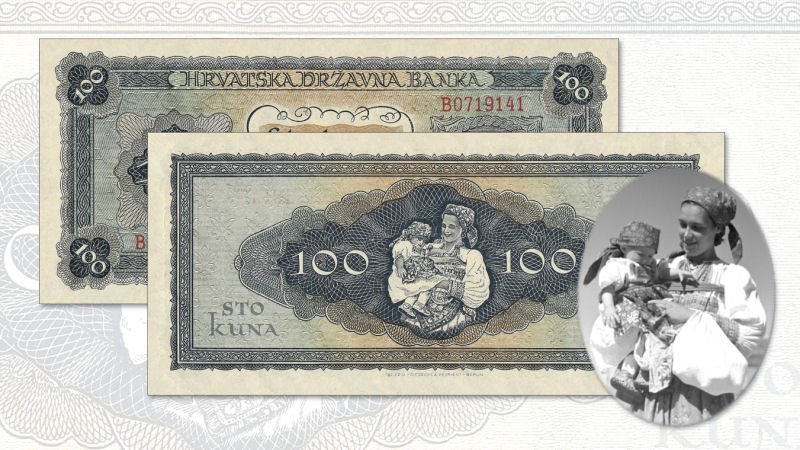
Ethnographic motif on the 100 Kuna banknote from 1943.

The ethnographic motif on the 100 Kuna banknote from 1943 represents the main visual element of the reverse side, located in its central part. It consists of the depiction of a woman with a little girl in her arms, dressed in folk costumes characteristic of certain settlements in the Zagreb sub-mountain region (Prigorje). At the time the banknote was created, those settlements

Ethnographic motif on the 100 Kuna banknote from 1943. Read more »

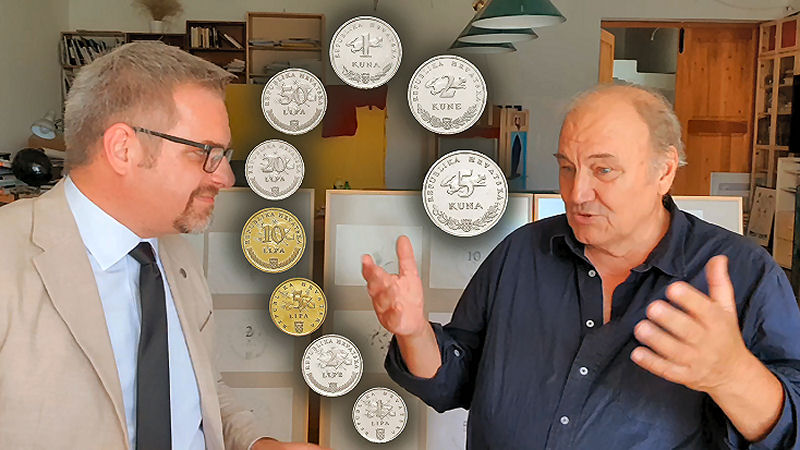
Interview with academic sculptor Kuzmo Kovačić, “father of the minted kuna and lipa”

It is a great honor and pleasure to speak with people who have made history, especially history that is a subject of one's personal interest. One of those people is the academic sculptor, university professor, and academician Kuzma Kovačić, the man who visually designed the kuna and lipa coins. In this

Interview with academic sculptor Kuzmo Kovačić, “father of the minted kuna and lipa” Read more »

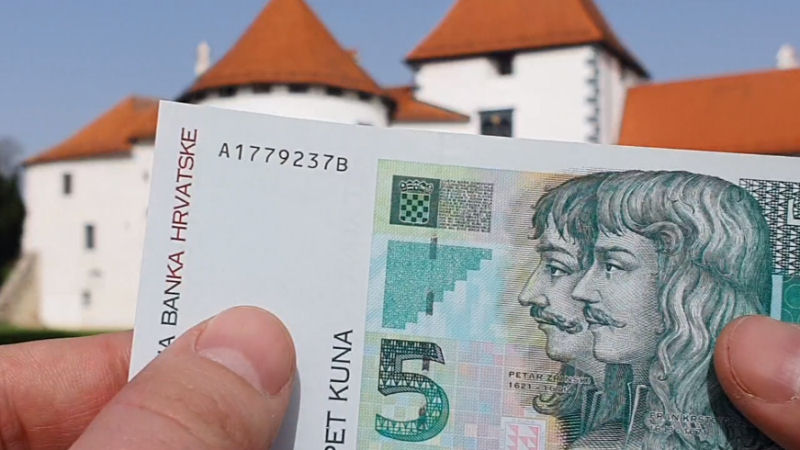
Overview of the banknote: Croatia 5 Kuna 1993, Petar Zrinski and Fran Krsto Frankopan

In today's video, we are talking about the smallest Croatian circulating banknote until the introduction of the euro, the National Bank of Croatia 5 kuna banknote dated October 31, 1993. This banknote belongs to the first series of kuna banknotes and was withdrawn from circulation in 2007 when it was replaced by a new series with better security features

Overview of the banknote: Croatia 5 Kuna 1993, Petar Zrinski and Fran Krsto Frankopan Read more »

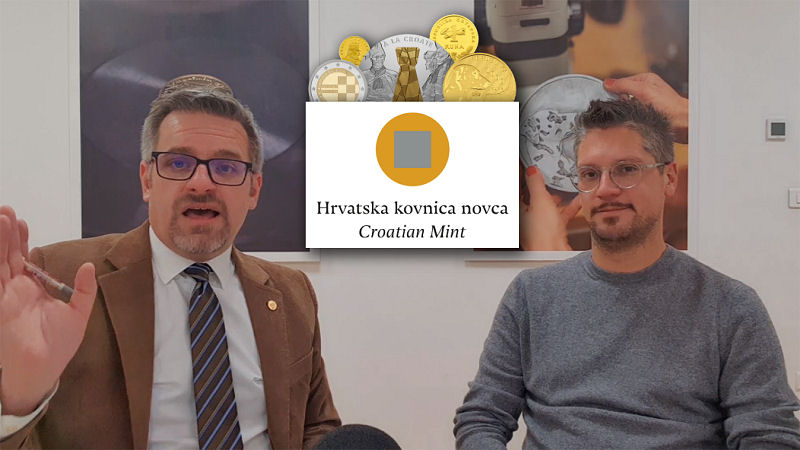
With Ivan Odrljin of the Croatian Mint on Croatian numismatics today and future plans

The Croatian Mint, our national mint, has undergone major changes in the past few years. These changes are also reflected in the new numismatic issues, which have finally begun to match the pace of modern global numismatics. One of the people responsible for this is Ivan Odrljin, with whom we

With Ivan Odrljin of the Croatian Mint on Croatian numismatics today and future plans Read more »

Scroll to Top