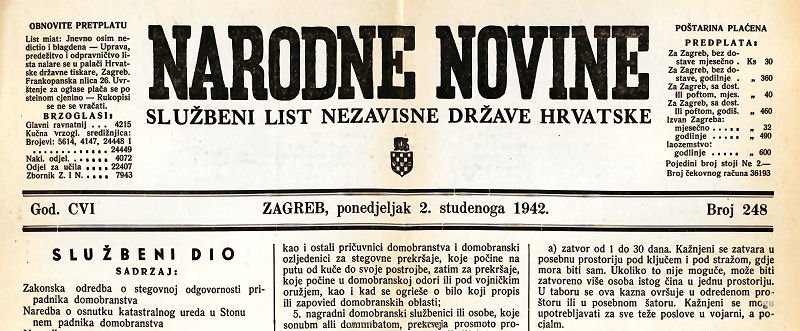
In „Narodne novine,” the official gazette of the Independent State of Croatia, issue number 248 of November 2, 1942, published the exchange rate list for the month of November 1942. At first glance, this is dry administrative data, but for numismatists, such a document is exceptionally interesting. It shows how the Croatian kuna of the NDH was officially valued against foreign currencies and gold coinage in the wartime circumstances of the Second World War.
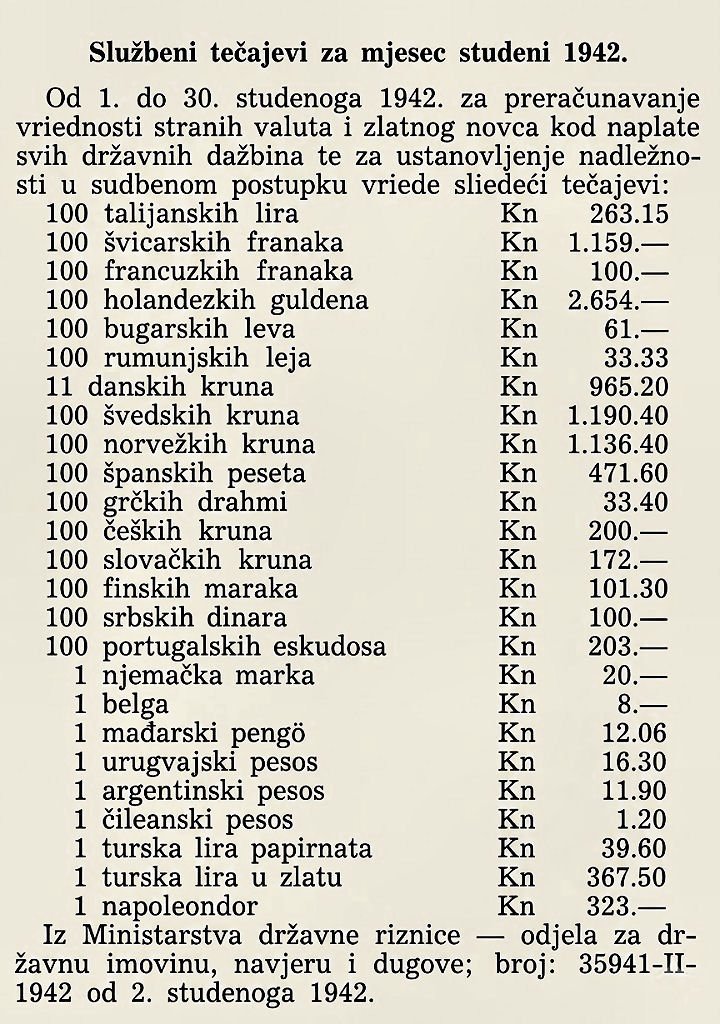
It is important to emphasize right away that this is not necessarily a free market exchange rate in today's sense. The text itself states that the rates were applied for converting the values of foreign currencies and gold coins when collecting state duties, and for determining jurisdiction in court proceedings. In other words, this is primarily an official, state, and administrative exchange rate.
What currencies are listed?
The list of currencies is very interesting because it clearly reflects the political and economic reality of Europe in 1942. The exchange rate list includes the currencies of the Axis powers, states allied with Germany, occupied territories, and also neutral countries. Among them are the Italian lira, the German mark, the Hungarian pengő, the Romanian leu, the Bulgarian lev, the Slovak koruna, the Serbian dinar, as well as the Swiss franc, the Swedish krona, the Spanish peseta, the Portuguese escudo, and the Turkish lira.
Particularly striking is what is not on the list. There is no British pound, American dollar, or Soviet ruble. Such a choice of currencies clearly shows that the official exchange rate list was not merely a financial document, but also a reflection of the wartime order, diplomatic relations, and actual economic ties in the Europe of that time.
Official exchange rates in kuna
According to the published list, the following official exchange rates were valid for November 1942:
| Currency | Official exchange rate |
|---|---|
| 100 Italian lira | 263.15 Kn |
| 100 Swiss francs | 1,159.00 Kn |
| 100 French francs | 100.00 kn |
| 100 Dutch guilders | HRK 2,654.00 |
| 100 Bulgarian levs | 61.00 Kn |
| 100 Romanian lei | 33.33 Kn |
| 11 Danish crowns (probably a mistake and should read 100) | 965.20 Kn |
| 100 Swedish kronor | 1,190.40 HRK |
| 100 Norwegian Krone | 1,136.40 Kn |
| 100 Spanish Pesetas | 471.60 kn |
| 100 Greek drachmas | 33.40 HRK |
| 100 Czech korunas | 200.00 Kn |
| 100 Slovak korunas | 172.00 kn |
| 100 Finnish marks | 101.30 kn |
| 100 Serbian dinars | 100.00 kn |
| 100 Portuguese escudos | 203.00 Kn |
| 1 Deutsche Mark | 20.00 kn |
| 1 Belgian | 8.00 kn |
| 1 Hungarian pengő | 12.06 Kn |
| 1 Uruguayan peso | 16.30 kn |
| 1 Argentine peso | 11.90 kn |
| 1 Chilean peso | 1.20 Kn |
| 1 Turkish lira banknote | 39.60 kn |
| 1 Turkish lira in gold | 367.50 kn |
| 1 napoleondor | 323.00 Kn |
Care should be taken with Danish krone. In the original text, an unusual notation “11” appears before the name, while the amount of 965.20 kuna logically corresponds to the exchange rate against Scandinavian currencies and most likely refers to 100 Danish krone. This is a good example of why, in old official publications, data should be compared rather than relying solely on a single isolated line.
What do our relationships with nature tell us?
From the exchange rate list, the approximate value of one unit of a particular currency in kuna can be easily calculated. One German mark was officially worth 20 kuna. One Swiss franc was worth 11.59 kuna, one Dutch guilder 26.54 kuna, one Italian lira 2.63 kuna, while the French franc and the Serbian dinar were tied with the kuna at a 1 to 1 ratio.
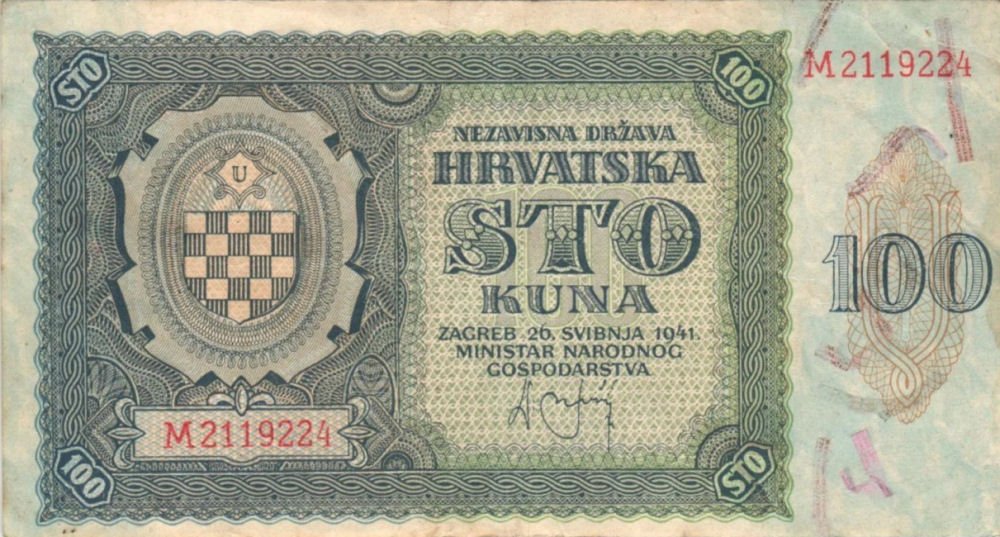
Taking a 100 kuna banknote as an example, such as the one issued by the NDH dated May 26, 1941, according to this official list, it corresponded in value to 5 German Reichsmarks, 100 French francs, 100 Serbian dinars, about 8.63 Swiss francs, or approximately 0.31 gold Napoleon d'or.
These ratios, of course, do not speak directly of actual purchasing power on the market, especially not in wartime conditions. Nevertheless, they provide a valuable official framework for understanding the banknotes of the NDH, the state administration, the calculation of fees, and the relationship of the kuna to other currencies.
The Golden Napoleon as a particularly interesting fact
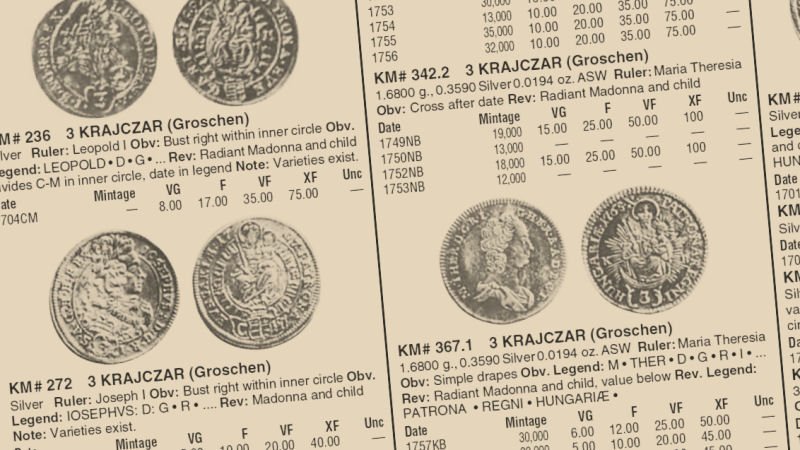
Of particular interest to numismatists is the line stating „1 napoleondor” valued at 323 kuna. The napoleondor, or golden Napoleon, in practice most commonly refers to the French 20-franc gold coin. The standard 20-franc gold coin has a total mass of 6.4516 grams and a fineness of 900/1000, which means it contains approximately 5.806 grams of pure gold.
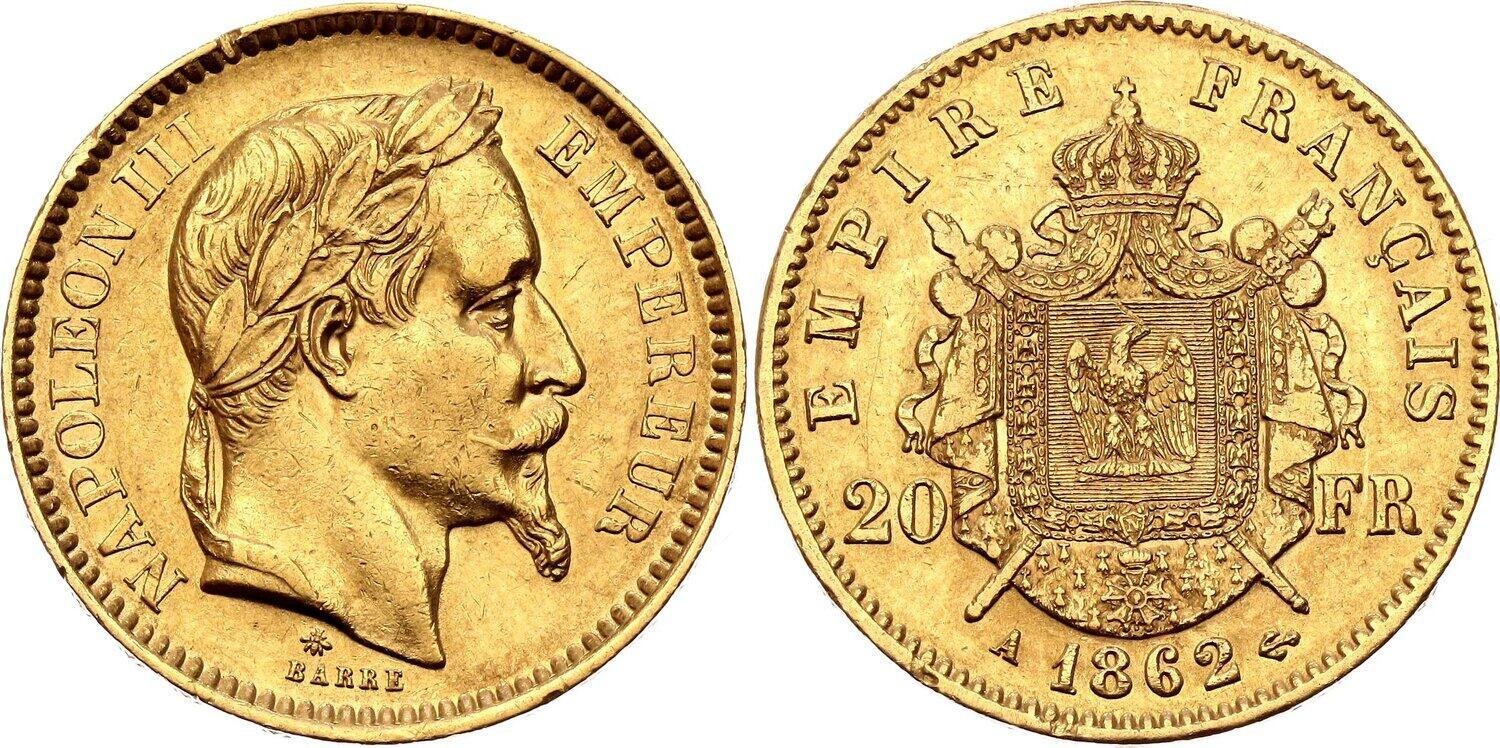
If 323 kuna is divided by approximately 5.806 grams of pure gold, an official value of about 55.6 kuna per gram of pure gold is obtained. Almost the same ratio can be seen with the Turkish gold lira, which is estimated at 367.50 kuna on the list. This shows that in the official administrative calculation there was a relatively consistent ratio toward the gold content of the coins.
Exchange rate list as a numismatic source
Such official documents are precious today for studying the currency of the NDH. From them, we learn more about the broader monetary environment in which the money of that time was used. The 100-kuna banknote is not just a piece of paper with a coat of arms and ornaments, but part of a system in which its value was officially compared with the German mark, the Italian lira, the Swiss franc, the Serbian dinar, the Turkish lira, and the gold Napoleon.
For collectors of NDH banknotes, such an exchange rate list provides additional context. It helps understand how the state calculated the value of the kuna, which foreign currencies were administratively relevant, and how gold currency was officially valued relative to paper money. Precisely for this reason, this small excerpt from the „Narodne novine” is an interesting numismatic document, as well as a testament to the wartime monetary reality of 1942.
Author: Zlatko Viščević with AI assistance
Photos: Internet Archive, Katz Auction, Numex – Coins, Banknotes & Militaria Store [www.numex.hr]