



News and information related to the euro coins.
2-euro coins: types, recognition and actual value
This page is intended for anyone looking for information about the value of euro coins, especially the 2-euro coins. If you have found an unusual coin among your collection or have read that a piece like yours is worth hundreds or thousands of euros, this guide will help you understand what you have and whether there is a reason to keep that coin.
For twenty years now, the media have been publishing stories about rare and valuable euro coins. Numerous information, as well as misinformation, also appears on social networks, forums, classified ads, and other websites. Such posts often create confusion and high expectations in people who are not usually involved in numismatics.
Not every publication about the value of a coin is accurate nor does it reflect the real situation on the numismatic market. The fact that someone is asking for several thousand euros for an ordinary coin does not mean that it is worth that much or that anyone is willing to buy it at that price. Likewise, the price of a rare collectible coin cannot be automatically attributed to a similar coin found in a trash heap.
The problem arises when a media outlet or a social media user presents such an advertisement as proof of value, without verifying whether the coin was actually sold. The reader then finds a similar example and believes that he or she has some wealth in their hands.
Numismatists and dealers have been responding to a large number of such inquiries for years. People often contact them convinced that they have a coin worth several thousand euros, but the actual estimate disappoints them. However, the expert, who does not confirm the price from the Internet, is not trying to invalidate the item by doing so. He assesses a specific example and the demand for it.
Out of the need to answer these questions clearly, understandably and in one place, this guide to euro coins was created, with a special emphasis on the 2-euro coins.
In this section, I will try to explain to you how to recognize your coin, on which its value depends and which issues can be worth more than the nominal 2 euros. I will especially clarify which coins can be found in everyday circulation and which are sold in special collector's packaging, so they should not be expected in bulk. We will also discuss the preservation, markings on the coins, casting errors, and the most common misconceptions about them.
What do we need to know about the 2 euro coins?
The 2-euro coin is part of the money we pay for every day. It has a silver-colored outer ring and a gold-colored center, but it is not made of silver and gold. Metal alloys are used to produce it. The standard diameter is 25.75 mm, and the weight is 8.50 g.
Well on the common side There is a large number 2, the inscription EURO and the map of Europe. National party It shows the motif of the issuing country. It is usually the country we look at first when trying to determine which coin we have.
Euro coins are issued by the euro area countries, and, under special agreements, Andorra, Monaco, San Marino and the Vatican. Therefore, having a coin from another country in your wallet is not unusual: official 2-euro coins can be used for payment throughout the euro area. More about euro coins.
Regular and commemorative coins
There are regular and commemorative 2-euro coins. Regular coins The nose bears the usual national motif of a particular country. This can be a coat of arms, a portrait of the ruler, a building, or another national symbol. The same motif can be repeated for years.
Commemorative coins They have a special motif that marks an event or anniversary, pays tribute to a person, or represents an important theme. The first commemorative 2-euro coin was issued by Greece in 2004, on the occasion of the Olympic Games in Athens.
Sometimes several countries issue coins with a common basic motif, for example on the occasion of the anniversary of the Rome Treaties or the Erasmus program. Although the images are similar, the issuing country, inscriptions, and minted quantities differ.
The commemorative 2-euro coins are also valid for payment throughout the Eurozone. However, A commemorative coin is not automatically rare or valuable. Many have been electrocuted in millions of copies. Overview of commemorative editions.
Which coins can we get in the kusur?
It is important to distinguish between editions released into regular circulation from those sold primarily to collectors.
Coins for circulation They are distributed through banks and are included in everyday payments. You can get such coins in a store, a cafe, or another retail outlet. However, the official release into circulation does not mean that every issue will be easily found.
Collectible editions and performances They can be sold in cards, boxes, sets, or special packaging. Some editions are not officially distributed as ordinary money for everyday payments at all.
A well-known example is the 2007 Monaco coin dedicated to Grace Kelly, with an edition of 20,000 pieces. It was intended for collector sales. However, it is misleading to present it as a coin that should be expected in a regular coin purse. Theoretically, someone could spend an example from their collection, but such a possibility does not change its original distribution method. Data on issuance.
The same motif and year can exist in both the circulating and special collector's editions. Only the packaging does not prove rarity, and the difference in distribution does not mean that the official 2-euro coin ceases to be valid as a means of payment.
How to recognize your coin?
Before requesting a price, it is necessary to determine which exact coin do you have. Check the following:
- The issuing state. Look for the name of the country, the abbreviation, or a recognizable national symbol.
- The motif. Compare the whole picture and the inscriptions, not just one detail.
- Year of publication. The same motif from different years does not have to have the same value. With commemorative coins, distinguish the year of issuance from the years marking anniversaries.
- Small markings. Letters and symbols can indicate the mint or the designer.
- Performance. When necessary, check the common side, the circumferential label, and the manufacturing method as well.
For example, on German coins the letters A, D, F, G and J indicate different mints. These are official markings, and their combinations with the year can be important for identification.
On the common side there are older and newer maps of Europe. The newer version was introduced during 2007 and 2008, depending on the issuer. Both versions are official; the older map in itself is not proof of rarity. Views of the common side.
Why is preservation so important?
Two coins of the same country, year and motif can have different values due to differences in preservation. Collectors will often pay more for a piece with better preserved details and an original surface.
VF (Very Fine) refers to a coin with visible wear, where the main details and inscriptions are recognizable. Such specimens are present among everyday money.
XF (Extremely Fine), or EF refers to a coin with slight wear, mainly on the most exposed parts. It may retain some of the original coin-molding luster.
UNC (Uncirculated) Indicates a specimen without traces of wear caused by circulation. It may have slight traces of contact with other coins during production and packaging; UNC does not necessarily mean a perfectly smooth surface without any trace.
Proof, or polished plate, is a special forging technique. Such coins often have a mirrored backing and matte-colored motifs and are sold in protective packaging. Proof is not a degree of preservation: even so made a coin can be scratched, worn or damaged. More about preservation and the technique of making.
These are the basic denominations, not the entire preservation scale. For a beginner, the most important thing is not to compare the used coin with a UNC or Proof specimen just because they have the same motif. A freshly minted coin obtained in a mint can be excellently preserved, but the luster alone is not proof of UNC.
We can compare this to cars: the same model and year of manufacture do not mean the same price for a used and worn-out example. Similarly, the coin pictured in the seller's ad may not correspond to the condition of the one in your wallet. However, a rare coin can still have additional value when used. Preservation is an important factor, but not the only one.
What does the value of a coin depend on?
Nominal value The amount is marked on the coin: in this case 2 euros. Collector market value the amount that customers are willing to pay for a particular item.
The market value is influenced by the exact edition, year, mintmark, preservation, quantity minted, availability, and demand. For certain collector's editions, the original packaging with the corresponding certificate is also important.
A small quantity of coins does not guarantee a high price. If there are not enough interested buyers for a particular issue, the price can remain relatively low. Even the fact that you see a coin for the first time does not mean that it is rare: it may just be unusual in your area.
It is also necessary to check what the quantity data covers: the examples for regular circulation, those for collector sets or their total. The total minted quantity is not the same as the quantity put into circulation. The list of issues with a low issuance is therefore not in itself a list of the coins you can expect to see in circulation.
Most common 2-euro coins do not have significant collector's value above face value. The edition that is sold in UNC condition with a certain surcharge may only be worth 2 euros in used condition.
The price in the ad is not proof of the market value
Anyone can post an ad for their coin asking for 500, 5,000, or 50,000 euros. Such an ad shows the seller’s desire, but it does not prove that there is a buyer who would pay that much.
They are more useful for assessment comparable sales achieved. It is necessary to compare the same issue, year, mintmark, execution, and similar preservation. The price of the entire set must also not be attributed solely to a single coin from that set.
Even the „sold” label on the platform does not always reveal the actual paid amount. The seller may have accepted a lower offer than the displayed price. However, more reliable comparisons are more useful than a single isolated result.
Attempts at artificially inflating prices are also possible on online auctions, for example by bidding on linked accounts. Selling platforms like eBay prohibit such behavior. Therefore, an unusually high result should be verified before accepting it as the usual market value. eBay's rules on artificially raising prices.
The retailer's retail price, the amount you could achieve by selling directly to a collector, and the retailer's purchase offer may vary. The retailer includes operating costs and profit in its price. The catalog estimate is therefore not a promise that someone will immediately offer you the same amount.
Are there any valuable coins in circulation?
There are editions that have been officially put into circulation and may have collector's value even in used condition. Among the early commemorative editions it is worth paying attention, for example, to the Finnish coin from 2004 dedicated to the expansion of the European Union. It is recognizable by stylized designs that grow out of the pillar. Official description of the release.
That does not mean that every Finnish coin, every 2004 coin or every example with a botanical motif has the same value. It is necessary to recognize the exact issue and evaluate the specific example.
For browsing the collection, a list of issues that have additional value in VF or XF condition is useful. The list of the most expensive coins, composed mainly of special collector's editions, serves a different purpose. The most expensive 2-euro coins and the coins worth seeking out in the Czech Republic are not the same list.
Hundreds or thousands of euros for a random find in a wallet are not a reasonable starting expectation. For many collectible interesting coins, it is a modest addition above the face value, and the possibility of finding a specific issue depends on its availability and distribution.
An unusual coin: a casting defect or damage?
Forging errors occur during production. They can be related to the preparation of the metal plate, its position during forging, or the condition of the forging tool. Some of these errors are of interest to collectors, but their value depends on the type, expressiveness, rarity, and demand.
Among the more pronounced errors are mis-engaging the coin in the wrong slot, for example the one intended for the other nominal value, or a significant misalignment of the coin. In coins composed of a ring and a core, errors can also occur related to these two parts. Such cases require reliable confirmation, not just an unusual appearance. Examples of islands on the wrong tiles.
A small bump, a poorly polished star, or a slight trace of a damaged tool often does not yield a significant market premium. There are collectors of such irregularities, but that is no reason to advertise every minor detail as a rarity worth thousands of euros.
An important mistake does not have to be large or immediately noticeable. An example is the 2021 2-euro Lithuanian coin dedicated to the Žuvintas Reserve. The Lithuanian Central Bank confirmed that some of the BU collector’s edition and numismatic packaging specimens have a Latvian circular inscription instead of the Lithuanian one. This shows why it is necessary to check the specific edition and packaging, and why the information about the special packaging should not be omitted from the story of rarity. Official notice of error.
Scratches, impacts, corrosion, and grinding occur after production and are not casting defects. A faintly visible letter may be a result of production, but also of normal wear and tear. Every irregularity is not a casting error, and every right error has little value.
If you suspect a significant error or forgery, an expert check is necessary. Clear photographs of both sides and the perimeter are a good start.
False errors and subsequently redesigned coins
Some coins look unusual because someone subsequently changed their surface or shape. Gilding, plating, chemical treatment, and removal of the surface layer can create the impression of a different metal. Similar confusion exists with the 1, 2, and 5 cent coins, which have had their copper coating removed.
The standard official 1 and 2 euro coins are not made of gold. A completely gold color is not proof of gold content or a rare manufacturing defect. Often it is a matter of subsequent gilding. The appearance of a coin in one color does not prove that it was struck on the wrong plate.
A shifted or rotated core also requires caution: the central part can be mechanically removed and reinserted. The core's own position is therefore not sufficient evidence of a defect in the original design.
Weight and dimensions can help in verification. A significant deviation can indicate a faulty plate, but also subsequent processing or forgery. Neither measurement in itself confirms authenticity nor value.
It is necessary to distinguish between privately colored coins and official colored versions. An example of the latter is the 2014 French edition dedicated to the fight against AIDS. The status is verified according to the issuer's data; color alone does not guarantee anything. Data about the French edition.
The most common misconceptions about 2-euro coins
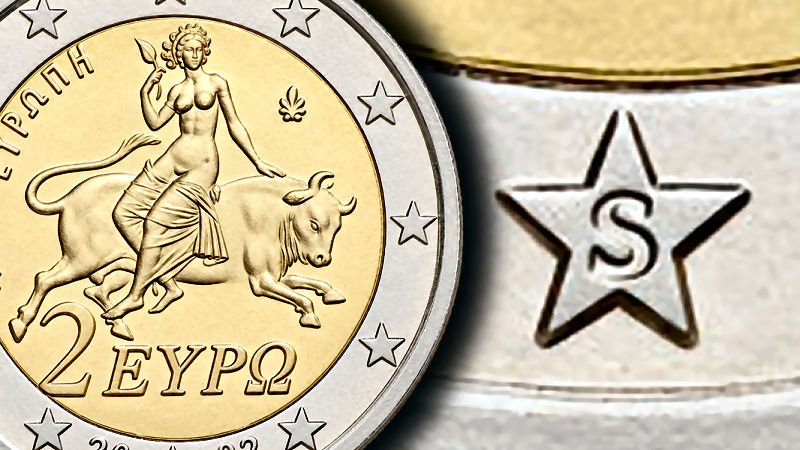
„The 2002 Greek coin with the letter S is a rare error.” The letter S with an asterisk indicates that this specimen was made in Finland, which participated in the production of Greek euro coins. This is an official designation, not a mistake. In itself, it does not carry a value of hundreds or thousands of euros.
„The upside-down inscription on the edge means a mistake.” In conventional issues, both orientations of the obverse inscription can appear relative to the sides of the coin. The direction of the inscription itself is therefore not evidence of rarity.
„All the coins from 2002 are worth more because they are the first ones.” Many of them were produced in huge quantities at that time. Also, in the years 1999, 2000 and 2001, there were no errors on certain euro coins: production began before the introduction of euro cash in 2002.
„The old portrait of the ruler means that the coin has become rare.” A change in the ruler or the national motif does not automatically change the availability of previously issued copies. It is necessary to check the year, the quantity minted, and the preservation status.
„They say it’s rare, so it must be worth a lot.” Such a claim without information about the issuance and evidence of actual sales says little. It is important who makes the claim, on what basis, and whether the claim applies specifically to your copy.
How to start collecting and properly storing coins?
To start with, you can focus on different national motifs or commemorative coins that you get in a souvenir shop. Later on, you can focus your collection on a specific country, theme, or period. You don't have to buy every edition right away.
Hold the coins by the edge and store them in suitable capsules, holders, or albums intended for numismatists. Avoid materials with PVC, moisture, and contact with the surface of the fingers. Keep the original boxes, cards, and certificates of collectible editions.
Do not polish the coins to increase their value. Cleaning can damage the original surface and cause scratches. A worn-out copy will not become UNC or Proof, and its collector's value may be reduced. If you are unsure how to proceed, leave it in its original condition until an expert inspection. Tips for keeping coins.
Where and how to sell a coin?
You can offer the coin to a collector, a numismatic dealer, through an ad or a specialized sales platform. Numismatic auctions may be suitable for more valuable examples.
Before selling, determine the edition, take sharp photos of both sides and, if necessary, the edges. Indicate the year, the coin minting mark, condition, and the accompanying packaging. Instead of stating „very rare,” which is not verified, write down the data that you can verify.
It is not enough to find an interesting coin; it is also necessary to find a buyer who is willing to pay for it. Publishing an ad does not mean that sales will be quick or that they will be made at the desired price at all.
Expect commissions, packaging, delivery, and the time required to find a buyer. For example, if you sell a 2-euro coin for 4 euros, the difference is only 2 euros before costs. Photographing, mailing, and going to the post office can take more time than this difference justifies.
If you want expert advice, send clear photos and basic information. A photo of one blurry detail or a link to an expensive ad is usually not enough for a reliable assessment.
Detailed recognition and verification of values
This guide provides the basics for understanding 2-euro coins. A detailed examination is required to verify a particular specimen, linking the photograph to the country, year, mint mark, design, and condition.
This is exactly what the catalog is based on. DPC-2EUR, This guide is prepared as a practical guide for identifying and verifying the market values of 2-euro coins. Separate data for used and non-counterfeit specimens, as well as special collector's editions, help avoid erroneous comparisons.
When checking your coin, start with its identification and preservation. Only then should you compare the prices of the corresponding specimens. This will make it easier for you to decide whether it is worth keeping for a collection, offering it for sale, or simply continuing to use it for payment.
Exploring euro coins can be fun and encourage you to get acquainted with numismatics. A collection doesn't have to be expensive to be interesting. Just keep realistic expectations: The trinket from the pocket mostly remains a trinket, and the collector's value is determined by inspection.
Author: Zlatko Viščević
Data sources: the manuscript of the DPC-2EUR catalogue and an earlier text by the author „Rare euro coins: A chance for profit or a serious mistake?”; European Central Bank: Euro coins, common side i special editions; Heritage Auctions: coin condition; U.S. Mint: keeping coins; NGC: otkovi na pogrešnim pločicama; Bank of Lithuania: pogrešan obodni natpis na izdanju Žuvintas iz 2021.; eBay: umjetno podizanje cijena; Sidaction: francusko prigodno izdanje iz 2014.
Ključne riječi: numizmatika, novac, euro, eurokovanice, kovanice, 2 eura, vrijednost kovanica, rijetke kovanice, prigodne kovanice, redovne kovanice, kovanice iz optjecaja, kolekcionarske kovanice, očuvanost kovanica, greške kovanja, kovničke oznake, grčka kovanica 2002, Grace Kelly, prodaja kovanica, DPC, Zlatko Viščević
News and information related to the euro coins.

Greek 2-euro coin from 2002 with the letter „S”: A rarity or an internet delusion?
Read more: Grčka kovanica od 2 eura iz 2002. sa slovom „S”: Rijetkost ili internetska zabluda?Na internetu se već godinama pojavljuju tvrdnje da je grčka kovanica od 2 eura iz 2002. godine, koja u jednoj od zvjezdica ima slovo „S”, iznimno rijetka i vrijedna nekoliko tisuća, pa čak i desetaka tisuća eura. Takve informacije redovito izazivaju veliko zanimanje, osobito među ljudima koji se inače ne bave numizmatikom. Mnogi tada počinju…
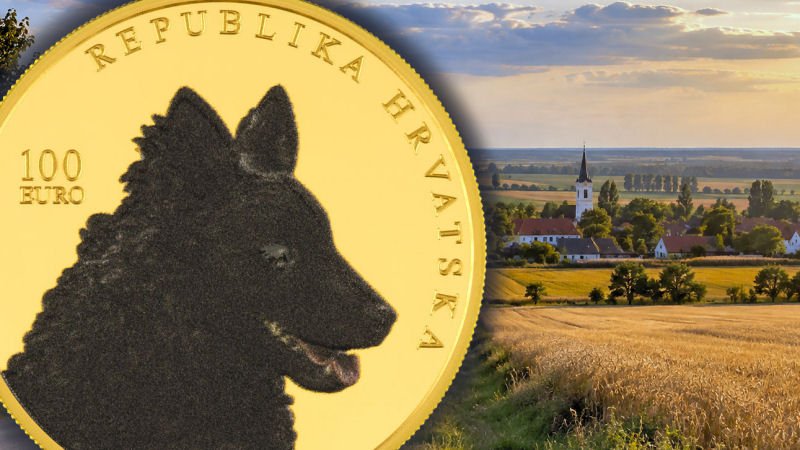
Croatian Shepherd on new Croatian gold and silver coins
Read more: Hrvatski ovčar na novim hrvatskim zlatnicima i srebrnjacimaHrvatska narodna banka, u suradnji s Hrvatskom kovnicom novca, predstavlja novo numizmatičko izdanje „Hrvatski ovčar” iz serije „Autohtona Hrvatska”. Izdanje obuhvaća tri zlatnika i dva srebrnjaka, a posvećeno je domaćoj pasmini pasa koja je stoljećima pratila život i rad slavonskih seoskih gospodarstava. Kovanice nose godinu izdanja 2026., a u prodaji će biti od 22. listopada…
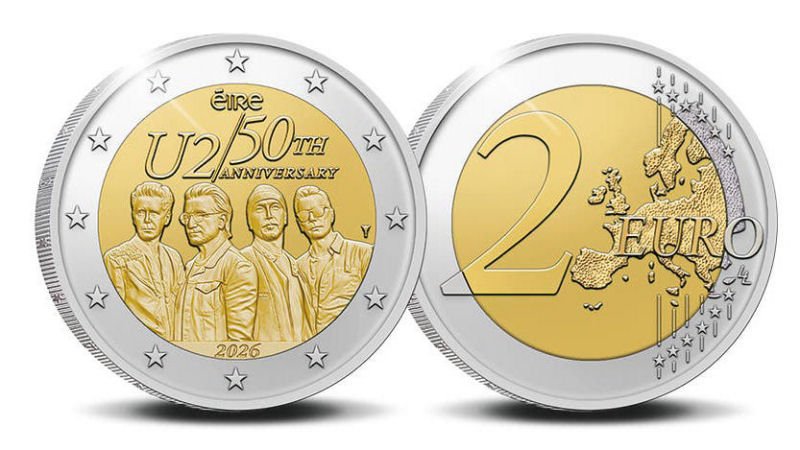
Ireland issued a commemorative 2-euro coin to mark the 50th anniversary of the rock band U2
Read more: Irska izdala prigodnu kovanicu od 2 eura povodom 50 godina rock grupe U2Središnja banka Irske (Central Bank of Ireland) 25. rujna 2026. predstavila je novu prigodnu kovanicu od 2 eura posvećenu 50. obljetnici osnutka irske rock grupe U2. Kovanica prikazuje sva četiri člana sastava, Adama Claytona, Bona, The Edgea i Larryja Mullena Jr., a njezin je autor irski dizajner Shaughn McGrath. Novo izdanje povezuje jedno od najprepoznatljivijih…
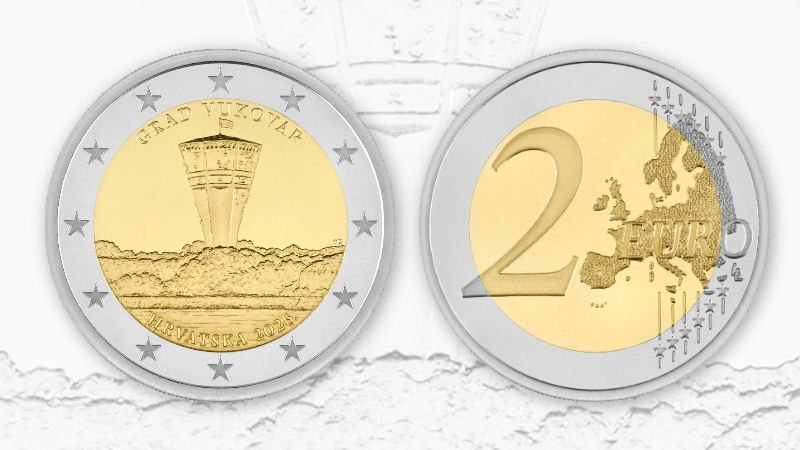
Vukovar on the new Croatian commemorative 2-euro coin
Read more: Vukovar na novoj hrvatskoj prigodnoj kovanici od 2 euraHrvatska narodna banka 21. rujna 2026. pustila je u optjecaj novu prigodnu kovanicu od 2 eura „Grad Vukovar”. Izdanje je dio serije „Hrvatski gradovi”, a posvećeno je gradu iznimnoga povijesnog, kulturnog i simboličnog značenja za Republiku Hrvatsku. Kovanica je izdana u ukupnoj količini od 500.000 komada. Za zamjenu građanima predviđeno je 490.000 primjeraka, što je…
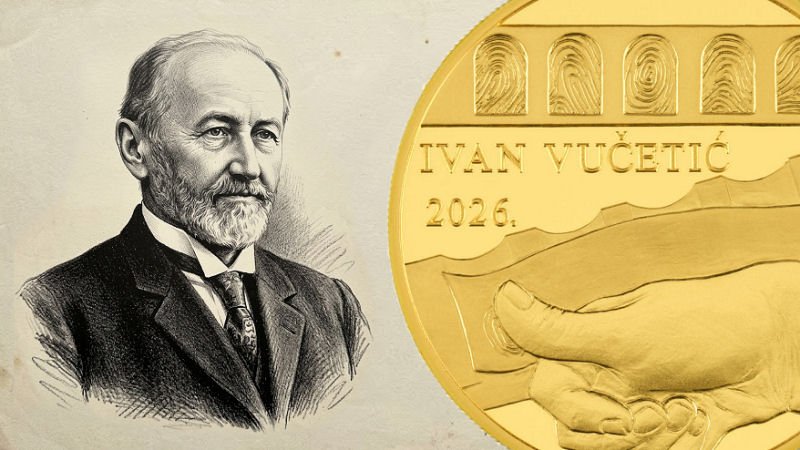
Ivan Vučetić on new Croatian gold and silver coins
Read more: Ivan Vučetić na novim hrvatskim zlatnicima i srebrnjakuHrvatska narodna banka i Hrvatska kovnica novca predstavile su novo numizmatičko izdanje posvećeno Ivanu Vučetiću, hrvatskom pioniru daktiloskopije čiji je sustav identifikacije osoba pomoću otisaka prstiju ostavio trajan trag u razvoju moderne kriminalistike. Izdanje pod nazivom „Inovacije Ivana Vučetića“ dio je serije „Hrvatski inovatori“, a sastoji se od dva zlatnika i jednog srebrnjaka, pri čemu…
CNB announced three new editions: Vukovar on 2 euros, Ivan Vučetić and the Croatian Shepherd dog on commemorative coins
Read more: HNB najavio tri nova izdanja: Vukovar na 2 eura, Ivan Vučetić i hrvatski ovčar na prigodnim kovanicamaHrvatska narodna banka najavila je nova hrvatska prigodna i numizmatička izdanja za 2026. godinu. Najviše pozornosti svakako privlači nova prigodna optjecajna kovanica od 2 eura „Grad Vukovar”, koja će biti izdana u čak pola milijuna primjeraka, što je dosad rekordna količina za hrvatske prigodne eurokovanice. Uz nju su najavljena i nova zlatna i srebrna numizmatička…
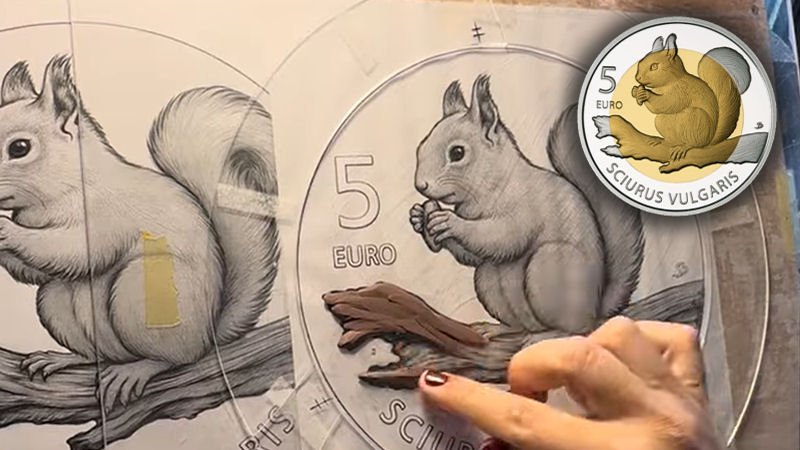
Red Squirrel: Weeks of Work in 90 Seconds
Read more: Crvena vjeverica: Tjedni rada u 90 sekundiKolekcionari i numizmatičari najčešće vide samo završenu, otkovanu kovanicu, dok im zahtjevan postupak koji prethodi kovanju uglavnom ostaje skriven. Talijanska dizajnerica kovanica i kiparica Sandra Deiana zabilježila je nastanak izvornoga modela za luksemburšku kolekcionarsku kovanicu od 5 eura posvećenu crvenoj vjeverici. Više tjedana istraživanja, crtanja, modeliranja i ispravljanja sažela je u videozapis koji traje približno…
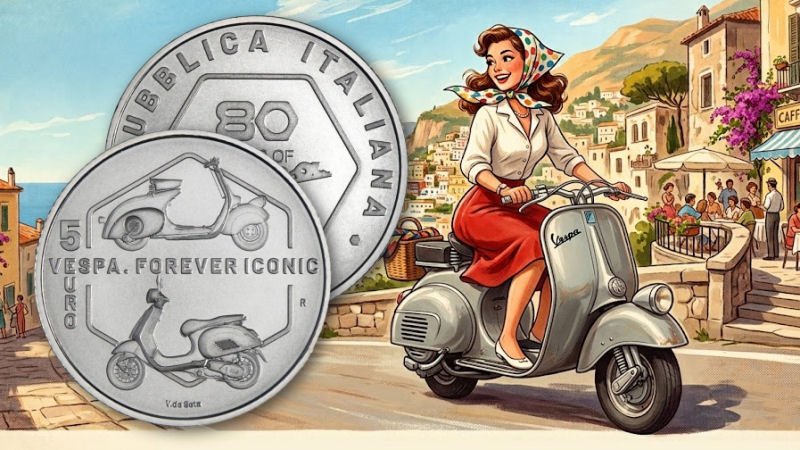
Vespa on the new Italian 5-euro commemorative coin
Read more: Vespa na novom talijanskom prigodnom srebrnjaku od 5 euraTalijanska kovnica novca obilježila je 80. obljetnicu Vespe prigodnim srebrnjakom nominalne vrijednosti 5 eura. Novo izdanje iz 2026. godine posvećeno je jednom od najpoznatijih proizvoda talijanske industrije, ali i simbolu koji je odavno prerastao svoju prvotnu ulogu običnog gradskog prijevoznog sredstva. Na kovanici su povezani početak i suvremeno razdoblje Vespe. Prikazani su prvi serijski model…
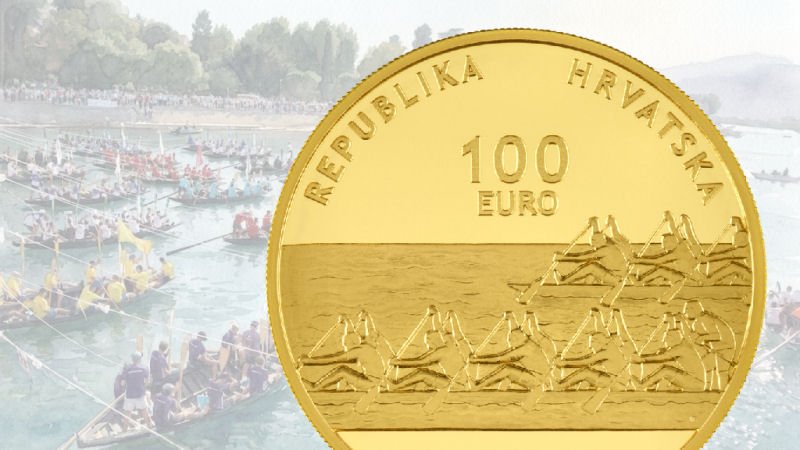
New Croatian gold and silver coins dedicated to the Neretva boat
Read more: Novi hrvatski zlatnici i srebrnjaci posvećeni neretvanskoj lađiHrvatska narodna banka i Hrvatska kovnica novca nastavljaju seriju prigodnog numizmatičkog programa „Hrvatski brodovi“ novim izdanjem posvećenim neretvanskoj lađi, jednom od najprepoznatljivijih tradicijskih plovila Hrvatske. Novo izdanje obuhvaća tri zlatnika i dva srebrnjaka, različitih nominalnih vrijednosti i masa, izrađenih od zlata i srebra čistoće 999,9/1000. Kovanice su posvećene plovilu koje je stoljećima bilo neraskidivo povezano…
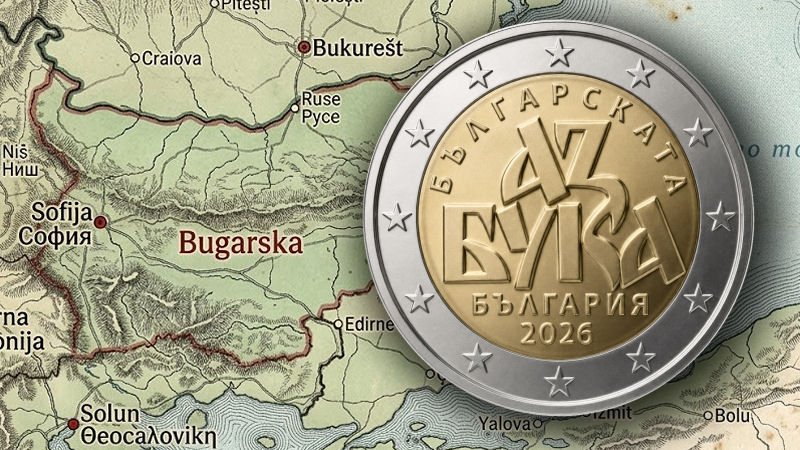
Bulgarian Euro drama: it hasn't even started, and it's already stuck
Read more: Bugarska euro drama: nije ni krenulo, već je zapeloBugarska još nije ni započela svoj puni život u eurozoni, a već se našla u prvoj ozbiljnoj numizmatičko-političkoj raspravi. U središtu priče nalazi se prva bugarska prigodna kovanica od 2 eura, planirana za 2026. godinu, posvećena bugarskoj abecedi (azbuci). Tema je naizgled kulturna, obrazovna i numizmatička, ali je vrlo brzo otvorila pitanje nacionalnog identiteta, povijesnog…

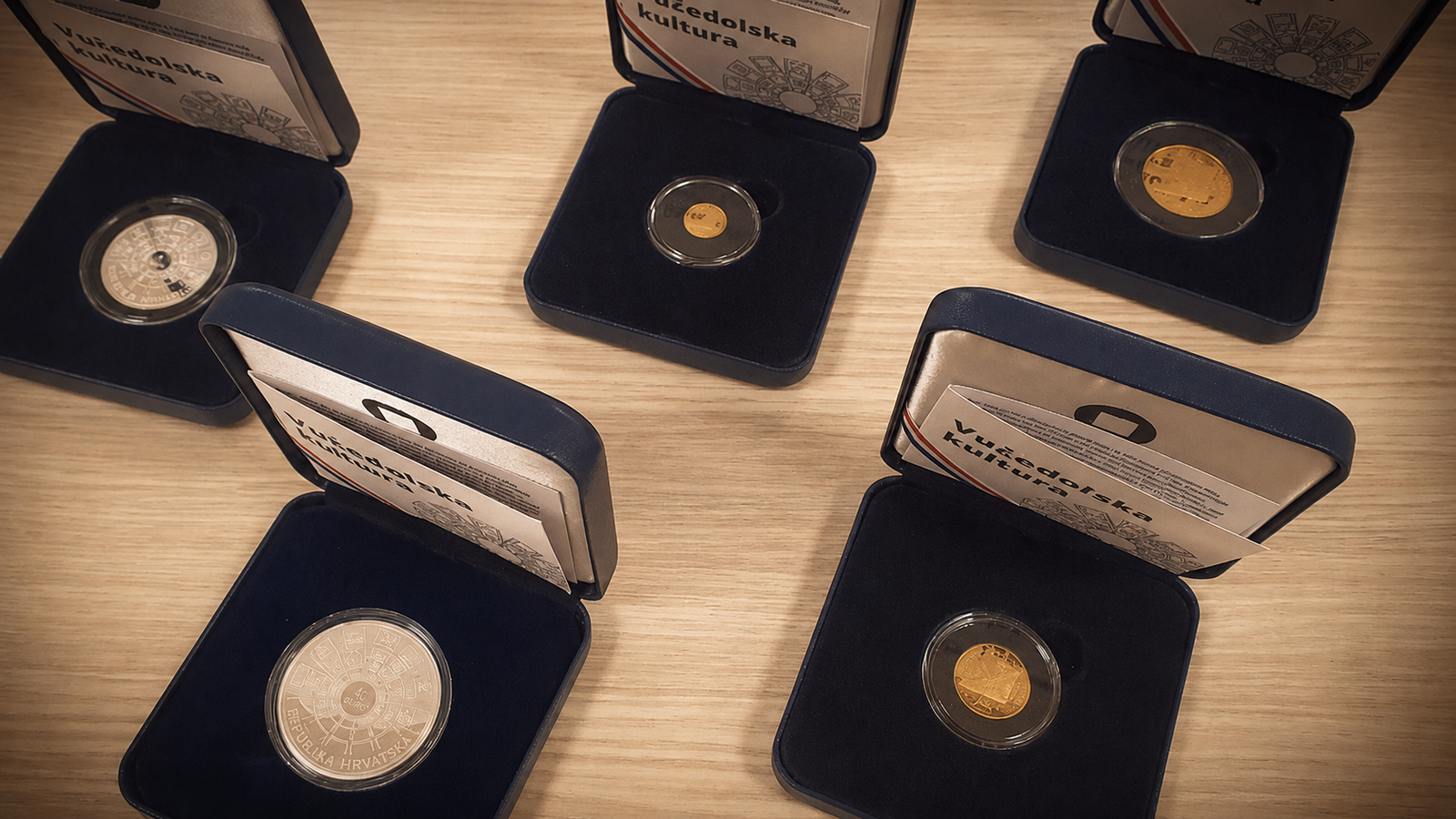
New Croatian gold and silver coins dedicated to the Vučedol culture
Read more: Novi hrvatski zlatnici i srebrnjaci posvećeni vučedolskoj kulturiHrvatska narodna banka, u suradnji s Hrvatskom kovnicom novca, izdala je novu seriju prigodnog novca pod nazivom „Vučedolska kultura“, kojim se nastavlja serija „Hrvatska baština“. Ovim izdanjem odaje se počast jednoj od najznačajnijih prapovijesnih kultura na prostoru današnje Hrvatske, čiji su tragovi ostavili dubok pečat u europskoj kulturnoj i civilizacijskoj povijesti. Kovanice iz ovog izdanja…
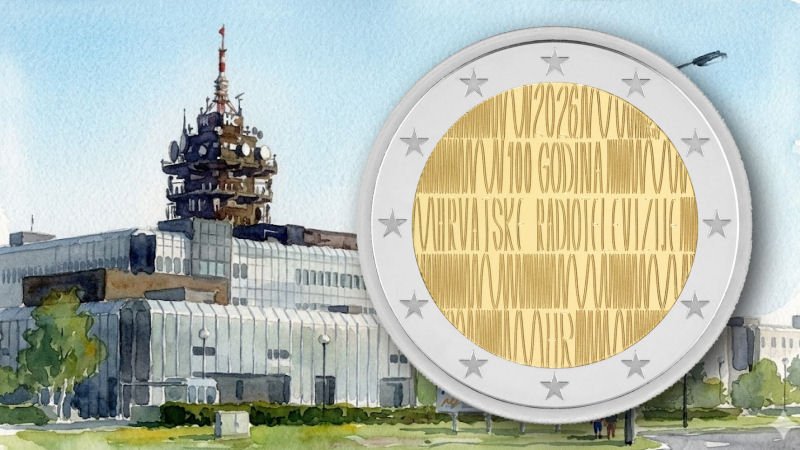
New Croatian 2-euro commemorative coin: „100 years of the Croatian Radiotelevision”
Read more: Nova hrvatska prigodna kovanica od 2 eura: „100 godina Hrvatske radiotelevizije”Hrvatska narodna banka izdaje uskoro novu prigodnu optjecajnu kovanicu od 2 eura posvećenu stotoj obljetnici Hrvatske radiotelevizije. Riječ je o izdanju kojim se obilježava važan trenutak hrvatske medijske povijesti, a to je početak emitiranja Radija Zagreb 15. svibnja 1926. godine. Toga se dana, u 20:30 sati, prvi put čuo program Radija Zagreb na valnoj duljini…
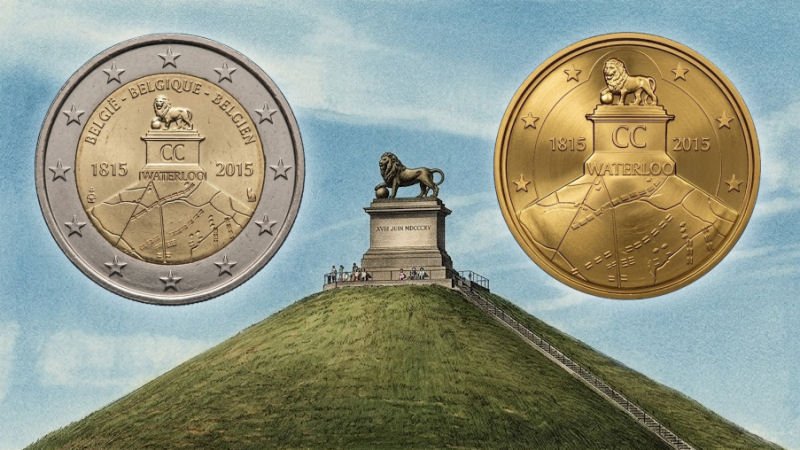
Belgian-French “diplomatic war” over the 2-euro coin
Read more: Belgijsko-francuski “diplomatski rat” oko kovanice od 2 euraNumizmatika često odražava povijest, identitet i kolektivno sjećanje, no rijetko kada izazove otvoreni politički sukob među državama. Upravo se to dogodilo 2015. godine, kada je Belgija planirala izdati prigodnu kovanicu od 2 eura povodom 200. obljetnice bitke kod Waterlooa. Umjesto rutinskog numizmatičkog izdanja, cijeli projekt prerastao je u međunarodnu kontroverzu, u kojoj je ključnu ulogu…
Official proof set of Croatian euro coins 2026 dedicated to Vukovar
Read more: Službeni proof set hrvatskih euro kovanica 2026. posvećen VukovaruHrvatska kovnica novca najavila je novo godišnje izdanje službenog seta hrvatskih euro kovanica s godinom kovanja 2026., izrađeno u kvaliteti otkova polirana ploča, odnosno proof-u. Izdanje nosi naziv Euro set Vukovar 2026. Proof, a bit će dostupno u vrlo ograničenoj količini od samo 500 komada. Riječ je o službenom kompletu koji sadrži sve apoene hrvatskog…
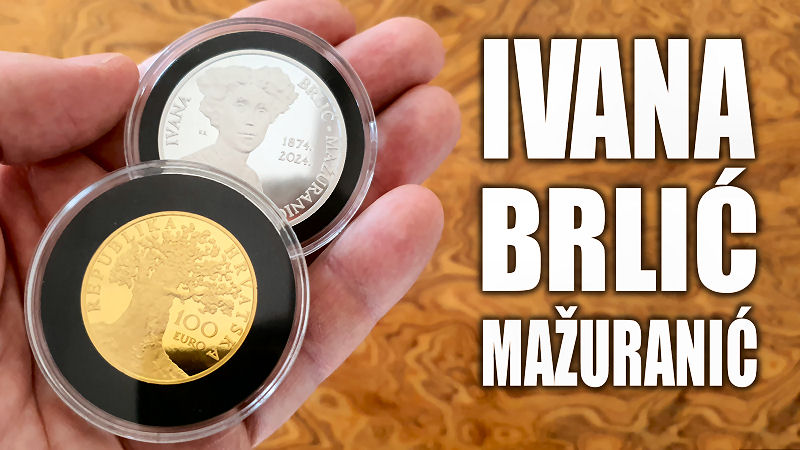
Overview of commemorative coins: Croatia 4 and 100 Euros 2024 Ivana Brlić Mažuranić
Read more: Prikaz prigodnih kovanica: Hrvatska 4 i 100 eura 2024. Ivana Brlić MažuranićU ovom videu predstavljamo nove hrvatske prigodne euro kovanice posvećene 150. obljetnici rođenja Ivane Brlić Mažuranić, naše poznate književnice. Ovo prigodno izdanje sastoji se od srebrnjaka nominalne vrijednosti 4 eura i zlatnika od 100 eura. I srebrnjak i zlatnik imaju čistoću metala 999,9 i sadrže po 1 uncu plemenitog metala. Kovanice su otkovane u tehnici…
Overview of commemorative coins: Croatia 4, 10, and 100 euros 2024. Brusnik black lizard
Read more: Prikaz prigodnih kovanica: Hrvatska 4, 10 i 100 eura 2024. Brusnička crna guštericaU ovom videu predstavljamo nove hrvatske prigodne euro kovanice posvećene jednoj našoj autohtonoj životinjskoj vrsti, brusničkoj crnoj gušterici (Podarcis melisellensis melisellensis). Ova serija kovanica dio je serije „Autohtona Hrvatska“ i sastoji se od dva zlatnika (100 i 10 eura), te jednog srebrnjaka (4 eura). Autor odličnog likovnog rješenja za ovaj kovani novac je naš proslavljeni…

Overview of gold coins: Croatia 10, 25 and 100 Euros 2023. Lacemaking in Croatia
Read more: Prikaz zlatnika: Hrvatska 10, 25 i 100 eura 2023. Čipkarstvo u HrvatskojU ovom videu predstavljamo prigodne hrvatske euro zlatnike posvećene čipkarstvu u Hrvatskoj. Ova izdanja predstavljaju nastavak teme koja je započeta sa zlatnikom od 10 kuna iz 2012. godine i na taj način se ističe važnost čipkarstva kao dijela hrvatske kulturne baštine. Prikazani zlatnici su iskovani u tehnici visokog kovničkog sjaja, izrađeni su od zlata čistoće…
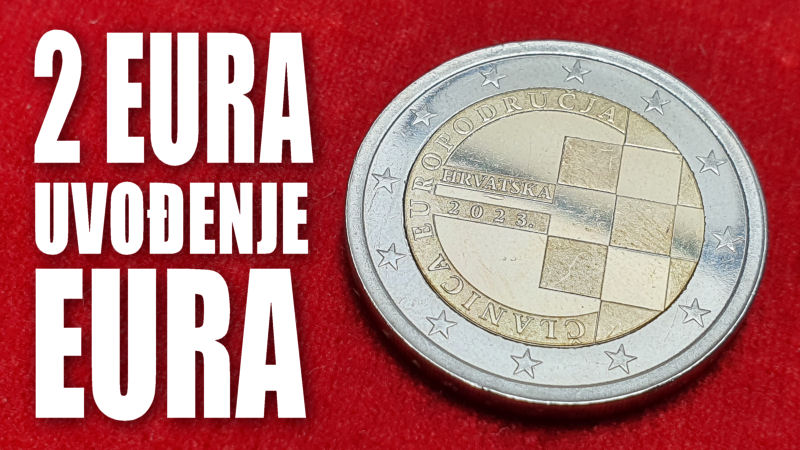
Coin overview: Croatia 2 euros 2023. Introduction of the euro as the currency in the Republic of Croatia
Read more: Prikaz kovanice: Hrvatska 2 eura 2023. Uvođenje eura kao novčane jedinice u Republici HrvatskojNakon uvođenja eura, Hrvatska je dobila i svoju prvu prigodnu kovanicu od 2 eura. Prva hrvatska prigodna euro kovanica je posvećena uvođenju eura kao novčane jedinice u Republici Hrvatskoj. Ova kovanica je puštena u optjecaj 15.09.2023. i odmah se susrela sa salvom kritika; od samog dizajna i prigode povodom koje je izdana, te načina distribucije…

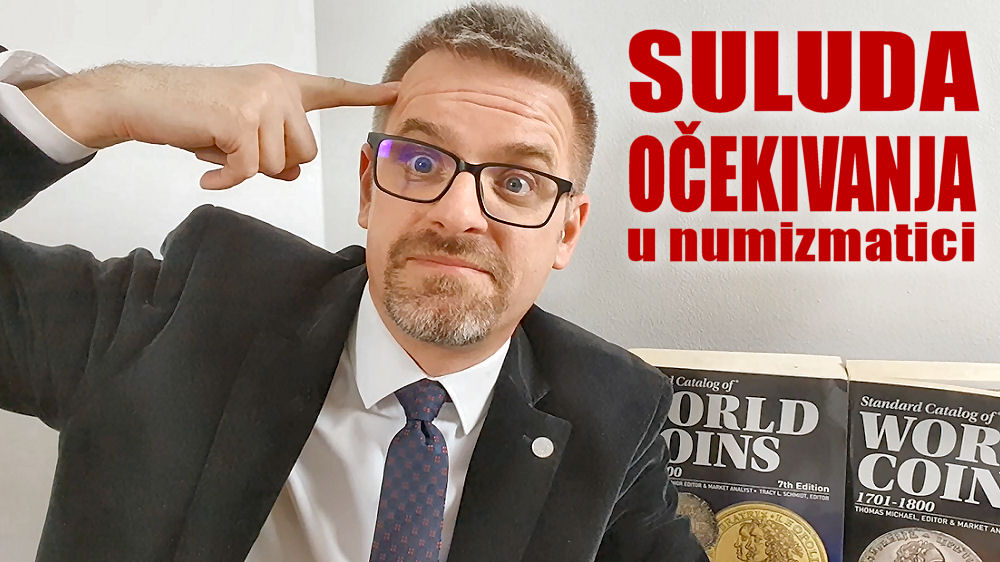
Unrealistic expectations in numismatics
Read more: Suluda očekivanja u numizmaticiU numizmatičkom svijetu ima svega i svačega; normalnih i divnih ljudi, društvenog prosjeka, ali i potpunih luđaka i psihopata. Isto tako, jedan dio ljudi je potpuno normalan u svakodnevnom životu, ali ima suluda očekivanja kad je numizmatika u pitanju. Od tih očekivanja i uvjerenja ne odustaju i ne daju se nikako urazumiti. U današnjem videu…

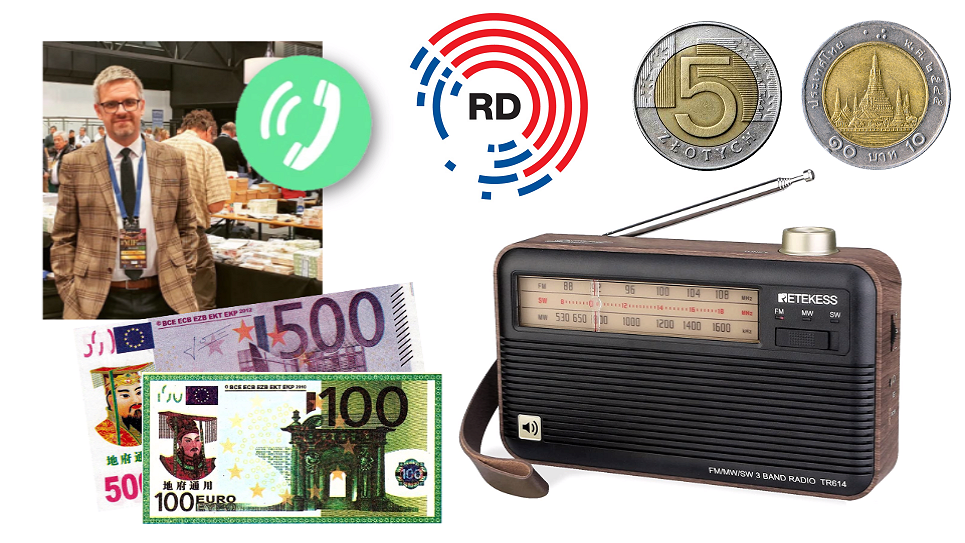
Zlatko Viščević's statement for Radio Dalmacija on the topic of coins similar to the euro and Chinese funeral money
Read more: Izjava Zlatka Viščevića za Radio Dalmaciju na temu kovanica sličnih euru i kineskom pogrebnom novcuU današnjem javljanju za Radio Dalmaciju govorimo o kovanicama koje su slične kovanicama eura, a koje vrijede bitno manje od njih. Takve kovanice se mogu podmetnuti neupućenim građanima kao euro kovanice i na taj način ih se prevariti. Uz malo pažnje, moguće je relativno lako utvrditi da se ne radi i kovanicama eura. Puno opasniji…