





Italian Mint marked the 80th anniversary Wasps with a commemorative silver coin with a face value of 5 euros. The new 2026 edition is dedicated to one of the most famous products of the Italian industry, as well as a symbol that has long outgrown its original role as a common urban means of transport.
The coin connects the beginning and the modern era of the Vespa. It depicts the first production model, the 1946 Vespa 98, and the modern Vespa Primavera created for the 80th anniversary. This summarizes eight decades of development of a scooter that has left a strong mark on transportation, industrial design, and popular culture on a small numismatic surface.
Two Vespa models on the same coin
The visual design of the silver coin was created by the Italian artist and medallist Valerio De Seta.
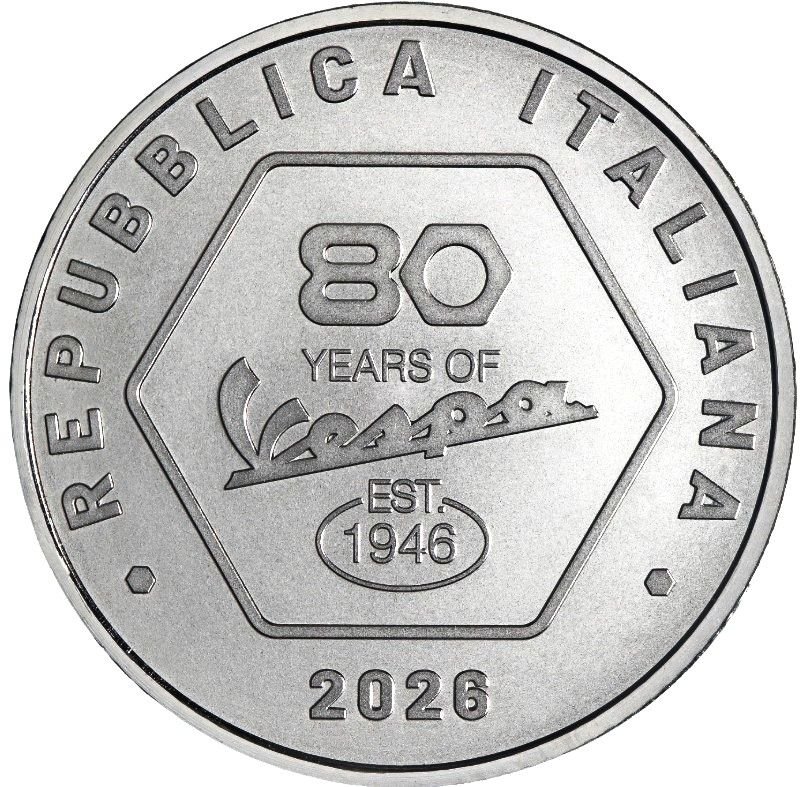
On the face of the coin is the sign of the 80th anniversary of the Vespa. In the center is the brand's recognizable logo, placed inside a hexagonal frame. Along the upper edge is the inscription „REPUBBLICA ITALIANA”, while the year of issue 2026 is placed in the lower part.
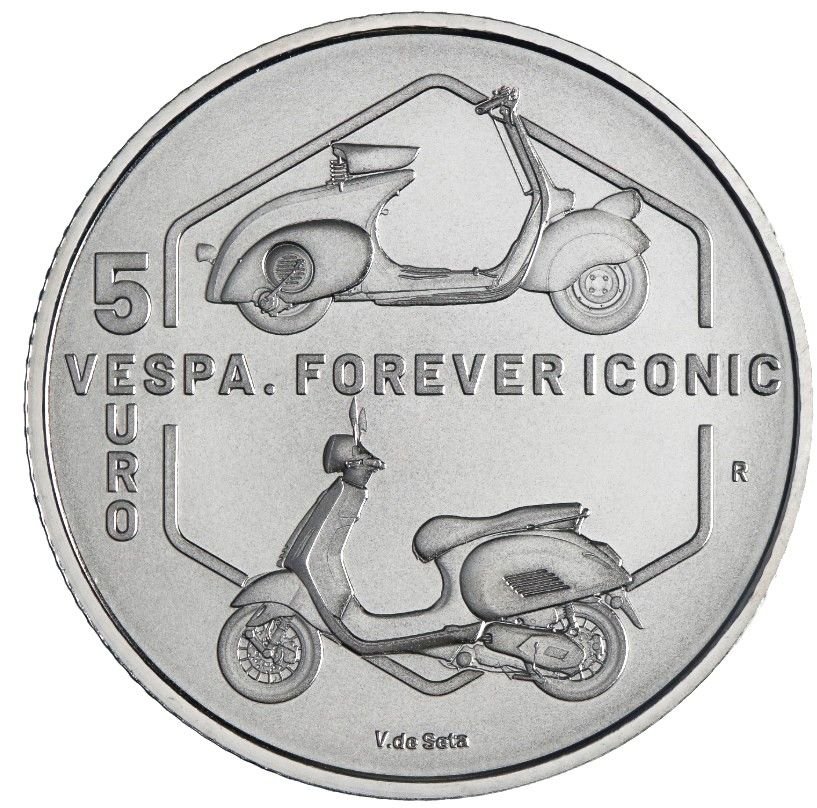
The reverse side features the main motif of this edition. In the upper section is a 1946 Vespa 98, the model that launched series production. Below it is the Vespa Primavera 80th Anniversary, a contemporary interpretation of the classic scooter. Between them is the inscription: "VESPA. FOREVER ICONIC.".
The motifs are reunited by a hexagonal frame, which connects to Piaggio's historical logo. The face value „5 EURO” is printed vertically on the left side. The letter E is stylistically connected to the name Vespa and the currency symbol, resulting in an interesting typographic solution.
To the right of the main view is the letter „R”, the mint mark of Rome, while along the lower edge is the author's name in the form „V. de Seta”.
Characteristics of commemorative coins:
- face value: 5 euro
- Metal purity: 925/1000 silver
- mass: 18 g
- diameter: 32 mm
- rim: toothed
- Forging quality: BU
- Edition: 5,000 copies
- Year of release: 2026.
- visual design by: Valerio De Seta
- Mint: Rome
- sales start date: June 25, 2026.
- selling price: 80 euros
- Packaging: box and certificate of authenticity
The coin is delivered in a protective capsule, placed in a presentation box. Each specimen comes with a corresponding certificate of authenticity.
From a post-war vehicle to a global icon
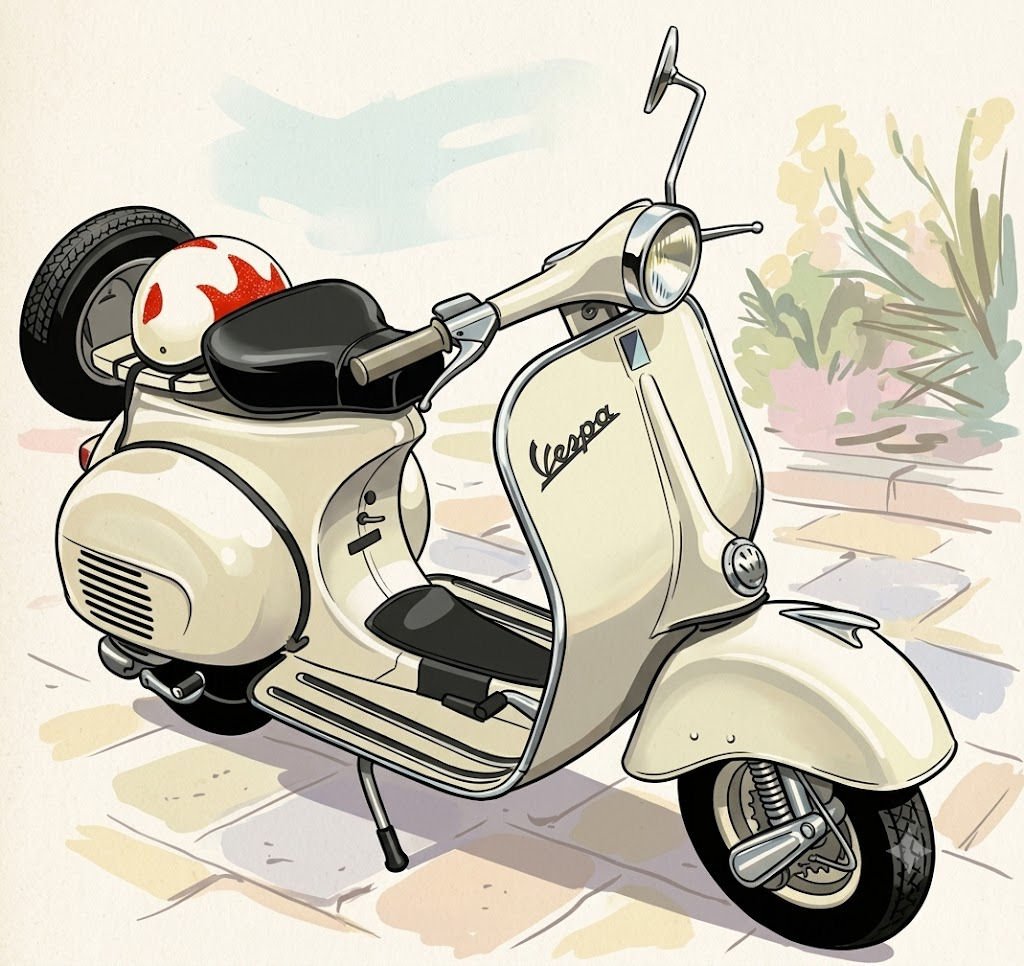
The Vespa was introduced in 1946, at a time when Italy was still recovering from the aftermath of World War II. The country needed an affordable and practical vehicle that the population could use to get around the damaged city streets and roads.
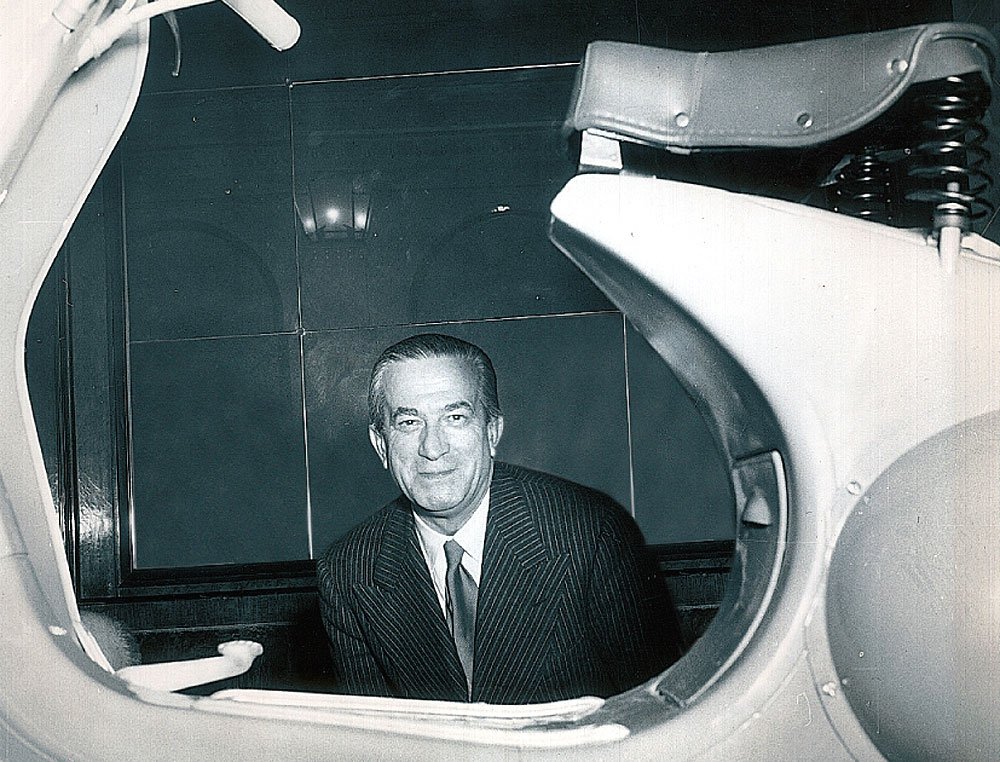
Before the war, the Piaggio company was primarily known for producing airplanes, aviation parts, and railway vehicles. After its industrial facilities suffered severe damage, owner Enrico Piaggio decided to shift production to a vehicle suitable for the needs of the postwar population.
The task of developing the new scooter was given to aeronautical engineer Corradino D'Ascanio. His experience in aircraft design influenced the shape and technical solutions of the Vespa. Instead of a conventional motorcycle, he designed a vehicle with an open frame, a flat foot area, and concealed mechanical components.
Such a construction made getting in and out easier, and better protected the driver and his clothing from engine oil, dust, and other impurities. The vehicle was simpler for daily use than many motorcycles of the time, which significantly contributed to its popularity.
How did Vespa get its name?
According to a well-known story, during the presentation of the prototype, Enrico Piaggio noticed its wide rear end, narrow middle section, and characteristic engine sound. The vehicle's appearance and sound reminded him of a wasp, so he allegedly exclaimed:
„It looks like a Vespa!”
In translation, „It looks like a wasp!”
The name Vespa soon became the official name of the new scooter. It proved to be extremely successful because it was short, easy to remember, and well connected to the vehicle's recognizable shape.
Vespa as part of popular culture
Over the decades, the Vespa evolved from a practical means of transportation into one of Italy's most famous symbols. It became associated with youth, freedom of movement, city life, travel, and distinctive Italian style.
The 1953 film Roman Holiday played an important role in the international popularization of the Vespa. Audrey Hepburn and Gregory Peck ride a Vespa through the streets of Rome, and the scenes from the film became part of the history of world cinematography.
After that film, the Vespa was increasingly used in photography, advertising, fashion, and music. Its shape became so recognizable that the scooter could represent Italy even without additional captions or explanations.
Vespa also enabled easier access to motorized transport for a large number of citizens, including women and youth. The open frame, simple operation, and practical design made it accessible to a wide range of users. Because of this, the concepts of personal freedom, independence, and social change in post-war Europe are often associated with the Vespa.
Industrial design as a theme of commemorative coins
Countries most often depict historical figures, national anniversaries, monuments, cultural heritage, or natural landmarks on commemorative coins. The issue dedicated to the Vespa shows that a successful industrial product can also become an important part of national identity.
The Vespa was not chosen solely for its longevity. Its importance stems from the combination of technical usability, characteristic design, and a strong presence in everyday life. Few vehicles have managed to retain such a recognizable basic appearance over eight decades.
The depiction of the Vespa 98 and Vespa Primavera models on the same coin clearly shows the continuity of this brand. The first model represents post-war reconstruction and the beginning of mass motorization, while the contemporary model confirms that the original design idea remained recognizable even in the 21st century.
For collectors, it's particularly interesting that this issue touches on numismatics, motorcycle history, industrial design, and popular culture. That's why the silver coin could appeal to a much broader range of buyers than the usual audience that follows Italian commemorative issues.
Author: Zlatko Viščević with AI assistance
Photos: Italian State Printing Works and Mint, Wikipedia