Yugoslavia

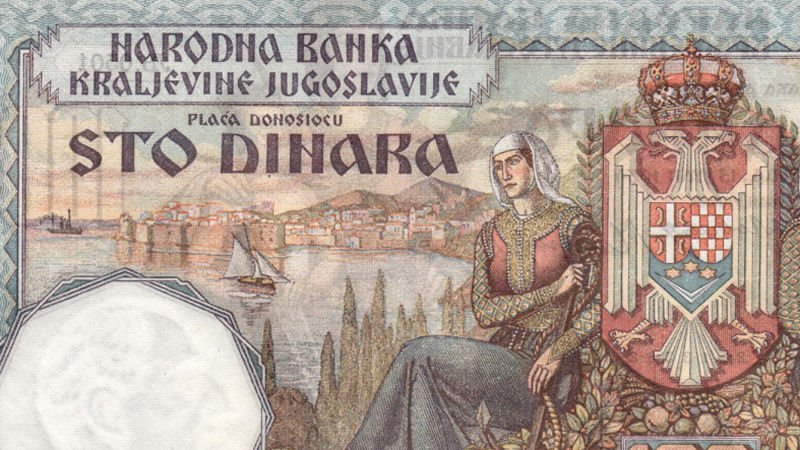
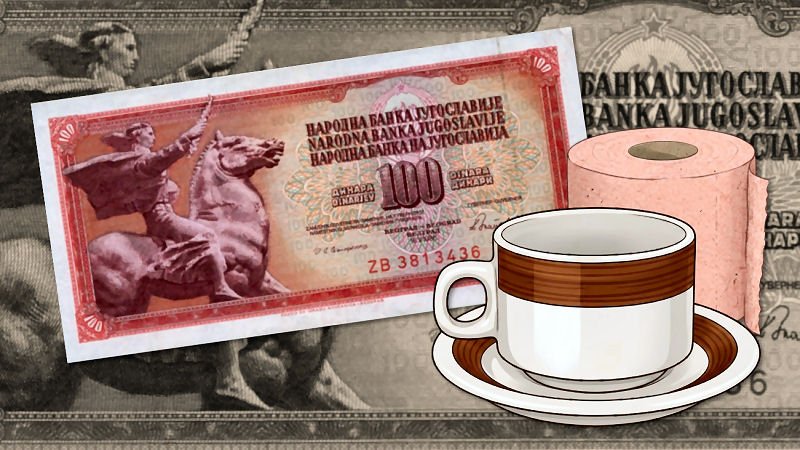
Prices from 40 years ago: A 100-dinar „Horse” – enough for a coffee and a roll of toilet paper, but not for a beer

We are once again witnessing inflation and the gradual loss of the value of money. Until recently, a 100 kuna banknote still represented „something,” while today 13 euros is almost „nothing.” It is not uncommon for a „round” of drinks at a café to cost that much. And a 100 euro banknote, which until recently was „something,” today
Prices from 40 years ago: A 100-dinar „Horse” – enough for a coffee and a roll of toilet paper, but not for a beer Read more »

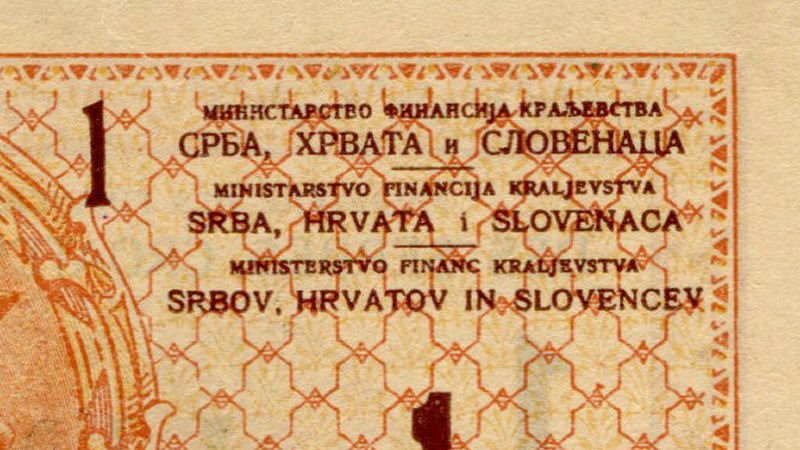
The enigmatic short-term circulation of the 100-dinar banknote of the National Bank of the Kingdom of Yugoslavia dated July 15, 1934.

It is known that the banknotes of the Kingdom of Serbs, Croats and Slovenes and the Kingdom of Yugoslavia are the product of the „French school“ of banknote printing. The first issues of royal Yugoslav banknotes (with the exception of the 10 dinar banknote of November 1, 1920, which was produced by the American Bank Note Co., New York) were designed and manufactured

The enigmatic short-term circulation of the 100-dinar banknote of the National Bank of the Kingdom of Yugoslavia dated July 15, 1934. Read more »

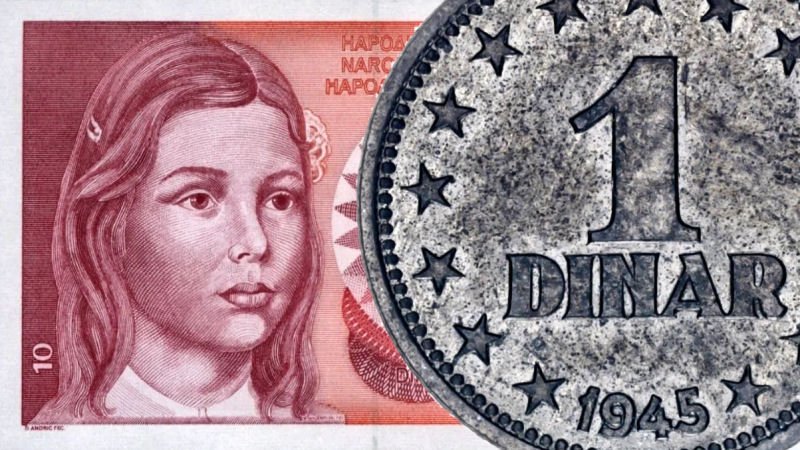
Exchange rate of the Yugoslav dinar 1945-1990.

The history of the exchange rate of the Yugoslav dinar from the end of the Second World War to 1990 reflects profound changes in monetary policy, the economic system, and the country's international position. In a numismatic sense, understanding the exchange rate relations is crucial for the proper interpretation of the timing of the issuance of certain nominal values of banknotes and coins, especially

Exchange rate of the Yugoslav dinar 1945-1990. Read more »

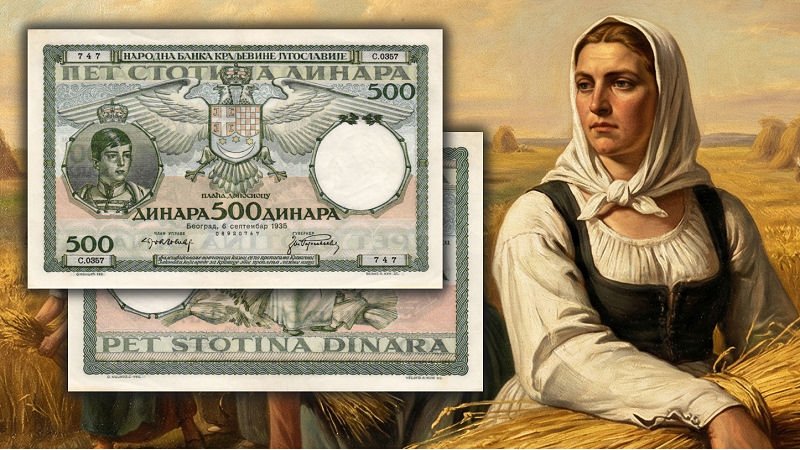
500 dinar banknote of the Kingdom of Yugoslavia from 1935.

The 500 dinar banknote of the Kingdom of Yugoslavia from 1935 represents one of the most artistically successful and iconographically complete issues of interwar Yugoslav notaphily. The entire composition is executed in a subtle palette of green, olive, and brown tones, with discreet pink transitions in the background, giving it a refined, almost painterly

500 dinar banknote of the Kingdom of Yugoslavia from 1935. Read more »

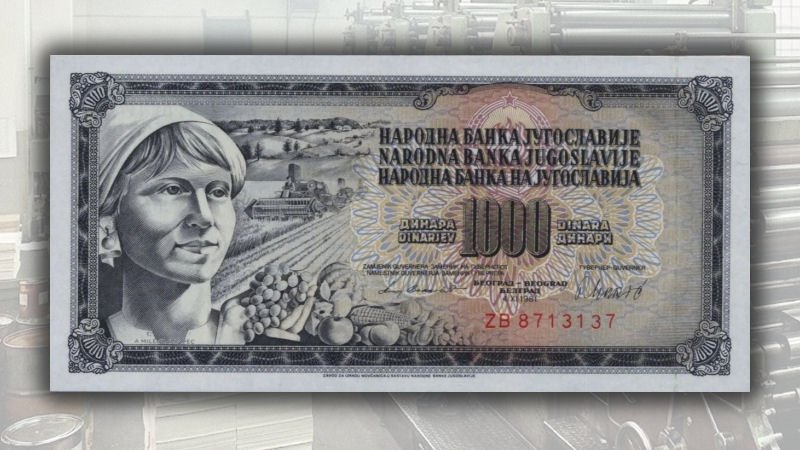
Replacement banknotes

Replacement banknotes represent a special and often insufficiently known segment of notaphily, which interestingly connects the technical process of money printing with collecting practice. Although at first glance they do not differ from regular specimens, their role in the monetary system and the way they are marked make them particularly interesting to researchers

Replacement banknotes Read more »

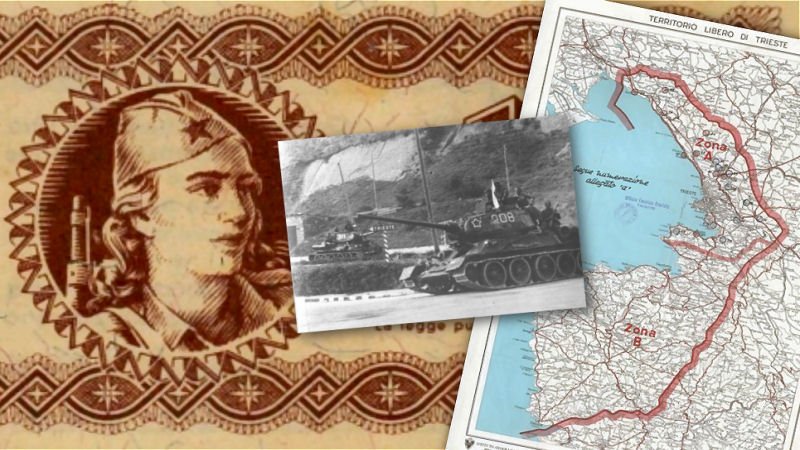
“Jugolire” – paper money of the Economic Bank for Rijeka, Istria and the Slovenian Littoral

Following the end of World War II and before the signing of the peace treaty with Italy, Zone “B” – which included Rijeka, part of Istria, and the Slovenian Littoral – was placed under the administrative control of the Military Administration of the Yugoslav Army (VUJA). In accordance with the international rights belonging to occupying authorities,

“Jugolire” – paper money of the Economic Bank for Rijeka, Istria and the Slovenian Littoral Read more »

Milivoj Rodić – Partisan on the first post-war Yugoslav banknote

In the height of World War II, while the fighting was still ongoing, the visual identity of the future new state was being crafted in Italy. In April 1944, the prominent artist and partisan Đorđe Andrejević-Kun, upon the proposal of Ivan Milutinović, the then commissioner for the national economy in the National Committee for the Liberation of Yugoslavia (NKOJ),

Milivoj Rodić – Partisan on the first post-war Yugoslav banknote Read more »

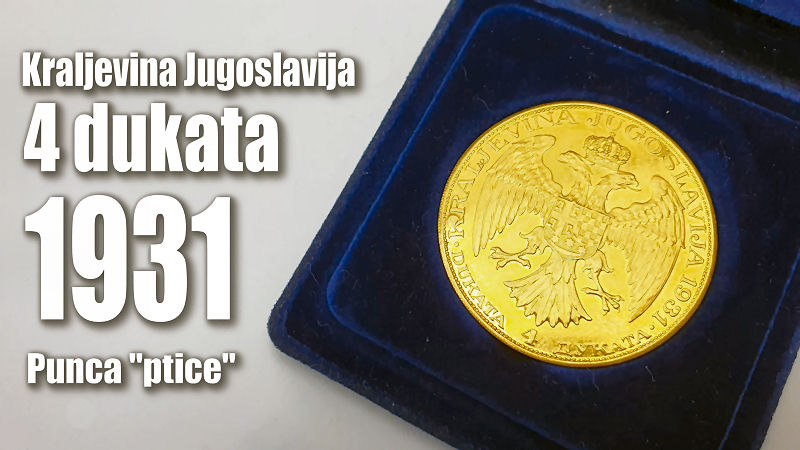
Overview of the gold coin: Yugoslavia 4 ducats 1931. King Alexander I Karađorđević and Queen Maria

In today's video, we are presenting the largest gold coin issued during the time of the Kingdom of Yugoslavia, which is the quadruple ducat from 1931 featuring the image of King Alexander I Karađorđević and Queen Maria. This gold coin bears the „bird“ hallmark (stamp). The ducats themselves are not money in the legal sense, but rather

Overview of the gold coin: Yugoslavia 4 ducats 1931. King Alexander I Karađorđević and Queen Maria Read more »

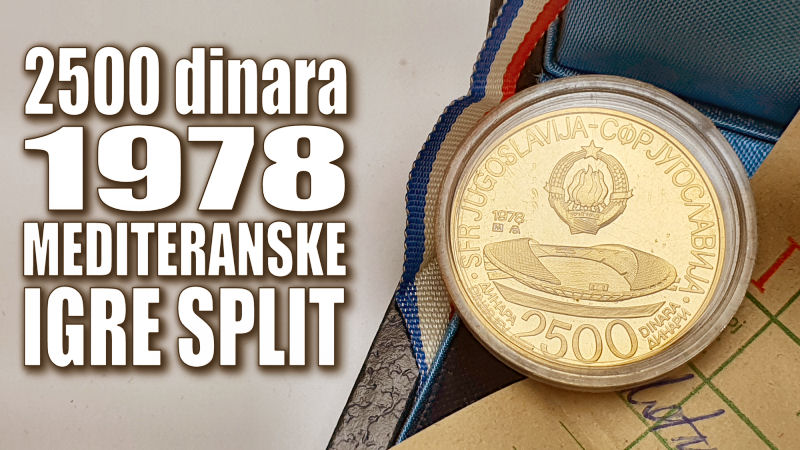
Gold coin presentation: Yugoslavia 2500 Dinars 1978 Mediterranean Games Split ’79

In today's video, we are presenting a Yugoslav gold coin issued on the occasion of the 8th Mediterranean Games held in Split in 1979, specifically the 2500 dinar gold coin from 1978. This gold coin is the second largest gold coin in the aforementioned series of commemorative currency. The obverse of the gold coin depicts, at the time

Gold coin presentation: Yugoslavia 2500 Dinars 1978 Mediterranean Games Split ’79 Read more »

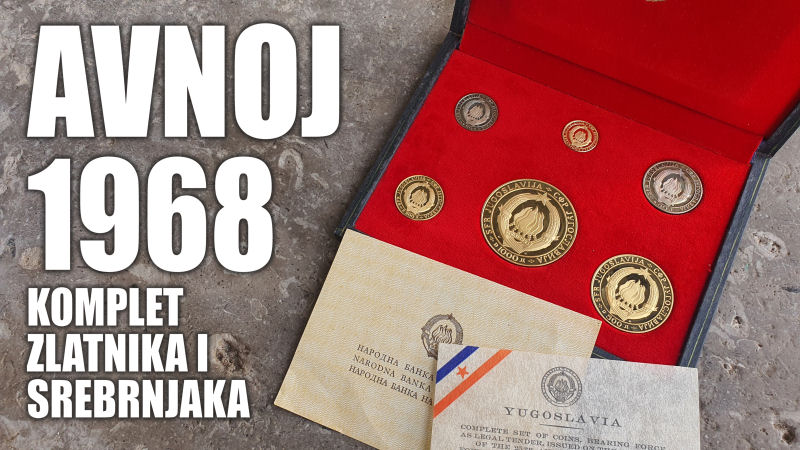
Coin Display: Yugoslavia, gold and silver coin set, 25th anniversary of the 2nd session of AVNOJ

Socialist Yugoslavia received its first commemorative gold and silver coins only in 1968, when a set of commemorative coins dedicated to the 25th anniversary of the 2nd session of AVNOJ in Jajce was issued. The set consists of four gold coins and two silver coins. Although the coins bear the year 1968, they were released

Coin Display: Yugoslavia, gold and silver coin set, 25th anniversary of the 2nd session of AVNOJ Read more »

Scroll to Top