
In the heat of World War II, while fighting was still ongoing, the visual identity of the future new state was being forged in Italy. In April 1944, at the suggestion of Ivan Milutinović, then Commissioner for the National Economy in the National Committee for the Liberation of Yugoslavia (NKOJ), prominent artist and partisan Đorđe Andrejević-Kun began creating the conceptual design for the first banknotes of Democratic Federal Yugoslavia.
The model for the partisan on those banknotes was the then nineteen-year-old wounded soldier Milivoj Rodić. He was the political commissioner of the town command in Martin Brod, and in April 1944, heavily wounded and suffering from tuberculosis, he was awaiting evacuation to Italy for treatment. His journey led via Medeno Polje near Livno to Bari, where he was placed in allied hospitals, and later to recovery in the village of Cozzana near Bari.
There, in the immediate vicinity of the villa where the wounded fighters were staying, a group of prominent cultural and political figures from the Yugoslav refugee scene would gather: the painter Đuro Tiljak, the architect Nikola Dobrović, the poet Vladimir Nazor, the politician Josip Smodlaka, and of course, Đorđe Andrejević-Kun.
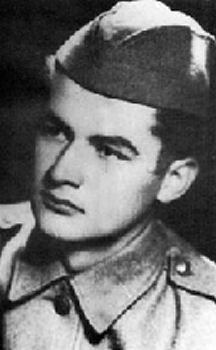
Rodić often visited Kun, admiring his simplicity and directness. One day, Kun asked him to pose for him. He placed an English rifle on his shoulder and told him to sit still while he drew him. Just before the drawing, he asked him if he was superstitious, explaining that the previous two fighters he had painted had died. Rodić laughed and said, „Just go ahead and paint. There is no death without the day of judgment.”
When the drawing was finished, Kun confided a secret to him: he had just drawn the template for the first banknotes of the new Yugoslavia. Rodić, surprised, accepted the confidentiality of that information, which he carried with him until the end of the war.
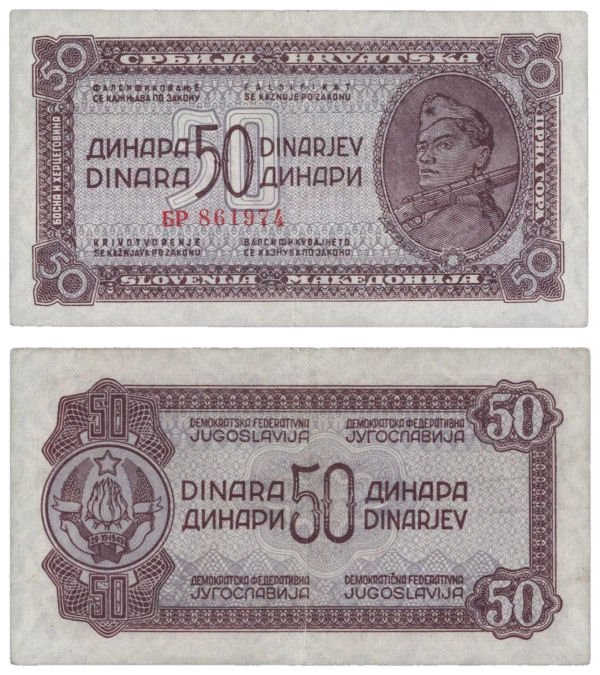
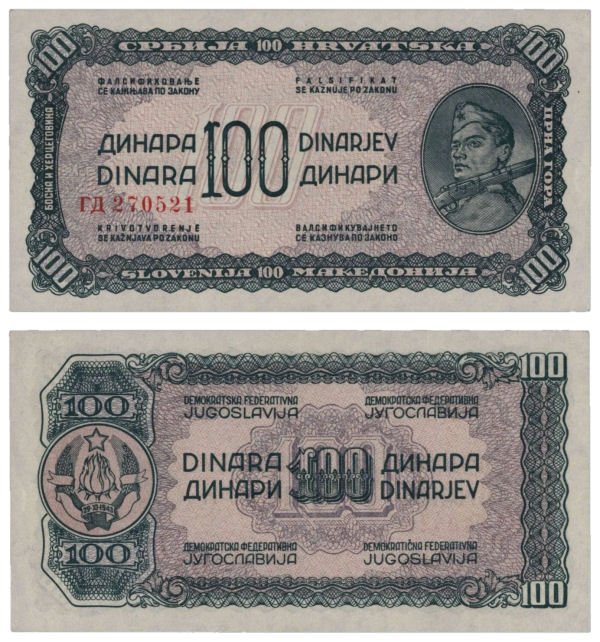
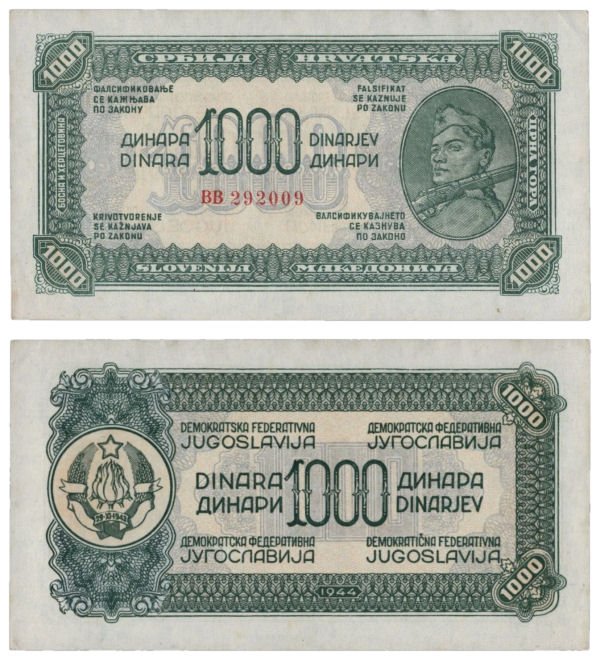
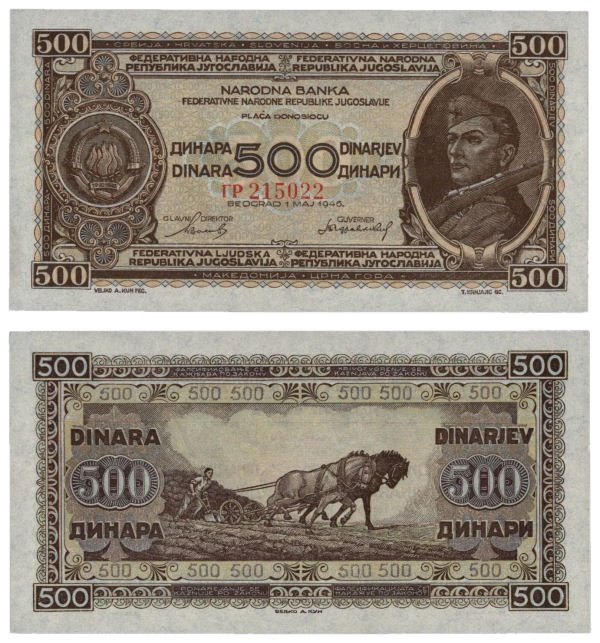
Banknotes were later printed in the Soviet Union and gradually put into circulation as NOVJ units liberated territories. On one of them—the image of a young man with a carbine on his shoulder, is actually Milivoj Rodić. The English rifle from the photoshoot was replaced with a Yugoslav-made carbine.
Rodić returned to liberated Yugoslavia in late October 1944, but never met Kun again. He continued his military career in the Yugoslav People's Army, where he reached the rank of colonel.
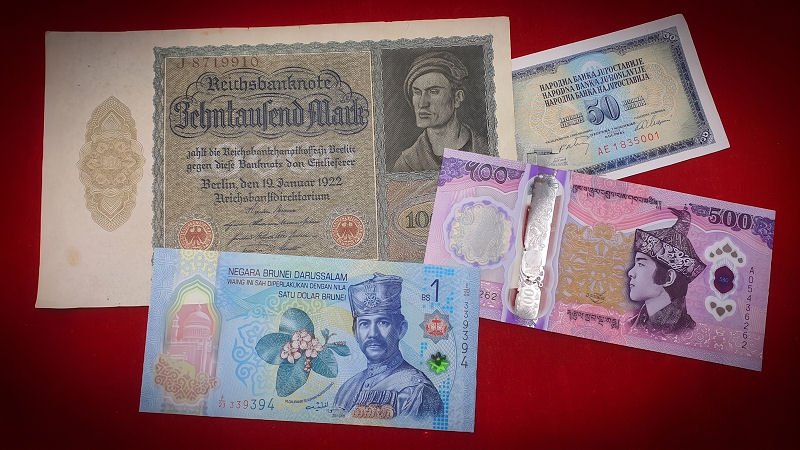
The image of Milivoje Rodić was featured on the banknotes of the Democratic Federal Yugoslavia from 1944, specifically on the denominations of 1, 5, 10, 20, 50, 100, 500, and 1000 dinars, as well as on the 500-dinar banknote of the Federal People's Republic of Yugoslavia from 1946.
Gallery
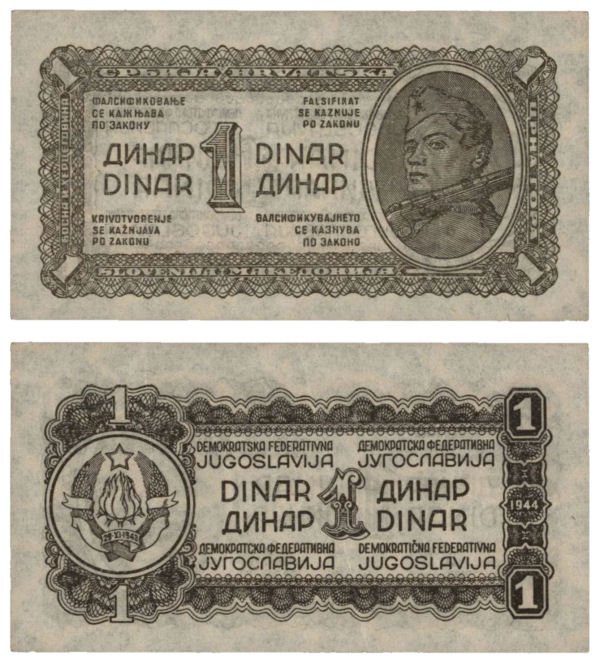
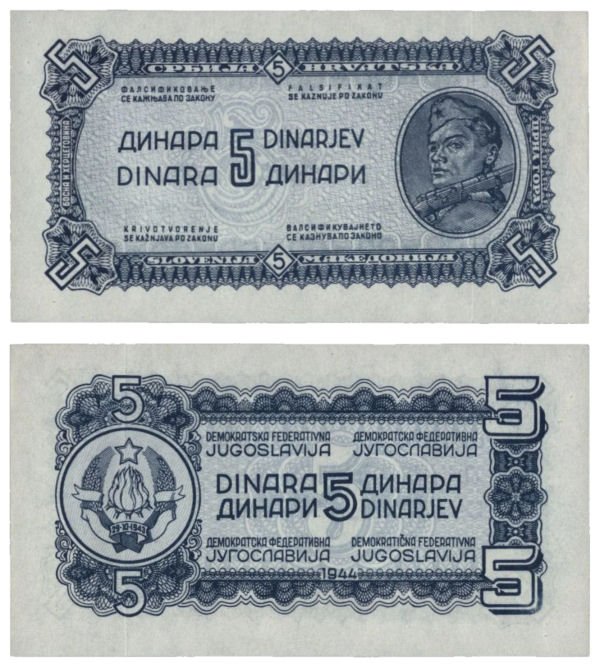
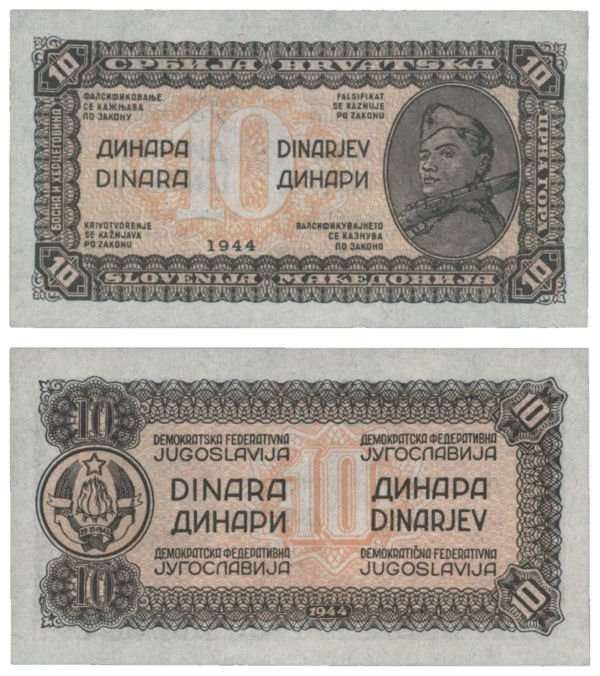
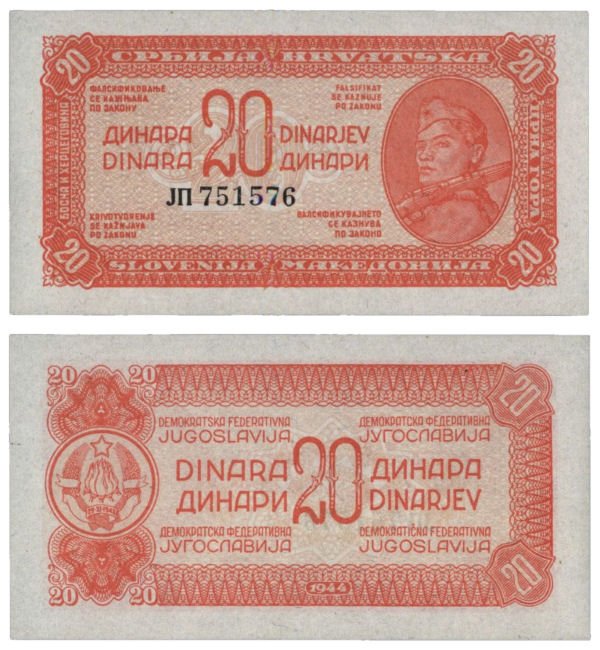

Author: Zlatko Viščević
Photos: Numex – Coins, Banknotes & Militaria Store [www.numex.hr]