



Over the past few years, a phenomenon has become extremely noticeable within the numismatic community which, although not essentially new, has taken on its most stripped-down and primitive form in the digital space. This is the obsessive reduction of numismatic items solely to their market value, where every post, every presentation, and even every expert or informative article is reduced to a single question: „Price?“
Social networks today represent the dominant communication channel among numismatists. They are fast, practical, and efficient, but at the same time superficial. In such an environment, the mentalities, levels of knowledge, and true intentions of the participants are clearly outlined. There is almost no post featuring a specific item (whether it is a coin, a banknote, or a medal) without the comment „Price?“ appearing beneath it in record time.“
It is even more devastating when the same question appears beneath a professional article or educational text that has no sales character whatsoever. The author invests time in research, contextualization, and the interpretation of historical circumstances, and beneath the text appears a question that ignores all the content and reduces the entire effort to a market category. Such a reaction says nothing about the subject matter, but it says a lot about the person asking the question.
Here this is not even about a legitimate interest in purchasing... The market is an integral part of numismatics and no reasonable person disputes the right to buy, sell, or trade an item. However, the problem arises when price becomes the sole criterion, the sole measure, and the sole horizon of contemplation. Then numismatics ceases to be an auxiliary historical science and cultural discipline, and becomes merely a commercial category.
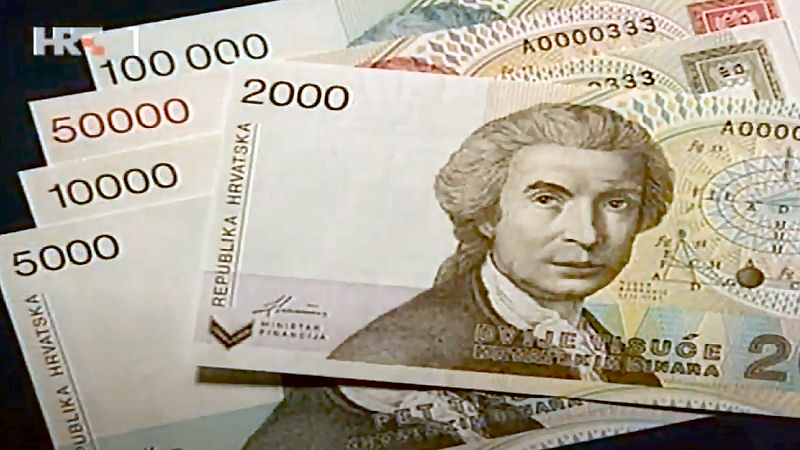
Coins or banknotes are not just ordinary metal or paper objects with market value. They are small bearers of great stories. They contain the iconography, ideology, history, political message, artistic expression, and civilizational level of a given era. Every detail in the design, every variant in the inscription, every difference in the mint mark tells its own story. A numismatic item is a witness to space and time, an artifact that outlives generations and systems.
Viewing such an object exclusively through the prism of market price means trivializing its multilayered nature. This is a reduction of a complex cultural and historical phenomenon to a single numerical designation. Such an approach not only diminishes the cultural and historical significance of the object itself, but also impoverishes the one who observes it in that way.
True numismatics enthusiasts know that value and price are not synonyms. Value can be historical, artistic, symbolic, scientific, or emotional. Price is merely a market reflection of current supply and demand. It varies, oscillates, and is subject to speculation. Value, however, remains a permanent category, independent of market cycles and trends in the collector's market.
It is therefore not surprising that such behavior causes irritation among serious numismatists. Persistently asking about the price, without any interest in the context, often comes from people who ultimately do not even buy the item... They participate in communication without any real intent, turning a public discussion space into an improvised auction hall. In doing so, they ignore a fundamental rule: not every item that is presented is also for sale.
There is also an element of basic decency. If someone is truly interested in purchasing, it is appropriate to reach out discreetly, via a private message or direct contact. Insisting publicly on the price at all costs, especially when no intention to sell has been indicated, shows a lack of understanding of basic etiquette within the community.
Numismatics, as an auxiliary historical science, requires a certain level of conversational culture. It implies patience, research, respect for the object, and for the person with whom one enters into communication. Otherwise, we arrive at a paradoxical situation where the high cultural value of something meets a low level of communication. This disproportion creates the impression of a kind of cultural misunderstanding: an object that symbolizes statehood, art, and history is commented on using the most primitive language of a merchant „marketplace.“.
Of particular concern is the fact that such an approach gradually shapes the perception of younger collectors. If the first and only impulse is „how much does it cost,“ then the process of learning, research, and understanding is absent. Numismatics is then no longer experienced as a scientific and cultural discipline, but as a potential source of quick profit. In such an environment, the distinction between a collector and a reseller, between a researcher and a speculator, disappears.
We should not fool ourselves – the market aspect will always be present. But the question is one of measure and priority. Is the primary goal to understand why a certain emission was created, what message it carried, and what role it played in the monetary system, or is it primarily to find out what its current market value is? The answer to that question determines one's level of numismatic maturity.
Ultimately, everyone has the right to approach their hobby and area of interest in their own way. However, the public space of numismatic communication should not become a hostage to superficiality. If every discussion is reduced to price, then we lose what makes numismatics special – its interdisciplinarity, its depth, and its cultural dimension.
The most destructive combination is numismatics and primitivism. When an object of high cultural and historical value is treated exclusively as a commodity without context, it leads to the symbolic humiliation of the discipline itself. This is a situation where a wealth of meaning is offered to those who do not wish to see it. To put it vividly, it is casting pearls before swine.
It is therefore time to clearly articulate within the community the difference between legitimate market interest and the banal reduction of everything to price. Numismatics deserves more. It deserves respect, knowledge, and a culture of dialogue. And those who see in it exclusively a numerical designation should perhaps ask themselves whether they are truly in the right place?
Author: C. G.