



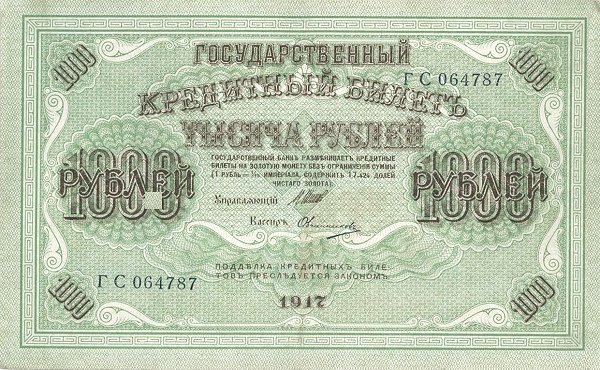
By carefully observing two Russian banknotes from the revolutionary period, in denominations of 250 and 1,000 rubles (Pick Nos. 36 and 37), the motif of the swastika can be seen in the background on their obverse and reverse sides. It is important to emphasize that these banknotes were issued in 1917, about twenty years before the Nazis came to power in Germany. Despite the fact that the depicted swastika is identical to the one later used by the Nazis (orientation, 45-degree angle position, and equal proportions), it has nothing to do with Nazism or Nazi ideology.
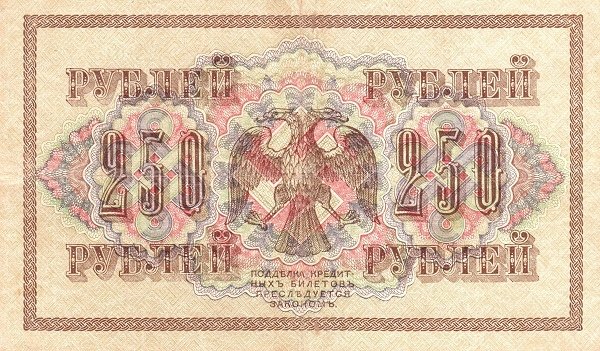
The aforementioned banknotes were designed by Latvian academic painter Rihard Zarrinsch, who included in the background a symbol already widespread in Latvia. That sign appeared on postage stamps, banknote watermarks, and other official insignia. The Latvian Air Force used the swastika as its symbol even before the Second World War, and a similar practice existed in certain other Nordic countries.
It is common knowledge that the swastika, as an ancient symbol of the sun and prosperity, is particularly widespread in India and other parts of Asia. Unfortunately, „thanks“ to Nazi misuse, this originally positive symbol has become permanently stigmatized as a sign of one of the worst regimes in human history.
Author: Zlatko Viščević
Photos: Bank Note Museum [www.banknote.ws]