
Bulgaria has not even begun its full life in the eurozone yet, and it has already found itself in its first serious numismatic and political debate. At the center of the story is Bulgaria's first commemorative 2-euro coin, planned for 2026, dedicated to the Bulgarian alphabet (ABCThe topic is seemingly cultural, educational, and numismatic, but it very quickly opened up the issue of national identity, historical heritage, and sensitive relations among European states.
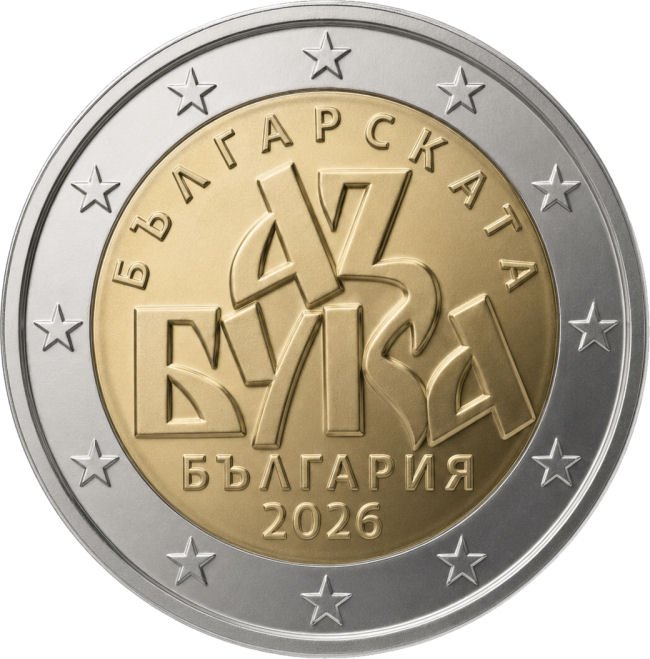
The Bulgarian National Bank has included this coin in its 2026 issuance program. According to previous announcements, this is a commemorative 2-euro coin titled „Bulgarian Alphabet,” which is scheduled to be issued in the second half of 2026. The planned mintage is one million pieces, which is a very solid quantity for commemorative 2-euro coins and large enough for the issue to be not just strictly for collectors, but also for wider circulation.
However, the project got stuck in the European approval procedure. According to documents from the Council of the European Union, Bulgaria officially submitted the draft design of its commemorative coin in May 2026. A few days later, a euro area member state lodged an objection. In the publicly available version of the document, the name of that country has been redacted, so officially it is still not known who exactly challenged the Bulgarian proposal.
Bulgarian media, citing unofficial information, report that the objection allegedly came from Greece. That, however, has not yet been officially confirmed in published documents. It is precisely this detail that has further heightened public interest, as the entire case is no longer viewed merely as a technical issue of design approval, but as a potential political and identity issue.
Controversial phrase: „Bulgarian alphabet”
At the center of the discussion is the inscription „Bulgarian alphabet”. With this, the Bulgarian side aims to emphasize Bulgaria's historical and cultural contribution to the Cyrillic alphabet, specifically the fact that the Cyrillic script is deeply connected with the medieval Bulgarian state, literature, and Old Church Slavonic tradition. Following Bulgaria's accession to the European Union in 2007, the Cyrillic alphabet became the third official script of the European Union, alongside the Latin and Greek alphabets. Because of this, the Bulgarian issue also holds broader European significance.
Yet precisely such a wording was obviously problematic for someone. According to Bulgarian media reports, the objection could be related to the fear that the name „Bulgarian alphabet” might provoke reactions in states or among peoples who also use the Cyrillic alphabet or who have their own historical and cultural interpretations of its development. Some commentaries mention the possibility that this would open the door for future EU member states, such as Serbia, Ukraine, or North Macedonia, to one day similarly emphasize their own national interpretations of the Cyrillic script.
For numismatists, this case is particularly interesting because it shows how the small surface area of a coin can become a space for a major symbolic struggle. The 2-euro coin is not even 3 centimeters in diameter, but the inscription, motif, and official name of the issue can provoke reactions that go far beyond numismatics.
What does the European procedure say?
Commemorative 2-euro coins are not ordinary souvenirs or local commemorative issues. They are legal tender throughout the euro area, so their design must go through a prescribed European procedure. The country planning the issue submits the design draft, and other euro area countries have the opportunity to lodge a reasoned objection if they consider that the proposed design could cause negative reactions among their citizens.
That does not automatically mean that the coin is banned or permanently rejected. An objection means that the procedure is becoming more complicated and the issue must be considered further. The Bulgarian National Bank stated that it has not identified any technical issues regarding the design and that the approval process is still ongoing. In other words, the case is not closed yet.
Precisely for this reason, one should be cautious with claims that the coin has been „canceled.” For now, it is controversial, disputed, or blocked in the procedure, but it has not been officially confirmed that it has been permanently withdrawn from the program. In numismatic terms, this is an important distinction, because the status of the issue directly affects collector interest, pre-orders, inclusion in catalogs, and future market value.
Bulgaria defends its right to the name
Bulgarian Vice President Iliana Iotova has publicly defended the name „Bulgarian alphabet.” According to her position, Bulgaria has every right to call the script by that name, as it occupies a central place in national tradition. She emphasized that in Bulgarian history and education, the Cyrillic alphabet has been understood as the Bulgarian alphabet, and that there are both scientific and historical arguments for such a formulation.
This kind of reaction shows how sensitive the issue is. For Bulgaria, this is not just a motif on a coin, but a part of national identity. For other states, especially those with their own Cyrillic tradition or their own interpretations of the history of Slavic literacy, such a name may sound too broad or exclusive. Right there arises the conflict between numismatic design and political symbolism.
A coin as a message
Commemorative 2-euro coins often serve as small messages in metal. Countries use them to mark anniversaries, cultural figures, historical events, architecture, science, literature, or national symbols. As a rule, these are themes that the issuing country wants to present not only to its own citizens, but also to the entire euro area.
By choosing the Cyrillic alphabet, Bulgaria has sent a clear message: by entering the European monetary system, it wants to emphasize its own cultural contribution to Europe. That is logical and understandable. The Bulgarian euro coin not only brings a new national side to the euro, but also expands the visibility of the Cyrillic alphabet on the metallic currency of the euro area.
Euro coins are simultaneously national and common. Precisely for this reason, the design of one country must also be acceptable to other countries that use the same currency. This case shows how the balance between national pride and European sensitivity is sometimes difficult to maintain.
Numismatic significance of a potential issue
If the coin is approved and issued, it could become one of the more interesting Bulgarian euro issues. Not only because it would be the first Bulgarian 2-euro commemorative coin, but also because even before its release, it has gained publicity that most modern commemorative coins never receive.
For collectors, this kind of situation is particularly attractive. If the design remains unchanged, the coin will have an additional story. If the design is altered, the initial proposal could remain interesting as an unissued or modified project. If, however, the issue were delayed or withdrawn, then the entire case would enter the category of numismatic curiosities, similar to other European examples where politics influenced the fate of a coin.
Special attention should be paid to whether the name „Bulgarian alphabet” will be retained or if a compromise solution will be found, such as a formulation that would emphasize the Cyrillic alphabet as Bulgaria's cultural heritage, but without a term that could provoke objections from other countries. Such a change might calm the political part of the debate, but from a numismatic perspective, it would create a new and interesting story about the evolution of design.
Small coin, big topic
The Bulgarian euro drama shows that money is never just a means of payment. Coins are also state symbols, political and cultural messages, and objects of collector interest. In this case, a single commemorative 2-euro coin raised the question of who has the right to name a script, how national history is represented in a shared currency, and where cultural pride ends and diplomatic sensitivity begins.
For now, the most important thing is to wait for the official procedure to conclude. What is certain is that the Bulgarian coin dedicated to the alphabet has already become one of the most interesting European numismatic topics of 2026. It hasn't even entered circulation yet, and it has already received what every coin rarely gets before its release – a story.
Author: Zlatko Viščević with AI assistance