Literacy is one of the fundamental elements of any nation's identity, and in the Croatian case, it historically developed through three scripts: Glagolitic, Cyrillic, and Latin. A unique feature of Croatian cultural history is the fact that all three scripts also acquired their own national variants: the Croatian (angular) Glagolitic script, Croatian Cyrillic (Arvatica), and the Croatian Latin script. Such a wealth of scripts is a rarity in a European context, so Croats can rightfully be called a tri-scriptural nation.
Money as a symbol of statehood and identity
Money is, along with the coat of arms, flag, and anthem, one of the key symbols of statehood. It is not only a means of payment, but also a bearer of messages about political sovereignty, cultural identity, and historical heritage. Through the motifs on its currency, a state consciously represents itself, its history, and its values. In this context, the Glagolitic script, as the oldest Slavic alphabet, rightfully finds its place on Croatian currency.

The Origin and Development of the Glagolitic Script
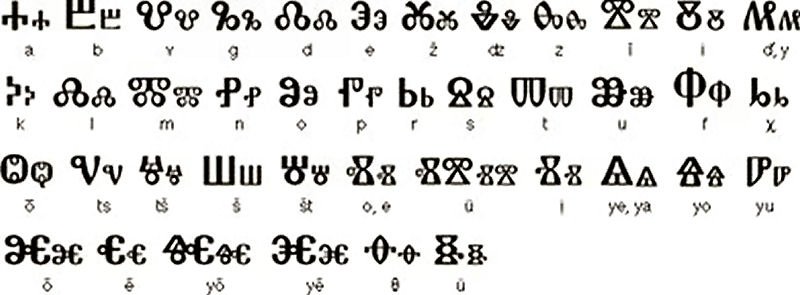
The Glagolitic script was created in the 9th century with the aim of recording Slavic languages. Although it is often perceived as an exclusively Croatian script, in its early period it was widespread over a much wider area, from present-day Czechia to Bulgaria. Over time, two basic types of the Glagolitic script developed: round and angular. The round Glagolitic script was known to almost the entire Slavic world, while the angular Glagolitic script emerged in the 13th century and became an exclusively Croatian phenomenon, inextricably linked to the Croatian language and cultural sphere.
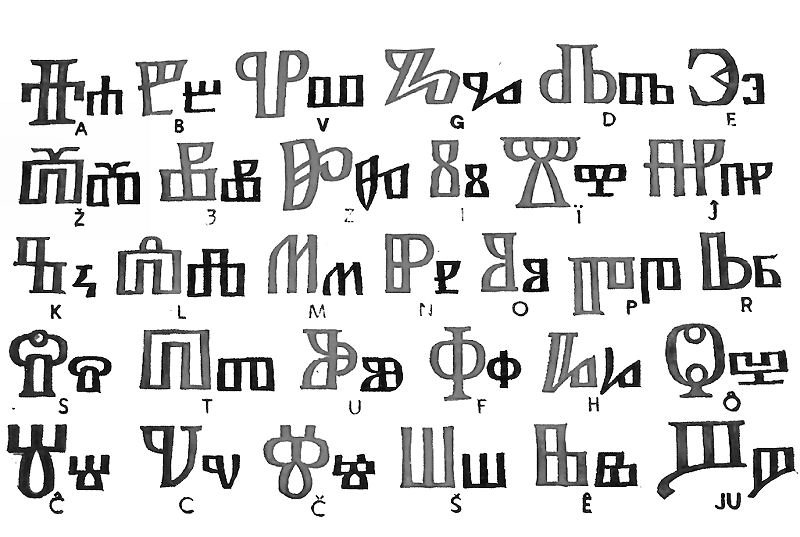
Croatian Glagolitic Privilege
A special place in history is held by the so-called „Croatian Glagolitic Privilege,“ a unique privilege of the Croatian people within the Catholic Church. While in the rest of the Church the liturgy was celebrated exclusively in Latin for centuries, Croats were allowed, with papal permission, to celebrate the liturgy in their vernacular language, Croatian Church Slavonic, and church books were in the Glagolitic script. This right was confirmed to the Croats by Pope Innocent IV in 1248. Thanks to this privilege, a rich Glagolitic literacy developed, resulting in the Baška Tablet, the „Missal According to the Law of the Roman Court,“ and the „Istrian Demarcation.“ Thus, the Croats were the only people within the Roman Catholic rite to have a non-Latin liturgy for nearly a thousand years, right up until the reforms of the Second Vatican Council.
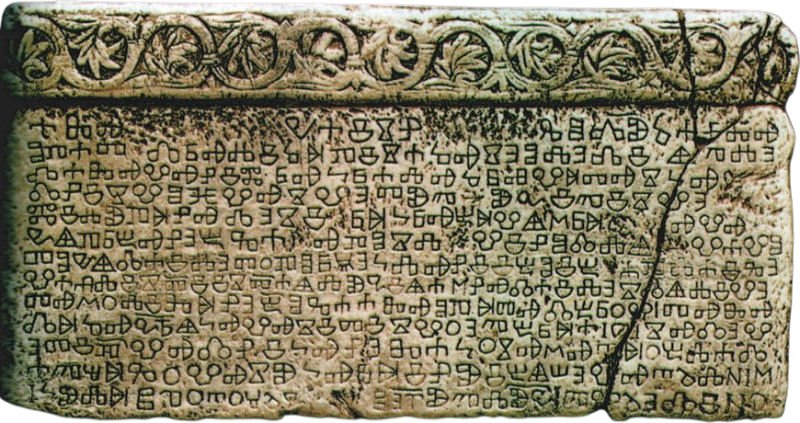
First depictions of Glagolitic script on currency
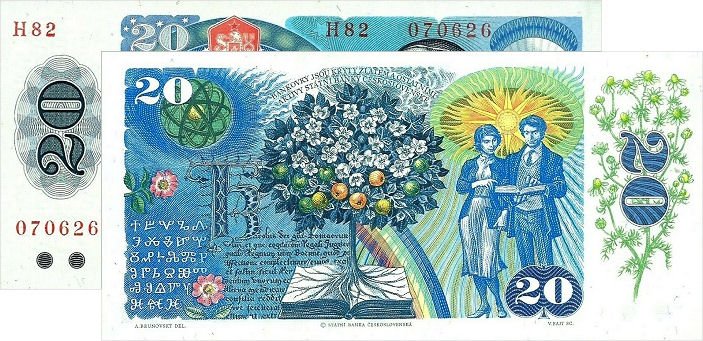
Although the Glagolitic script is deeply rooted in Croatian history, Croatia was not the first country to feature it on its currency. That honor belongs to Czechoslovakia, which in 1988 issued a 20-crown banknote bearing a depiction of round Glagolitic script on its reverse.
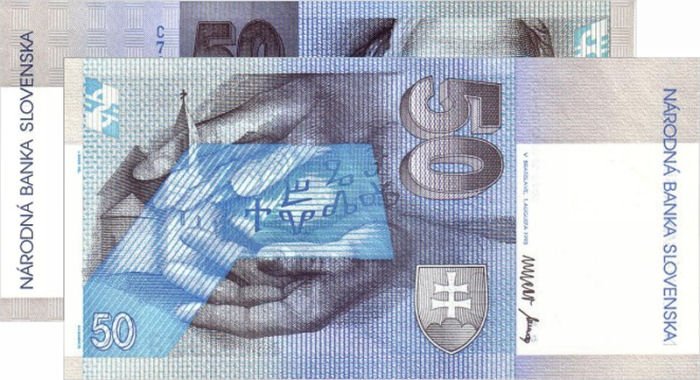
Following the dissolution of Czechoslovakia, Slovakia featured the Glagolitic script on its currency, specifically on the reverse side of the 50-crown banknote issued in 1993. As with the Czechoslovak banknote, this also depicts the round Glagolitic script.
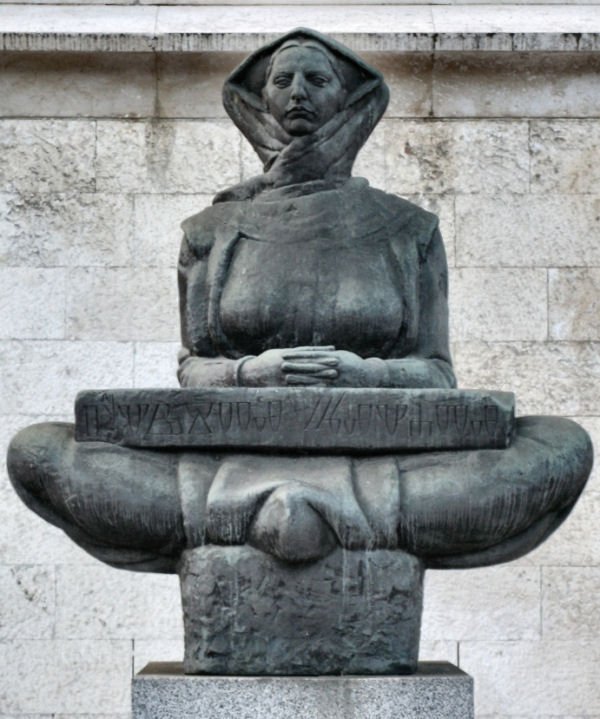
In Croatia, the Glagolitic script appeared on currency for the first time in 1992, on a new series of Croatian dinar banknotes. On those banknotes, we do not find direct Glagolitic inscriptions; instead, the Glagolitic script is depicted indirectly, on Ivan Meštrović's sculpture „History of the Croats,“ which is featured on the reverse of the banknotes. The sculpture itself contains a Glagolitic inscription and symbolizes the literacy of the Croats as a nation.
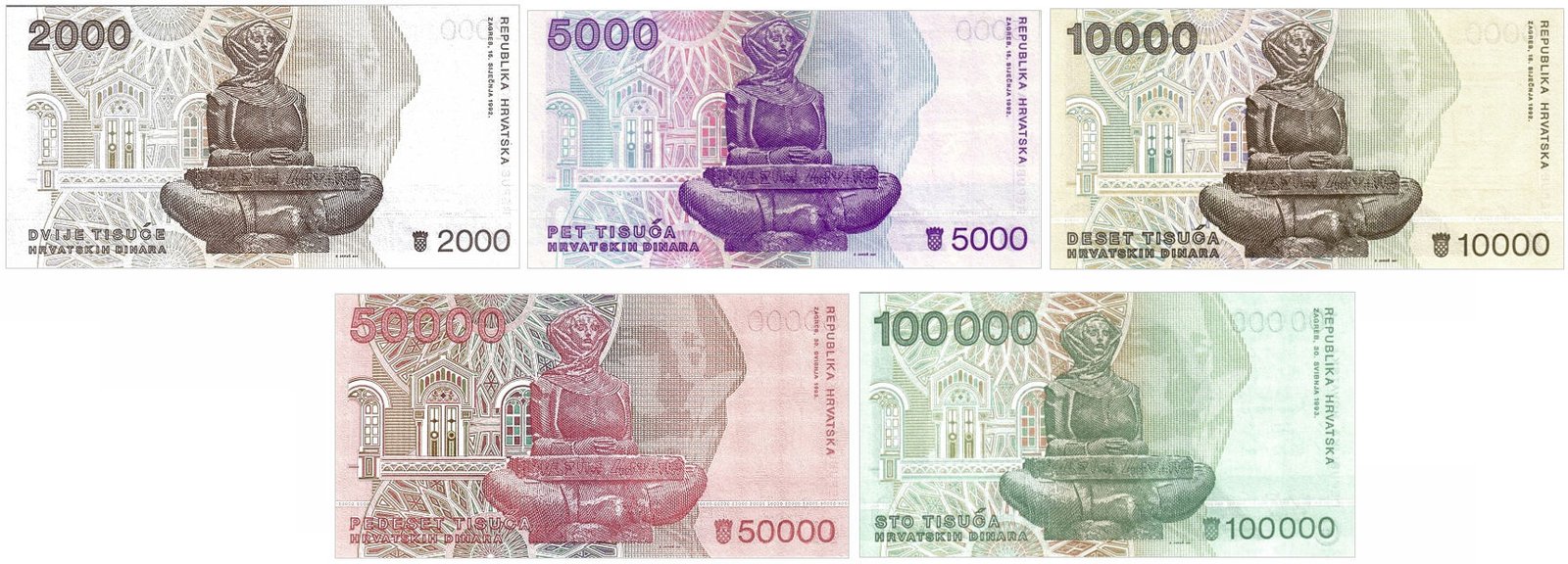
Banknotes of 2,000, 5,000, and 10,000 dinars were issued in 1992, while the 50,000 and 100,000 dinar denominations were issued in 1993. The Croatian dinar was a wartime currency and a temporary medium of exchange that remained in circulation until 1994, when the kuna and lipa were introduced.
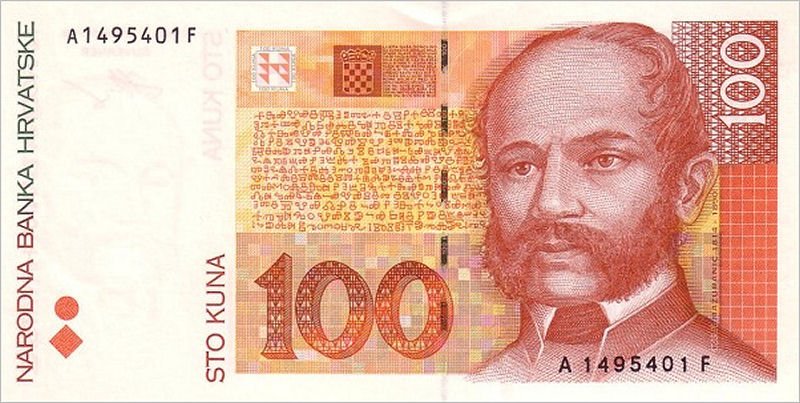
Glagolitic script on kuna banknotes
With the introduction of the kuna in 1994, the Glagolitic script appeared on only one banknote, the 100-kuna note dated 1993. Its obverse features text from the Baška Tablet, thereby clearly and directly affirming the Glagolitic script as part of the national identity. This banknote was also issued later in slightly modified versions in 2002 and 2012.
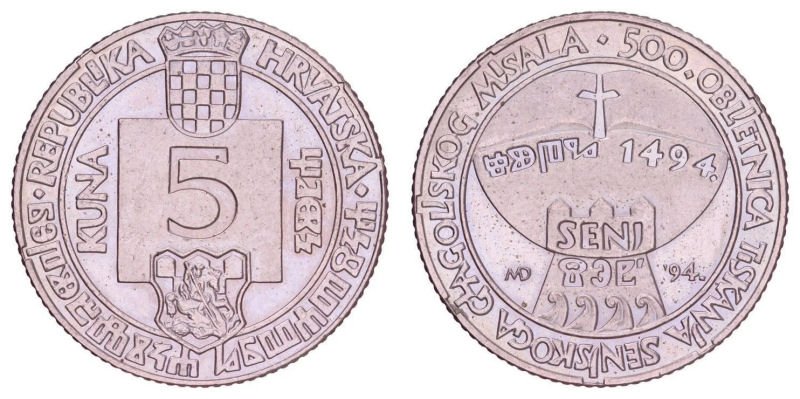
Glagolitic script on kuna coins
The first real Glagolitic inscriptions on Croatian currency appear in 1994 on the commemorative 5-kuna coin, issued on the occasion of the 500th anniversary of the printing of the Senj Glagolitic Missal. The coin was put into circulation as a commemorative circulation issue, and a gold coin with the same artistic design was also minted. The Croatian angular Glagolitic script was used on this coin, featuring the name of the country, the currency, the name of the city of Senj, and the year 1494.
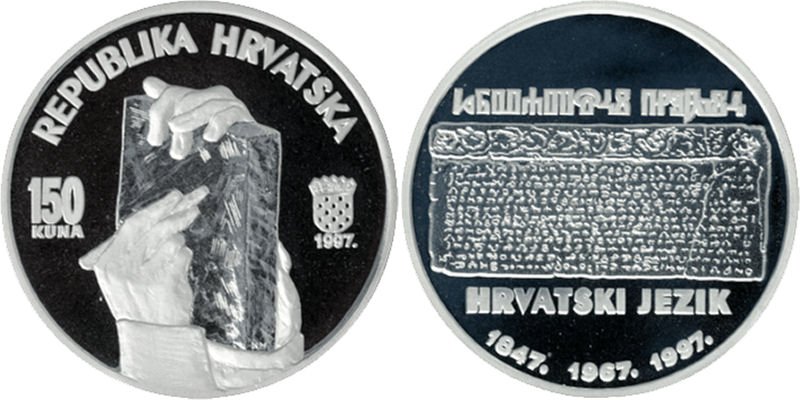
The Glagolitic script reappeared in 1997 on a commemorative 150-kuna silver coin dedicated to the 150th anniversary of the Croatian language as the official language. Here, the Glagolitic script appears twice: as the inscription „HRVATSKI JEZIK“ (CROATIAN LANGUAGE) and as the text of the Baška Tablet depicted on the obverse of the coin.
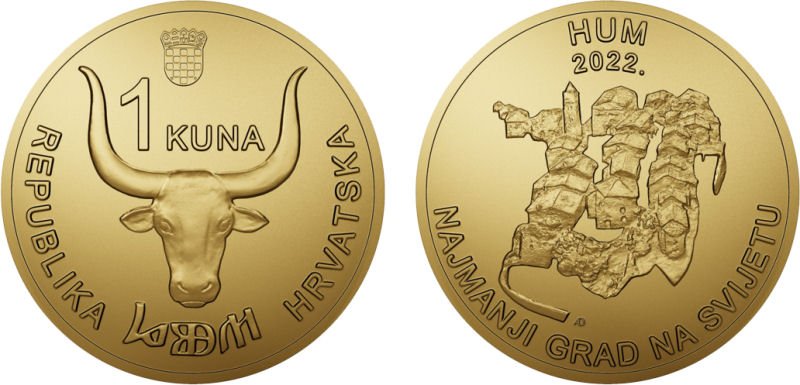
A special place is held by the year 2022, when the Croatian Mint struck the smallest gold coin in the world, with a diameter of 1.99 mm and a weight of 0.05 g. The gold coin with a nominal value of 1 kuna is dedicated to the smallest town in the world, Hum, and features the Glagolitic inscription „HUM“.
Glagolitic script on Croatian euro coins
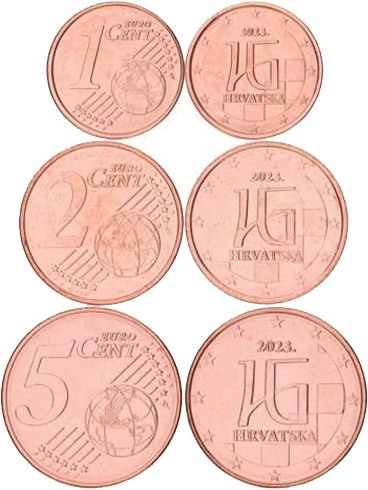
With the entry of the Republic of Croatia into the euro area, kunas and lipas were withdrawn from circulation, and euros and cents were introduced. On the national side of Croatian euro coins, the Glagolitic script has been given a special place. The 1, 2, and 5 euro cent coins feature a ligature of the Glagolitic letters H and R, as a recognizable symbol of Croatian identity deeply rooted in tradition.
Affirmation of the Glagolitic script through numismatic issues
Money is not only a means of payment, but also a kind of cultural and political message. Every coin and banknote passes through thousands of hands, both domestic and foreign, thereby transmitting information about the country to which it belongs. At the same time, money remains a lasting source of information for future generations who can learn from it about the history, culture, language, and script of a nation.
The Glagolitic script, as a symbol of literacy, continuity, and the cultural distinctiveness of the Croatian people, especially through its angular variant, deserves a prominent place in numismatics. Precisely for this reason, it is important to nurture the Glagolitic heritage through future issues of Croatian currency as well. The Glagolitic script should not be viewed as an archaic decoration, but as a strong and recognizable symbol of Croatian national identity.
Edited: Zlatko Viščević
Photos: Bank Note Museum [www.banknote.ws], Poreč City Library [www.knjiznicaporec.hr], Croatian Mint [www.croatianmint.hr], Croatian National Bank [www.hnb.hr], Numex – Coins, Banknotes & Militaria Store [www.numex.hr], Rjecnik.hr [www.rjecnik.hr], Wikipedia [hr.wikipedia.org].