


1. What does this monetary transition from the kuna to the euro mean for Croatian numismatics?
This is undoubtedly one of the historic events for Croatian numismatics, and it is precisely in moments like this that new numismatists are created. Thus, with the arrival of the euro, a new circle of people interested in numismatics will emerge. This is one of the most positive aspects of introducing the euro. The negative side is that we are replacing an excellent numismatic solution, such as the kuna and lipa, with numismatically inferior euros and cents, which do not enjoy a very high reputation within the numismatic community.
2. Is it in some way a loss of identity of national monetary numismatics, which has a rich history?
On the one hand, yes. With the kuna and lipa, we could choose ourselves what our coins and banknotes would look like, and we had a very good artistic and numismatic solution there. When we talk about coinage, we had a wide denomination structure in circulating money – from 1 lipa to 25 kuna, a solid choice of metals and coin sizes, consistent artistic design, an interesting selection of motifs from flora and fauna, and on top of that, bilingualism.
3. There were also a few commemorative-circulating issues that are now achieving great value?
Yes, for example the FAO, the Atlanta Olympic Games, the Senj Glagolitic Missal... A special story are the 25-kuna coins which have gained huge popularity only now, as the kuna is leaving. We will replace all of this with rather numismatically unremarkable euros. Kuna banknotes were conceptually quite similar to German marks. That was probably meant to emphasize the stability of the kuna on a symbolic level.
4. You published a book about Croatian currency. What did our first banknotes look like?
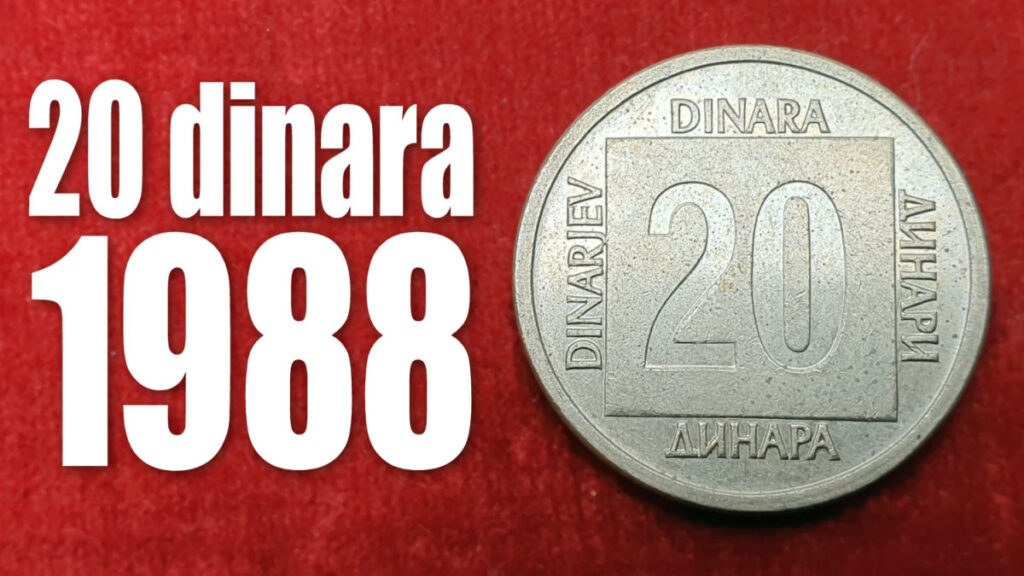
If we are talking about the first currency of the independent Republic of Croatia, those were the Croatian dinars from 1991. It was a transitional solution between the Yugoslav dinar and the future “real” Croatian national currency – the kuna, which was introduced only in 1994. Croatian dinars were temporary money and were prepared in very difficult, wartime conditions.
5. What are our national symbols that were featured on the banknotes we used in Austria-Hungary and Yugoslavia?
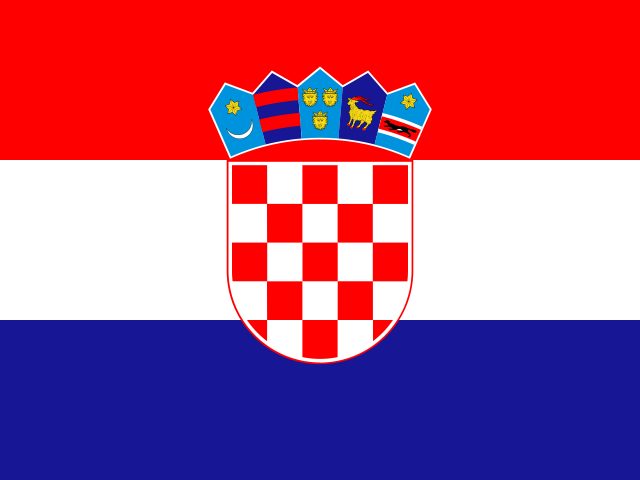
In Austro-Hungarian coinage, Croatian motifs appear primarily on coins issued for the Hungarian part of the Monarchy, specifically in the depiction of the coat of arms of the lands of the Crown of St. Stephen. Elements from the coat of arms of the Triune Kingdom of Croatia, Slavonia and Dalmatia are present there, and later the Rijeka coat of arms also appears. The situation is similar with banknotes, as the aforementioned coat of arms is also found on them. In monarchist Yugoslavia, we again have a similar situation. In socialist Yugoslavia, from time to time the names of the republics appeared on banknotes, including the inscription Croatia.
6. What happened when the post-war dinar arrived?
The new Yugoslav dinar, dated 1944, replaced the currency that had been in circulation until then, which was primarily the NDH kuna. That first dinar of the “new Yugoslavia” visually relied on Soviet banknote designs of the era. All banknotes had a similar design: the obverse featured the image of a partisan with a rifle, and the inscriptions were in all the languages of the recognized nations of the time. The Yugoslav dinar subsequently underwent numerous changes until the breakup of the country in 1991.
7. In the nineties, there were many debates about the introduction of the kuna because of the same name as in the NDH. Were there any common elements in the appearance of those banknotes?
Aside from the name of the main monetary unit, the banknotes of today's kuna and those of the NDH are completely different. It should be kept in mind that these are two different eras and that the kuna of the NDH was under the partial stylistic influence of German marks from the late 1930s, while the current kuna is under the stylistic influence of German marks from the late 1980s. Therefore, these two series of banknotes cannot be compared. What is interesting is that a part of the NDH kuna, as well as a part of today's kuna, was printed by the same printing house – Giesecke & Devrient from Germany.
8. You are the author of several medals. How do you assess the latest HNB competition for the design of euro coins?
A lot could be said about the choice of motifs, the competition itself, and everything that went wrong there. However, we can say that the artistic solutions themselves are solid. The authors made an effort and I believe they did their best. With Croatian euros, the more problematic issue is the choice of motifs, which was left to the public to decide. That is not always the best solution. It is best to engage professionals for this, who will come up with a quality solution and selection of motifs. Croatian euros are a mix of everything and anything and conceptually inconsistent.
9. You recently warned that certain banknotes of the outgoing kuna may have numismatic value. Which ones would be worth keeping?
When it comes to banknotes, it is best to keep higher denominations, but they must be in pristine condition. Only such banknotes can have additional numismatic value. When we talk about pristine condition – these are banknotes that have not been in circulation, show no signs of handling, are not folded, and the like.
10. What are the most important tips for beginner numismatists?
The most important thing is to educate themselves about what they do. First and foremost, learning and acquiring knowledge from numerous numismatic literature, as well as from older and more experienced colleagues. Without knowledge, it is difficult to navigate the world of numismatics. Sometimes it is also very expensive.
Let me ask you something...
VIŠČEVIĆ: How do you like the new euros compared to the kuna?
ŠIMIĆ: I agree with you when you say that it is a faceless and somewhat soulless numismatic abomination. What kind of union, such is its money.
Author: Zlatko Šimić
Source: Jutarnji list of December 31, 2022, and January 1, 2023.