



Precious metal prices have been „skyrocketing“ for some time. Gold and silver are breaking historical records, investors are rubbing their hands in satisfaction, but concern is growing among numismatists and collectors. Almost everyone is asking the question: Does the rise in precious metal prices benefit numismatists as well, or does it actually harm them by making it harder to buy silver and gold coins for their collections?
Inflation or actual price growth?

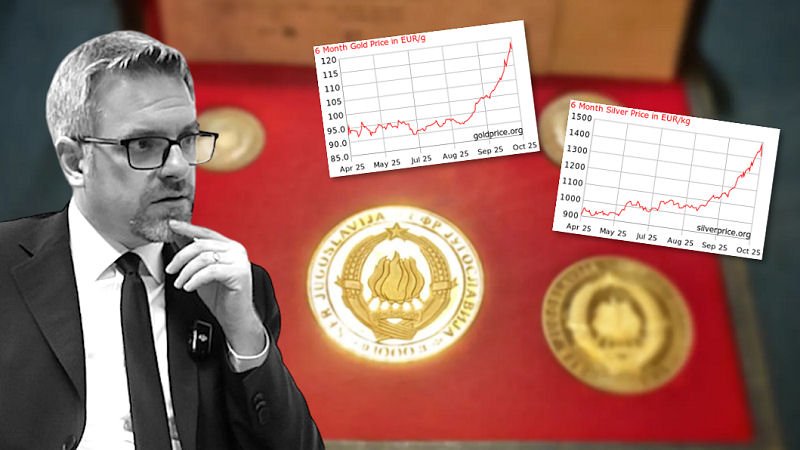
On Friday, October 18, 2025, precious metals markets closed at €117.18 per gram of gold and €1.43 per gram of silver. This is actually a slight drop (correction) compared to the prices they had in earlier hours: almost €121 for gold and almost €1.50 for silver. But as a reminder, on January 1, 2025, gold was priced at €81.52, and silver at €0.89 per gram. In percentage terms, gold has risen by 43.1% year-to-date, and silver by a whopping 60.1%!
At first glance, it seems to us that gold and silver are in a strong surge. However, a large number of analysts agree that this is not about a real increase in value, but only about adjusting prices for inflation. In other words, a gram of gold is worth more today than it was a few years ago, but everything else, from fuel to bread, has also gone up in price by a similar, if not greater, proportion. Therefore, regardless of the nominal price increase, this is nothing „revolutionary,“ but merely a „price correction“ to the actual state of affairs.
Gold coins, silver coins and their „new“ underlying value
Since some coins are made of silver or gold, it is logical that as metal prices rise, so does the base value of those specimens, which is the value of the metal itself. If, however, a specimen had numismatic value above and beyond the value of the metal, then it is logical that as metal prices rise, the total price of that specimen will also rise. But what does that mean for the collector's market? And is that always the case?
Source: Numex – Coins, Banknotes & Militaria Store [www.numex.hr]
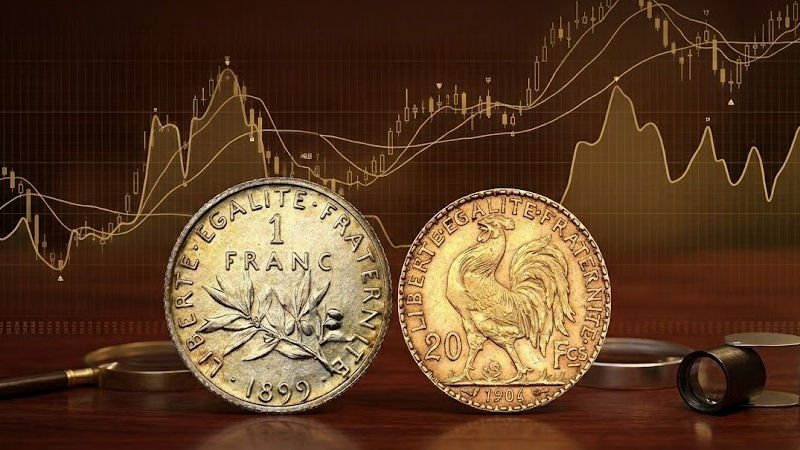
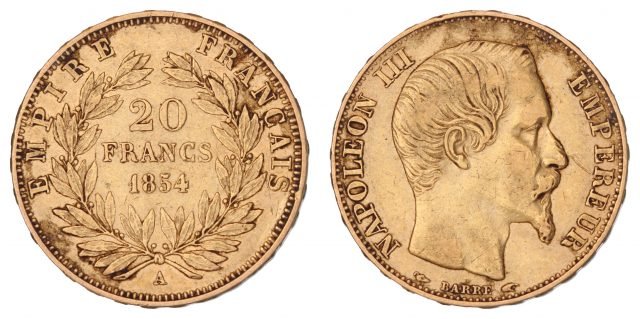
For example, ordinary 20-franc gold coins, which fall more into the category of investment gold coins than numismatics, until recently represented relatively affordable and popular pieces among collectors with investment tendencies. At the beginning of this year, those pieces were quoted at around EUR 470 per piece. Today, those same gold coins are EUR 680 per piece, which is a significantly higher price. Therefore, until recently, such a gold coin fell into the category of pieces below the „psychological threshold of EUR 500,“ but now it is significantly more expensive and is somehow becoming „out of reach“ for the average collector.
Something similar is happening with silver coins: coins that for years were perceived as „cheap silver coins“—such as the 20 and 50 dinar silver coins of the Kingdom of Yugoslavia from 1938—are noticeably more expensive today. Only a few years ago, they went for 4 and 7 EUR or even less, while now their price is already 10 and 16 EUR. If we were to convert that back into kuna, the 50 dinars from 1938 is today worth 120 kuna, which sounds surreal.
With the increase in these prices, it is also shifting psychological accessibility threshold, and what was once considered financially accessible is now becoming a less accessible luxury.
Furthermore, there is another phenomenon that accompanies the rise in metal prices, and it is related to numismatics. If purchasing power in a given market is generally low, then sometimes the numismatic value of certain specimens is simply "nullified" by the rise in metal prices. The reason for this is that the average collector no longer has the financial capacity to purchase specimens (most often gold coins) of that caliber, thus reducing the number of potential buyers. Such material then becomes the subject of interest for investors, who are exclusively concerned with the metal's value.
A good example of this are the Yugoslav gold coins from the AVNOJ series (1968), which were once sold at the price of gold plus about 30 percent, while today their practical price is at the exchange rate of gold (around EUR 14,800).
Collectors „passing the baton“ to investors?
Here the difference between becomes more clearly apparent investment i numismatic access to precious metal coins. The investor views the coin primarily through the amount of gold or silver the coin contains and sees it as a means of capital protection and preservation of the value of their assets. The collector (numismatist), on the other hand, values the aesthetics, artistic and historical value of the money. Of course, rarity and market price are also important factors here, but as a rule, they are of secondary importance.
When the price of metal rises sharply, precious metal coins begin to change hands rapidly. Many specimens that were circulating among collectors until yesterday are now passing into the hands of investors, as they become financially less accessible to the average collector and at the same time more interesting to investors from an investment perspective. This reduces the supply of collector specimens on the market, and it becomes increasingly difficult for beginners to find „entry-level pieces“ at an affordable price.
Psychological impact on market dynamics
Psychology plays an important role in this whole story. A collector who is used to buying, for example, a 20-franc gold coin for less than 500 EUR now has to pay almost 700 EUR for it. Because of this „breakthrough of the psychological barrier,“ many hesitate at that moment, postpone the purchase, or simply give up on it.
The same applies to silver coins, which are generally a more accessible precious metal in numismatics. They have traditionally been an „entry point“ into the world of numismatics, especially for younger numismatists or beginners. But today, even „ordinary“ silver coins are reaching prices that require an ever-increasing budget. The consequence of this is that Many people are giving up on collecting or it is switching to base metal coins, which consequently changes the interest structure on the market.
Is all of this just a temporary phenomenon or some new reality?
The question that arises throughout this whole story is: Will the market adapt and accept the new prices as „normal,“ or will the price increase permanently reduce the number of active collectors?
There are two possible scenarios here:
- Adaptation scenario. In a year or two, collectors will accept the new values, and the market will stabilize. Until then, the rise in metal prices will be built into the general perception of value, and everything will function „as before,“ just at a higher price level.
- Withdrawal scenario. A significant number of collectors will give up buying gold and silver coins, which entails a drop in demand and market stagnation. For those who remain in the world of collecting, interest in cheaper base metal pieces will intensify.
It should be emphasized that both scenarios have already „played out“ multiple times on the numismatic market and that this is nothing new. Like any other market, the numismatic one is dynamic, and various changes can be expected within it. Some people stay in collecting regardless of prices, some give up forever, while others temporarily withdraw and then return—sometimes even multiple times. In short, anything is possible and everything happens.
Adaptation as a common scenario
The rise in precious metal prices always affects the numismatic market, but it has never destroyed it. This price surge brings challenges because it reduces the availability of material, changes the structure of demand, and encourages collectors to be more selective. However, on the other hand, it also attracts new participants to the market, and it is not uncommon for a yesterday's investor to turn into a „full-blooded numismatist.“ Some simply cannot resist the beauty of numismatic aesthetics and the historical story that money carries with it. Therefore, nothing fundamentally changes; „business as usual“, just with slightly higher amounts.
Author: Zlatko Viščević with AI assistance
Photos: Numex – Coins, Banknotes & Militaria Store [www.numex.hr]