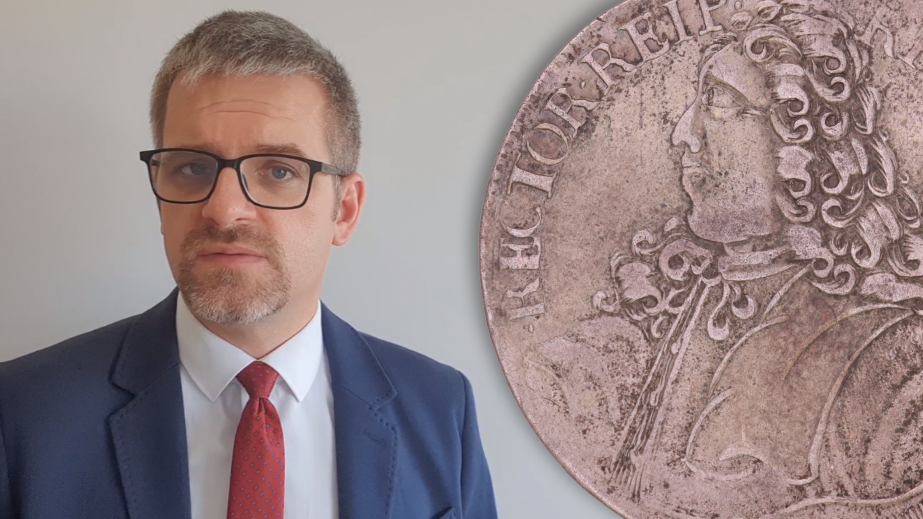




A topic that will cause discomfort and „turn stomachs“ for many, but is extremely important, especially in the collector's world where the boundaries between a hobby and business activity are often blurred. Although a large portion of transactions in this sector take place informally „under the table,“ meaning in the gray or even black zone, it is important to understand where the line lies between what is permitted and regulated by law and what is „on the edge“ or „outlaw.“.
Professional collectors„ item dealers are very few in our country, while there are a great many of those who deal in it “on the side.„ Most trade takes place outside formal channels, especially when it comes to cash transactions that remain “invisible„ to the “state." However, everything that passes through bank accounts, as well as via PayPal, Revolut, and similar services, is very much visible to tax authorities. At any moment, the Tax Administration can check the turnover on those accounts and request an explanation of the origin of the funds.
Numismatics, phaleristics, and related collecting fields bring together many passionate individuals who actively participate in the collector's market. However, it increasingly happens that such activities grow into a serious source of income. Whether it is a conscious decision or a gradual transition from a hobby to a business, the laws are clear—once a certain threshold of activity and income is crossed, an individual is obligated to regulate their status and register the activity.
In this article, we provide an overview of key issues:
- When does a collector cross the boundary of a hobby and enter the realm of economic activity?
- What are the legal obligations of such a person?
- What does the Tax Administration say?
- What are the possible penalties and tax liabilities if the activity is not registered on time?
The goal of this text is to inform and raise awareness about this issue. We want to clarify what is in accordance with the law and what can entail serious consequences if ignored.
Where does a hobby end and a business begin?
In Croatia, there is no clearly prescribed monetary threshold to determine when an activity transitions from a hobby into an economic activity. However, the Tax Administration applies a number of specific criteria to determine whether it is a business activity that should be registered and taxable.
Key indicators that it is no longer just a hobby include:
- Activity frequency - if an individual regularly buys and sells collector's items, regardless of their number.
- Intention to make a profit - if the items are acquired primarily for the purpose of resale rather than for a personal collection.
- Sales organization – if the person uses sales channels such as the internet, social media, trade fairs, or classified ads, and has a continuous offer and clearly defined prices.
- Realized turnover – if such an activity generates a regular monthly or annual income.
When these conditions are met, the Tax Administration may conclude that it is an unregistered independent activity. Such a status entails serious consequences, including retroactive tax calculation, the obligation to pay contributions, interest, and even misdemeanor or criminal sanctions.
Therefore, it is important for everyone who regularly engages in buying and selling, especially in the collector's segment, to carefully consider whether their activity is still within the scope of a hobby or if they have, perhaps unconsciously, stepped into entrepreneurship.
When does turnover become “too large” for the Tax Administration?
Although this is not clearly defined by law, based on previous interpretations by the Tax Administration and field experience, it is possible to roughly estimate when occasional sales cross the threshold of acceptability and become a subject of interest for the tax authorities.
- Occasional sales up to approximately 400 – 500 euros per month, such as selling part of one's own collection, is generally not considered conducting a business activity. The key is that it is a sporadic activity, without the characteristics of continuity. If there is repetition and continuity, then it becomes „problematic.“.
- Monthly turnover of 1,000 euros and more, especially if it is constant and recurring, may already indicate organized economic activity. Such a pattern can attract the attention of the Tax Administration and lead to a tax audit.
- In situations when monthly incomes reach 2,000 – 3,000 euros and more, it is almost certain that this is an activity that must be formally registered. Such amounts can hardly go unnoticed and as a rule require compliance with tax regulations.
In short, occasional small-scale sales are usually not problematic, but regular and significant turnover carries the risk of a tax audit and the obligation to register the activity.
What are the consequences of illegally performing an activity?
If an individual engages in the activity of reselling collectible items without proper registration, they expose themselves to serious consequences. If the Tax Administration determines that such an activity has been ongoing for years, it can take a series of measures:
- Retroactively calculate all taxes and contributions for the previous years in which the income was earned.
- Request the payment of statutory default interest on the total tax liability.
- Initiate misdemeanor proceedings and impose a fine for undeclared activity.
- Request complete documentation on the provenance of the collectibles and the generated revenue.
These measures can have a significant financial and legal impact, so it is crucial to regulate the status of the activity in a timely and proper manner.
How to legally trade collectibles and avoid tax problems?
One of the most important issues facing collectors and dealers of collectibles is how to conduct business legally and without risk? How to take steps in advance so as not to find yourself in a situation that could bring you tax problems or financial penalties?
If you regularly trade in collectibles, whether on a monthly, weekly, or even daily basis, the safest and „cleanest“ way is to legalize that activity by opening a sole proprietorship or a company (corporation). Within registered business operations, there are multiple tax regimes, including lump-sum taxation, operating within or outside the VAT system. Which model you choose depends on your business volume and planned revenue, but in any case, it is a legal framework that enables transparent operations.
Of course, registered business operations also bring certain obligations: paying taxes and contributions, keeping accounting records, and properly maintaining business documentation. Although this entails additional costs, in the long run, it enables peaceful and stable operations without the risk of inspections and penalties.
A second option, which applies to individuals who wish to occasionally sell a part of their collection, is the sale of property after a two-year period from the date of purchase. In this case, according to current legislation, there is no obligation to pay tax because it is the sale of personal property or an investment, rather than a business activity.
However, for this approach, it is crucial to have proof of the purchase date: a receipt, sales contract, or some other document proving when the item was bought. Although this may seem superfluous for items of lesser value, it is recommended to have valid documentation for more expensive collector's pieces.
It is important to note that the Income Tax Act does not explicitly mention investing in collectibles as a source of income, but rather focuses on property and property rights such as real estate or securities. However, the Tax Administration may also apply analogy to this type of property, especially in the case of significant amounts. In practice, collectibles can often have a higher value than certain stocks or even real estate.
Due to legal ambiguity and potential differing interpretations, it is advisable to consult with a tax advisor or directly with the Tax Administration to obtain accurate and specific information for your situation.
If you are already actively engaged in the resale of collectibles without registration, it is best to proactively contact the Tax Administration or register a trade immediately.
You can do this with:
- Instead of a high fine, reach a more favorable settlement.
- Retroactively settle potential obligations through installment payments.
- Ensure long-term legal business operations without the fear of inspections.
How does the Tax Administration monitor the financial data of citizens?
The Tax Administration has an efficient system for monitoring the financial flows of citizens, and the key point of that system is Personal Identification Number (OIB). Every transaction and financial trail associated with your OIB can be subject to monitoring. This includes all forms of bank accounts, payment aggregators (such as card systems and digital wallets), as well as other money transfer platforms.
Institutions that enable financial transactions—banks, payment processors, and other financial organizations—are required to submit data to the Tax Administration. This data is recorded and analyzed, allowing insight into account turnover, the source of payments, and any potential inconsistencies.
This also applies to foreign accounts platforms like PayPal, because information is also exchanged between countries there, allowing the Tax Administration to access data on your financial activities at any time. If, for example, a series of payments from different people appears in your account in amounts that significantly exceed your regular income (salary, dividends, freelance fees, and the like), the system may recognize such patterns as suspicious.
By the development technologies, especially artificial intelligence (AI), it is increasingly certain that systems will automatically detect inconsistencies in financial flows. For example, if a person with a reported regular income of 1,200 euros suddenly receives dozens of payments totaling 5,000 or 6,000 euros, the algorithm will recognize this as a potential irregularity and flag it for further review. Such automated monitoring is already standard practice in many countries and it is only a matter of time before it is integrated here as well.
It is also important to highlight the additional aspect that classified ads (online sales platforms), in accordance with the Act on the Prohibition and Prevention of Unregistered Activities, are required to collect the Personal Identification Numbers (OIB) of users. If the classifieds platform records a sale, this data is forwarded to the Tax Administration. Therefore, even seemingly occasional or „smaller“ sales can become subject to tax supervision.
In certain circles, it is increasingly being whispered that the attention of tax authorities has been drawn to a phenomenon related to the trade in Croatian investment gold coins. Specifically, it has been noted that these coins frequently appear on classified ad sites just one day after their official release, and at prices multiple times higher than the official retail prices. Such situations indicate that this is not a typical investment in numismatics—where a coin would be held for at least two years in order to be sold without the obligation to pay tax—but rather a prompt resale aimed at achieving short-term profit.
This pattern of behavior has clearly attracted the attention of the relevant authorities, since it can no longer be described as a classic investment, but rather as a regular trading activity. What specific steps the tax authority will take, and at what pace any proceedings will unfold, remains to be seen in the coming months.
What are the penalties for tax evasion?
Selling collectible items without reporting to the Tax Administration and without paying the applicable taxes carries certain risks. In such cases, the Tax Administration acts very rigidly and often imposes multiple penalties, since multiple regulations are usually violated simultaneously. Most often, this involves failure to report income, violation of the Trade Act, and other relevant laws, each of which carries its own separate penalties. Therefore, the fines can accumulate and reach very high amounts.
Besides the fines themselves, the Tax Administration retroactively calculates all taxes and contributions as if it were income from independent activity. This calculation includes income tax, pension and health insurance, which can ultimately amount to up to 40% of the total amount of receipts. It is important to emphasize that in such cases actual expenses are not recognized: therefore, if you sold goods for 10,000 EUR and paid 6,000 EUR for them, your actual earnings are 4,000 EUR, but the Tax Authority will not look at that difference. Instead, it will treat the entire 10,000 EUR as income and calculate 40% on it, which means you will pay 4,000 EUR in tax, practically the entire amount of your earnings, as well as the amount of the fine and interest.
Another specific feature of the tax procedure is its reverse logic compared to criminal proceedings. While in criminal law the burden of proof lies with the prosecutor, in the tax procedure it is the other way around: the Tax Administration first issues a decision on the determined tax debt, and it is up to you to initiate an administrative dispute and prove that you have not broken the law. In practice, this means that if the Tax Administration assesses that a certain transaction is subject to taxation, you are the one who must prove otherwise, either within the tax procedure itself or later before the Administrative Court.
It is often possible to hear a justification such as: „I am only selling my private collection and I have the right to dispose of my property.“ Although this is fundamentally true, the Tax Administration will view the situation differently if the sales take place continuously, regularly, via advertisements or other channels that suggest an organized commercial activity. In those cases, such an activity is no longer considered a one-off sale of private property, but rather the carrying out of trade, which brings with it all the obligations of registration, keeping business records, and paying taxes.
Selling a collection to a numismatic company or through an auction house
In the case of selling a collection to a numismatic firm or through an auction house, the situation is legally somewhat clearer and structured differently compared to the private sale of individual items. Here, a formal contract for the sale of the entire collection is usually concluded, which may involve an immediate sale in full or gradual realization through multiple stages.
The key difference lies in the fact that such a legal transaction is not treated as a turnover activity but as a one-time sale of assets (in one or more phases). Since there is a contract that clearly defines the transfer of ownership of the entire collection, this transaction has a solid legal foundation.
Both numismatic firms and auction houses cover such transactions with appropriate contracts, ensuring the transparency and legality of the entire process while placing clients in a more favorable and protected position.
Conclusion
Trading collectibles often starts as a hobby, but when it begins to generate significant and recurring income, the law no longer views it as recreation, but as a business activity. At that point, it is important to understand that undeclared income can result in serious tax consequences, and this must be taken into account.
It's not pleasant, and it's clear that people generally aren't happy about paying taxes, but that's just the way things are, and you need to be aware of certain facts.
It is important to emphasize that all information presented in this text is of an informative nature. It does not constitute legal or tax advice. The NumizmatikaNET portal and the author of the article disclaim any liability for actions taken based on the statements in this article. For accurate and legally valid information, please contact a qualified jurist, attorney, certified tax advisor, or the Tax Administration directly. Always verify all information to ensure it applies to your specific case, as legal regulations and the tax framework are constantly changing.
Author: Zlatko Viščević