
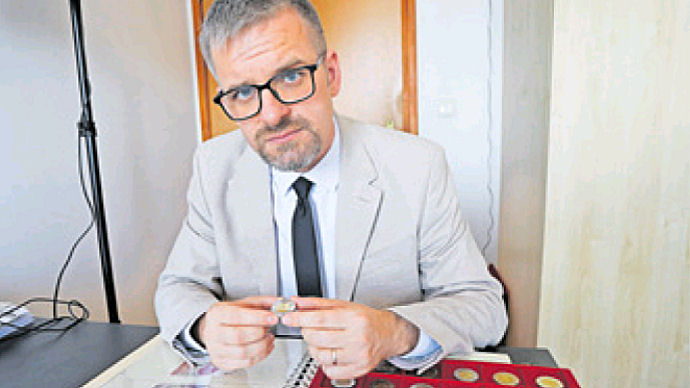
Zlatko Viščević, a numismatist from Kastav, explains how valuable rare Croatian coins are, which are soon going down in history.
A real craze still surrounds the 25-kuna coins featuring the motif of the Pelješac Bridge. At the time of their release, people waited in long lines to get them, and now the reason for such high demand is clear. Namely, today on eBay, this coin, bought for 25 kuna at the Croatian National Bank, is being sold for 500 kuna and more!
However, it seems that the coin featuring the Pelješac Bridge has also sparked interest in other similar Croatian coins. A total of 19 coins with a denomination of 25 kuna were issued, and other such commemorative coins have also seen a price surge, being in high demand on domestic and international online auction sites. Thus, the Pelješac Bridge has indirectly stimulated interest in Croatian numismatics, as almost everything is now in demand.
– It seems that way. Namely, we first had a discussion about what our euro coins would look like, so everyone had their own opinion about it. Then we had the opening of the Pelješac Bridge as a major political and social event, and in that context, this 25-kuna coin was well advertised in the media. Ultimately, this is the last commemorative kuna coin issued before the introduction of the euro. So that coin was also desired by many who are not collectors. No other coin of ours has received such media space so far – says Zlatko Viščević, LL.B., from Kastav, a numismatist, author, and editor of the NumizmatikaNET portal, who believes that this craze is also thanks to our diaspora, who also wanted to have the coin featuring the Pelješac Bridge.
But what is good for Croatian numismatics is that a portion of these people have now also become interested in other Croatian 25-kuna coins, where the smallest mintage is 20,000 and the largest is 300,000 pieces. The Pelješac Bridge had a mintage of 30,000 pieces. The price for all of them has now increased significantly.
– Now the other 25-kuna coins are also being sought, but since people know that the kuna is leaving and the euro is coming, collectors and others alike want to complete and collect all Croatian coins by year, because they will be harder to find later. Now, when people started completing these collections, they quickly came to the conclusion that some „ordinary“ kuna and lipa coins are harder to find. I expect the real rush to be some 4, 5, or more years after we introduce the euro, because those kunas will no longer be in circulation. Then there will be a situation where a commemorative coin like the ten-lipa UN coin from 1995, which now costs 15 to 20 kunas, might cost maybe seven to eight euros, and its face value is ten lipas, that is, a little more than 0.01 euros – Viščević adds.
Important events marked
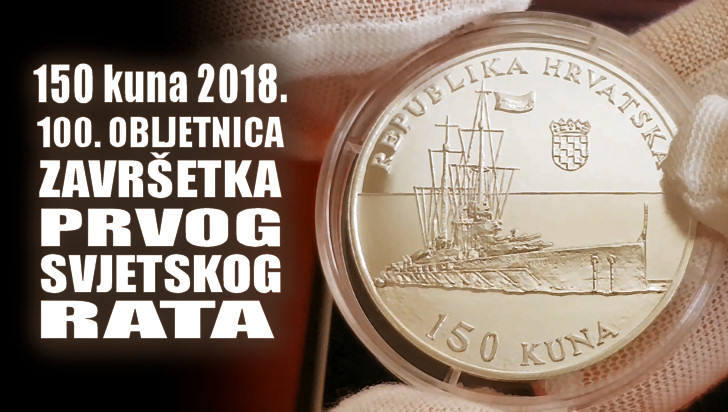
Namely, the 25-kuna ones are not the only commemorative coins. The HNB has also marked some other events with „ordinary,“ i.e., regular denominations of lipa and kuna coins, and now such coins are in demand. These are, for example, the two- and five-lipa and one-kuna coins issued on the occasion of the Olympic Games in Atlanta, the aforementioned ten lipa on the occasion of Croatia's admission to the UN, 50 lipa issued on the occasion of the 1996 European Football Championship, five kuna with the motif of the Senj Glagolitic Missal issued in 1994, etc. All these coins are in regular circulation, but for collectors they have a significantly higher value compared to their nominal value.
"If people find such coins in their wallets, they should always keep them. Especially if they are in very good condition," Viščević tells us, adding that kuna and lipa generally tend to confuse citizens.
- Everyone has probably noticed that they are not all the same. Some have inscriptions in Latin, and some in Croatian. Namely, odd years have Croatian inscriptions, and even years have Latin inscriptions. It is planned for those even years with Latin inscriptions to be issued in smaller quantities, and these are mostly emissions of around two million pieces. Those with odd years and Croatian inscriptions are more common and predominate in circulation. However, their quantity also fluctuates depending on needs. Generally, the ones from recent years of one and two lipa are rarer. They practically haven't been used for years and are not returned as change in stores. Due to inflation, this hasn't made sense for some time. Those coins were in circulation for years, but in the end, they began to represent only a burden for merchants, FINA, and banks, so they practically disappeared from circulation, even though they are still legal tender - Zlatko explains the situation with kunas and lipas that might still be in your wallets.
He believes that the current price of the coin featuring the Pelješac Bridge will not hold, because its price is currently driven more by emotion than reason. Collectors will keep their pieces, but the rest, who bought it due to the general craze, will very quickly lose interest in it and put it up for sale.
– When a collector buys one coin, they don't need another one. They might only buy it if the price is really low. Right now, those prices of 500 and 600 kuna that some are asking are more than exaggerated. For 500 or 600 kuna, you can buy a wonderful numismatic specimen that has been worth something on the market for many years, and worldwide at that. The Pelješac Bridge, it seems to me, is worth it while the euphoria lasts, and then we'll see. Those coins certainly won't be cheap in the future, but they won't be 500-600 kuna either – believes this numismatics expert.
However, Croatia also has valuable coins and paper banknotes in its history, but these are not the ones that are just accidentally found in houses and apartments anymore, e.g., ancient coins from this region, coins of the former Republic of Dubrovnik, „Yugolira“ banknotes from the middle of the last century, etc. However, banknotes from the former NDH can be found a bit more often.
– The NDH issued only paper money, but also a single two-kuna coin released in 1944, even though it is dated 1941. Most NDH banknotes are quite common, except for a few. Two are rare: the 500 kunas from 1943 and the 50 kunas from 1944, and they are expensive. The 100-kuna banknote from 1943 and the 20-kuna banknote from 1944 are somewhat less frequent compared to the others, while all the rest are common and inexpensive. There are really a lot of them, but the problem with NDH banknotes is finding good quality, perfectly preserved banknotes that were not in circulation – explains Viščević.
Yugoslav banknotes from the 1960s onwards are often found in homes today, just as common as Croatian dinars from the early 1990s. There are a great many of them on the market, just as there are many banknotes of the so-called Republic of Serbian Krajina, which everyone kept as war souvenirs after Operation Storm. With both the Croatian dinar and these „Krajina“ ones, only certain specimens that are truly in mint condition have any value.
Croatian motifs on the euro
Although we will soon say goodbye to the kuna, this does not mean we are also saying goodbye to Croatian motifs on coins. The euro gives us the opportunity to commemorate occasions that are important to us on the „national side“ of the euro coins.
– Each country can issue up to a maximum of two commemorative two-euro coins once a year. And here each country chooses its own motif and the theme it wants, provided that it is sent to the European Central Bank for approval and all member countries must agree to it. Therefore, the goal is to prevent a country from putting a motif that could politically upset another country. Euro coins are collected by a wide circle of collectors throughout the European Union, so collectors from all over Europe will also seek out Croatian euros to complete their collections – says Viščević, who notes that, when it comes to the euro, there are very valuable coins.
Namely, there is a large number of euro collectors, and they all collect issues from all European Union countries. Within the eurozone, there are countries that issue their euros in relatively small quantities every year: Andorra, Monaco, Vatican City, and San Marino. Collectors from all over Europe are interested in them, and the prices of some specimens from these countries are very high.
– I believe there will be great interest in our euro coins as well, so the situation with queues in front of the CNB could repeat when our commemorative two-euro coins appear. The one with the motif of the Pelješac Bridge, as we noted, had a mintage of 30,000 pieces, so they were all snapped up in Croatia. We can only guess what kind of chaos would ensue if Croatian commemorative two-euro coins were issued in such a small mintage. In that case, the lines would be far longer than for the 25-kuna coin with the Pelješac Bridge – Viščević believes.
By the way, the two-euro commemorative coin issued by Monaco in 2007 featuring Grace Kelly, with a mintage of 20,001 pieces, is now worth thousands of euros. Who knows, maybe some Croatian euro coin will soon make history as one of the most expensive.
Author: Danijel Prerad
Source: Vecernji.hr