





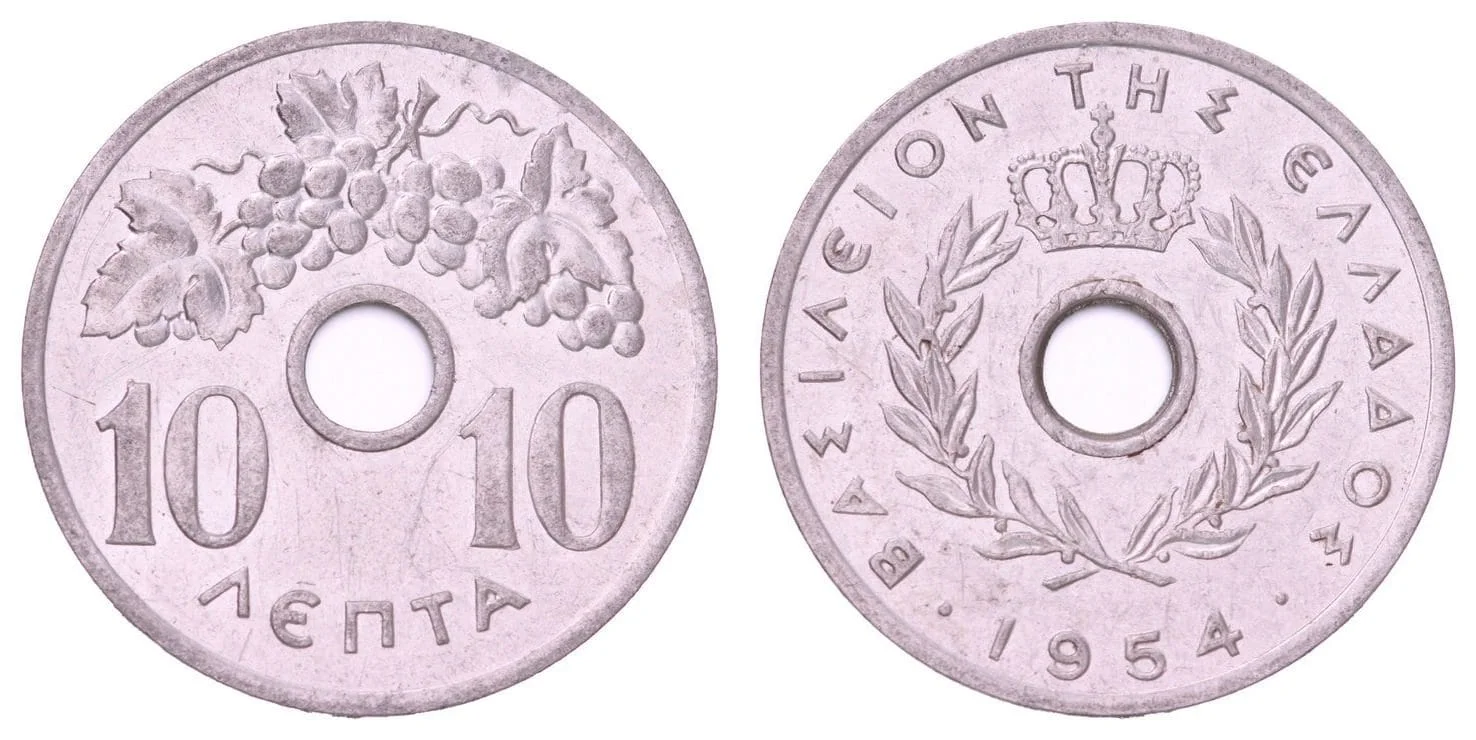
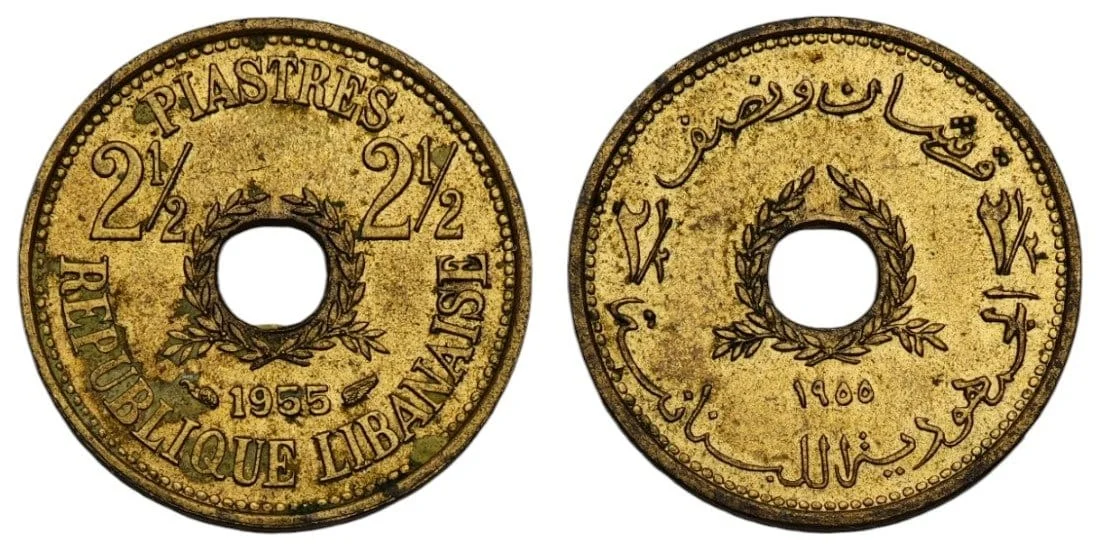
Throughout the centuries, coinage has experienced many forms and variations: in material, size, shape, and design. There are truly all kinds of them, and even some with—holes! Today we encounter coins with holes all over the world, but they are somehow historically most associated with money from East Asia. The hole in the center of the coin has a long and rich history, and its function has changed over time; initially from purely practical, to aesthetic and security.
Practical function in transport and production process
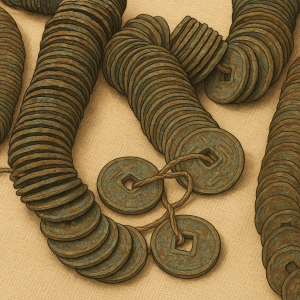
One of the oldest and most practical reasons why coins had a hole in the middle was the ability to string them onto a rope, wire, or stick. This practice was especially widespread in ancient China and Japan. The famous Chinese „cash“ coins with a square hole in the middle were used for more than 2,000 years. Stringing them allowed for easier transport and storage of larger quantities of small change. Instead of carrying them in a pouch, they were simply worn on a rope or wire.
The square hole in Chinese coins also had a function during their production. Since old Chinese coins were made by casting rather than forging, hundreds of coins were connected together by metal „rods.“ Such coins would then be separated from one another, but their rims would have excess metal at the point where the molten metal flowed in. To smooth the rims, metal rods were inserted into the square central holes, and the rims of the coins were then ground down until they became uniformly smooth.
Easier differentiation for the blind and visually impaired
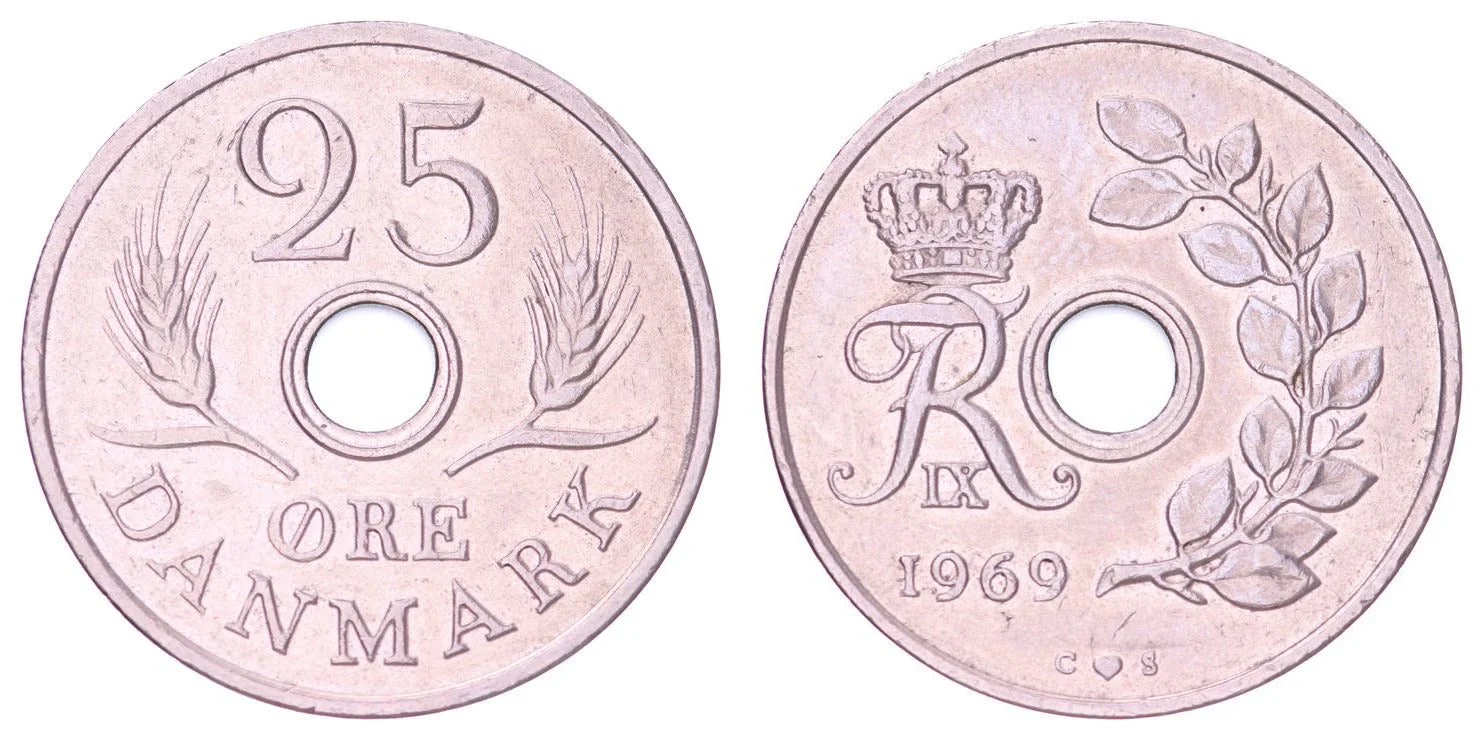
In modern times, especially in Scandinavian countries, the hole in coins also serves as an aid for blind and visually impaired people. By feeling with their fingers, such coins can be easily distinguished from those without a hole, thereby increasing inclusivity in the everyday use of money.
Anti-counterfeiting
Over time, the central hole in coins also takes on a new function as a protection against counterfeiting. Specifically, producing a coin with a hole requires special tools and procedures, which in turn makes the production of counterfeit specimens more difficult. Although this is rarely emphasized publicly, many mints around the world acknowledge that the hole is an additional barrier for those who might attempt to make fake specimens.

Material savings in manufacturing: myth or fact?
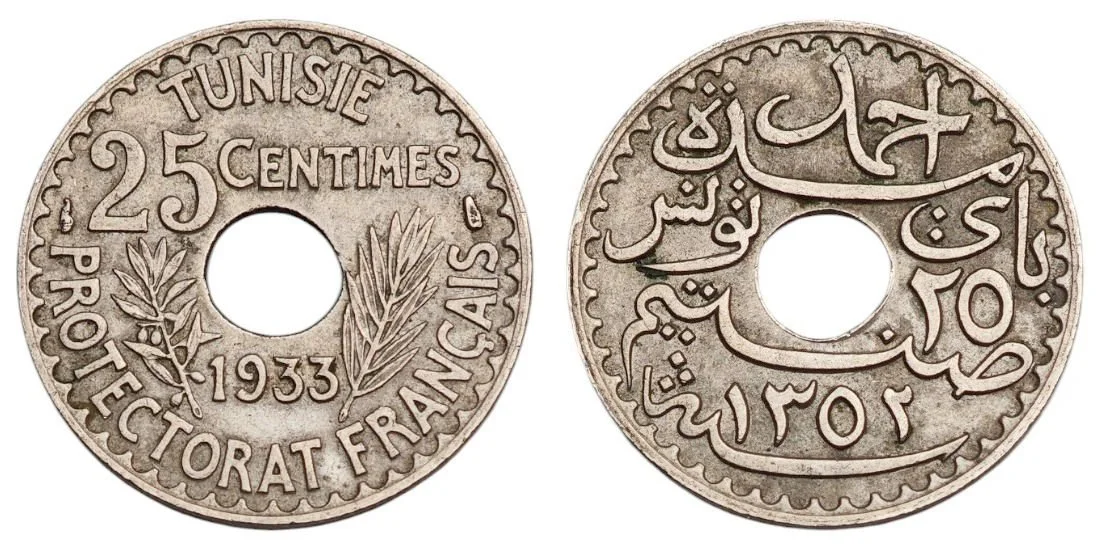
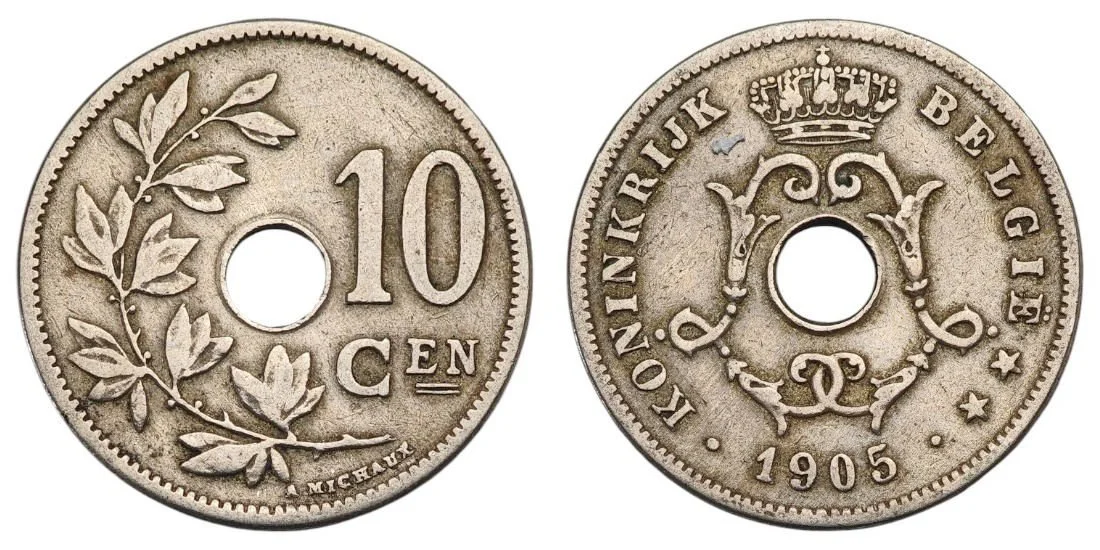
Sometimes it is claimed that the hole in a coin allows for metal savings, but this theory has no solid evidence. Namely, the amount of metal in a coin with a hole is usually not significantly smaller, and the hole can also complicate production. However, in certain cases with Asian currency, large holes may have indeed served the purpose of rationalizing metal consumption, especially when dealing with precious metals.
Where can we see coins with a hole today?
Even today, coins with holes remain in circulation in several countries such as Japan, Denmark, Norway, Papua New Guinea, etc.
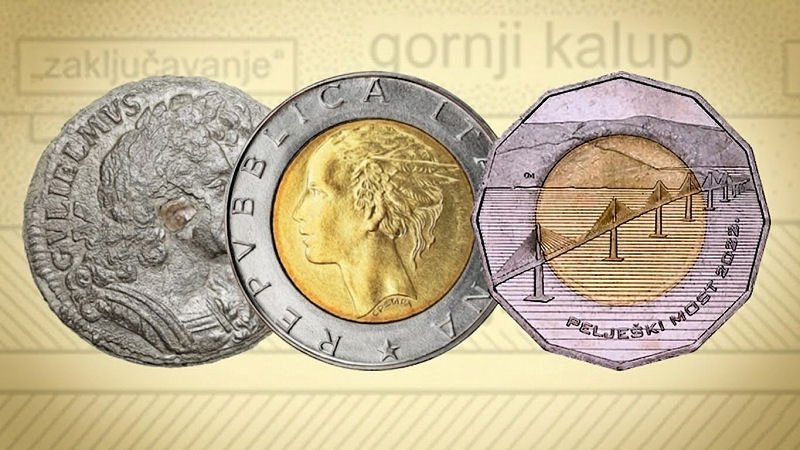
In addition, numerous countries have issued numismatic and commemorative coins with a hole in the center, often as a symbol of connection to ancient traditions or as a design experiment.
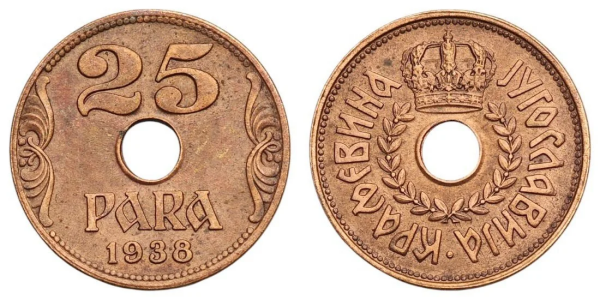
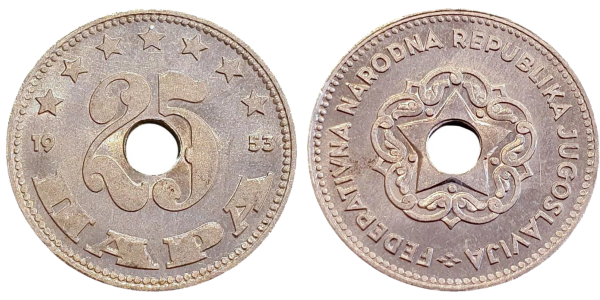
In our region, the only circulating coin with a hole was the 25 para coin of the Kingdom of Yugoslavia from 1938. There was an idea to issue 25 para coins of the FPR Yugoslavia dated 1953 with a hole in the center, but that was abandoned.
Coins with a hole in the center combine tradition, practicality, inclusivity, and aesthetics. Whether tied to ancient trade routes of the Far East, the protection of the visually impaired, or the fight against counterfeiting, such coins hold a special place in the history of numismatics. Their longevity and presence in modern monetary systems show how details in coin design can have deeply rooted reasons, both functional and symbolic.
Author: Zlatko Viščević
Photos: Numex – Coins, Banknotes & Militaria Store [www.numex.hr]