



For decades, numismatic catalogs have been one of the fundamental tools for collector numismatists, dealers, and auctioneers. Aside from providing a systematic overview of issues, types, varieties, and technical characteristics of coins or banknotes, almost every catalog also includes estimated market values, or „catalog prices.“ It is precisely these prices that often provoke the most interest, but also the most misunderstandings among participants in the numismatic market.
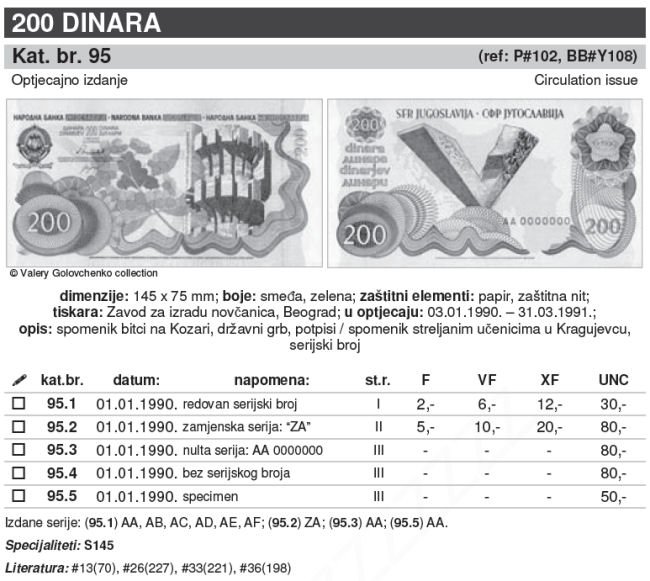
For many buyers of numismatic literature, catalog prices are even the main reason for purchasing a catalog. They want to get a rough idea of how much their collection is worth and what its potential market price might be. However, it is important to emphasize that prices in catalogs are not actual market prices at the time of purchase or sale, but rather indicative estimates which have an informative purpose.
How catalog prices are created
Defining catalog prices is one of the most difficult tasks faced by the authors of numismatic catalogs. When determining value, various sources are usually taken into account:
- auction results
- retail prices of merchants
- frequency of occurrence of a specific type on the market
- the author's and his contributors' (co-authors') many years of experience
It is ideal when there is a larger number of recorded auction results for the same item, because such data allows for a relatively reliable formation of the average market value. In that case, the catalog price can be based on actual sales rather than just a rough estimate.

The eternal conflict of interest between buyers and merchants
Determining list prices is made even more difficult by the fact that market participants often have different expectations regarding them.
- Merchants They often prefer higher list prices because it allows them to sell at a discount compared to the catalog.
- Customers, on the other hand, prefer lower catalog prices because this means a more favorable market value assessment.
Because of this, the catalog author is often in an ungrateful situation: it is almost certain that at least one party will be dissatisfied. Exactly for this reason, many authors emphasize that catalog prices should be understood as indicative framework, and not as a precise price list.
Catalog price manipulation
In numismatic practice, certain manipulations of catalog prices also sometimes occur.
Some authors resort to setting unrealistically high list prices, all so that retailers have as much „room“ as possible to sell „below the list price.“ It can then seem to the buyer that they have made a good purchase because they acquired the item at a price lower than the list price.
Other authors consider such a practice problematic because they believe that artificially increasing prices undermines the credibility of the catalog, as well as the reputation and objectivity of the author themselves in the long run.
A particularly sensitive issue arises when the author of the catalog is also a dealer. In such cases, there may be a temptation to:
- higher list price specified for items that the author has in stock,
- lower list price for items it wishes to purchase.
In this way, the catalog can be used as an argument during buying or selling, which can lead to the manipulation of market expectations and the deception of those who are not well-versed in numismatic values.
Difference between the list price and the actual market price
In practice, three typical situations are often encountered:
1. The catalog price is higher than the market price. This often happens with materials that are relatively common and widely available. In such cases, the actual selling price can be significantly lower than the list price.
2. The catalog price is lower than the market price. For rare or currently highly sought-after coins or banknotes, the market price canकई times exceed the catalog price.
3. Large deviations in top-grade preservation. Specimens of exceptional quality, especially those certified by international grading houses, can fetch significantly higher prices than those listed in the catalog.
The dynamic nature of numismatic prices
Prices of numismatic material are extremely dynamic and constantly changing, especially in the last few years. They are influenced by numerous factors, among which the most important are:
- supply and demand ratio
- current collecting trends
- availability of certain types on the market
- precious metal price for gold and silver coins
An additional problem is represented by Inflation. As inflation causes a general increase in the prices of goods and services, catalog prices can become outdated over time. Thus, it often happens that the prices listed in the catalog no longer realistically reflect market conditions after just one or two years.
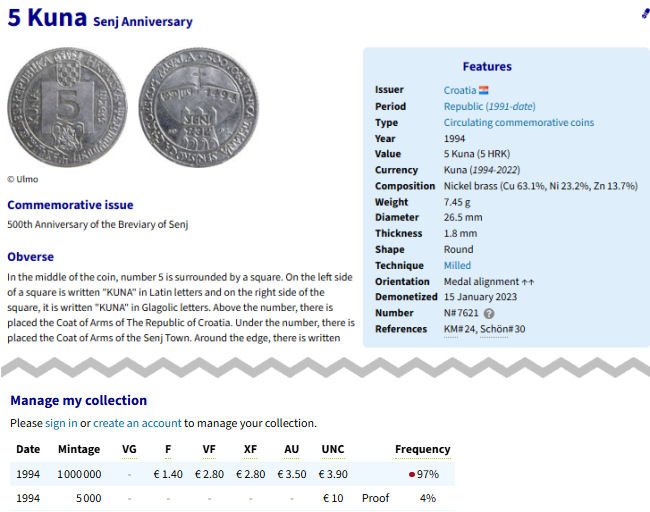
The role of auctions in the formation of actual prices
Today, auction results are one of the most important indicators of real market value. Unlike catalog estimates, the auction price represents the actual amount a buyer was willing to pay at a given moment.
However, auction results should also be viewed with a certain degree of caution. The final price can be influenced by:
- stiff competition among bidders
- exceptional rarity or preservation of the specimen
- current market interest
Because of this, an individual auction does not always have to represent the permanent market value of a certain item. However, it is good if we have as many realized auction results as possible for a certain item, so that based on that we can build a much „clearer picture“ of the market condition.
Why Catalogs Still Matter
Despite all limitations, catalogs still play a key role in numismatics. They enable:
- basic orientation in the values of individual types
- comparison of rarity between different editions
- standardized reference system for collectors and dealers
In other words, A catalog is not a price list, but a reference framework that helps understand the relative relationships between different coins, variants, and grades of preservation.
Prices in numismatic catalogs should be viewed as an informative framework rather than the final market value. The actual price always depends on a number of factors: condition, rarity, current demand, and the circumstances of the sale.
For a serious collector or dealer, the best approach is to combine catalog information with an analysis of recent auction results and current market offerings. Only such an approach enables a realistic assessment of the value of numismatic material.
Author: Zlatko Viščević