


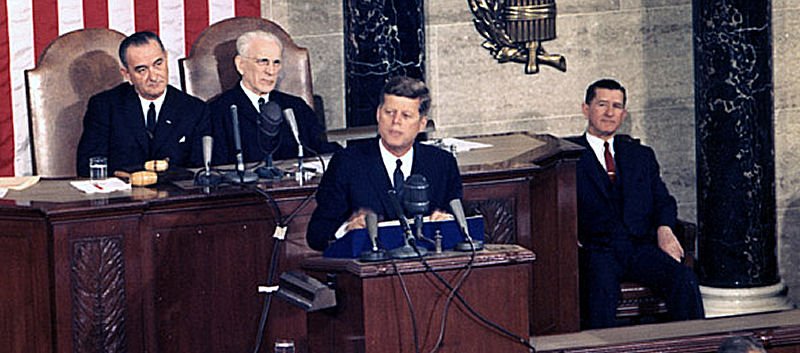
Among the American coins of the second half of the 20th century, few issues are as recognizable as the half dollar featuring the portrait John F. Kennedy. It is a 50-cent coin that has been minted in the United States from 1964 to the present day, created at a special historical moment as a numismatic monument to the assassinated American president.
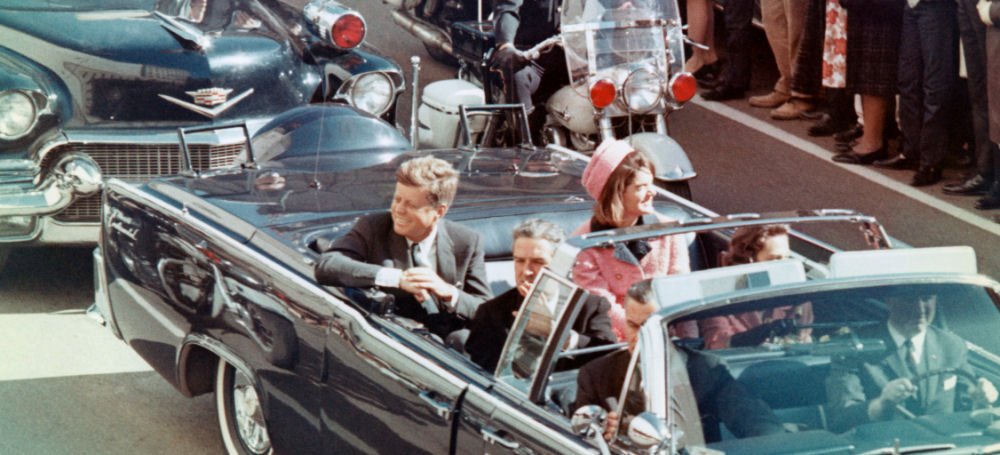
John Fitzgerald Kennedy was the 35th President of the United States. He took office in 1961 and was assassinated in Dallas on November 22, 1963. His death deeply affected the American public, and the decision to place his image on a coin was made very quickly after the assassination. Thus, the Kennedy half dollar became more than just ordinary circulating money – it became a small metal monument to one of America's most famous presidents.
Origin of the coin
Following Kennedy's death, the idea arose to feature his likeness on one of the larger American silver coins. The silver dollar, half dollar, and quarter dollar were all considered. In the end, the half dollar was chosen, which had previously borne the likeness of Benjamin Franklin.
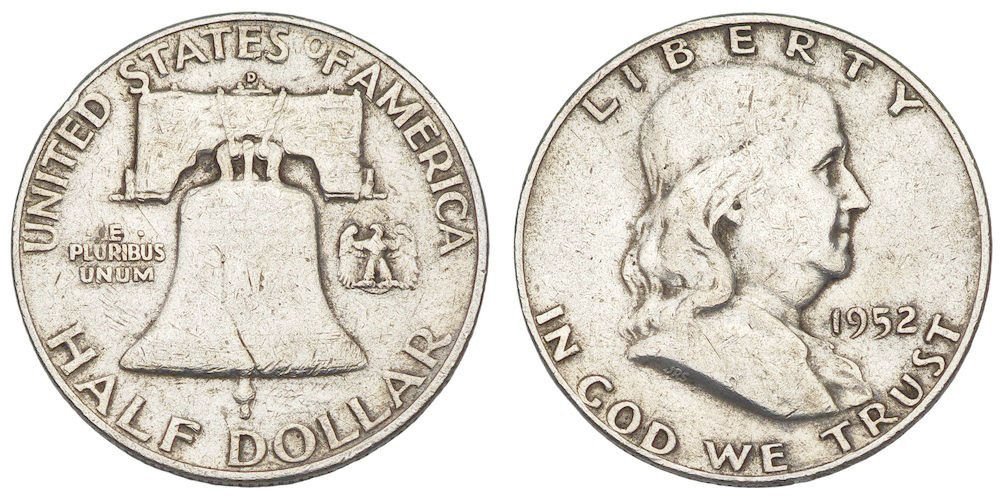
An important role in that was played by Jacqueline Kennedy, the widow of the assassinated president. According to available data, she did not want the quarter-dollar featuring George Washington to be changed, so the choice fell on the half-dollar denomination. This ended the Franklin half dollar series, which was minted from 1948 to 1963, and began a new series – the Kennedy half dollar.
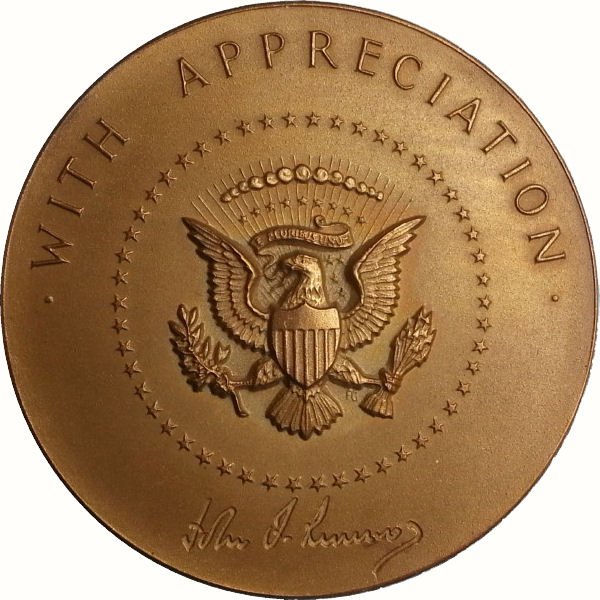
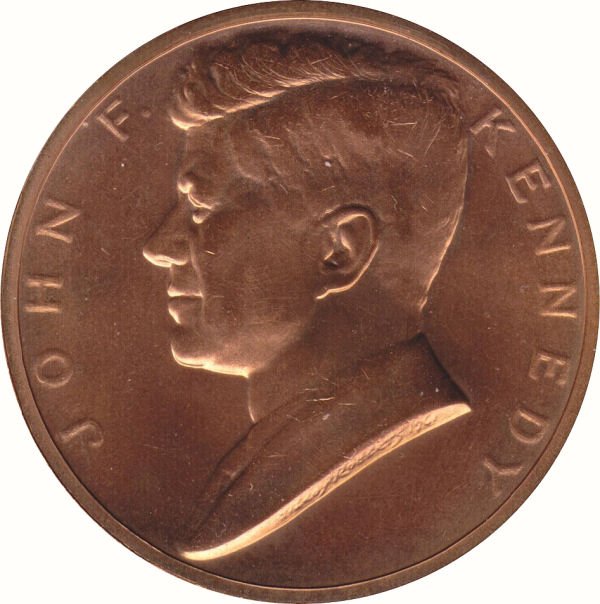
Due to the short time frame, the new design was not created entirely from scratch. Mint chief engraver Gilroy Roberts adapted the Kennedy portrait he had previously created for the presidential medal, while Frank Gasparro adapted the reverse with a modified Presidential Seal of the United States. The first specimens were minted as early as early 1964.
Design: Kennedy and the US coat of arms
On the obverse of the coin is a modified Presidential Seal of the United States. In the center is an American eagle with a shield on its chest. In one talon, it holds an olive branch as a symbol of peace, and in the other, a bundle of arrows as a symbol of military preparedness. In its beak is a ribbon with the inscription “E PLURIBUS UNUM”, and around the eagle is a circle of stars. Along the rim is the inscription “UNITED STATES OF AMERICA”, and at the bottom is the denomination “HALF DOLLAR”. The author of the obverse is Frank Gasparro, whose initials FG are located in the lower part of the design.
On the reverse of the coin is the left profile of John F. Kennedy. Above the portrait is the inscription “LIBERTY”, and below and along the portrait is the motto “IN GOD WE TRUST”, along with the year of minting. The author of the portrait is Gilroy Roberts, whose monogram GR is located on the truncated part of the neck.
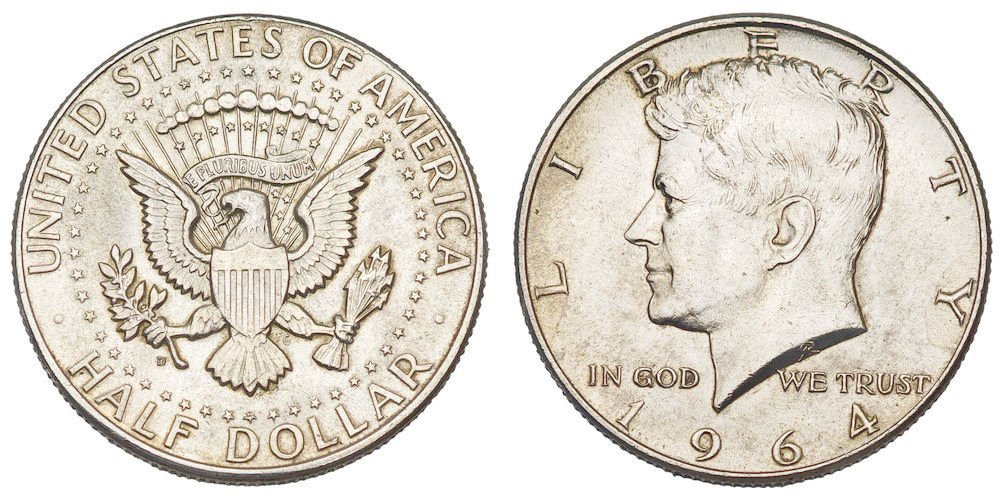
This basic design featuring Kennedy's portrait and the presidential seal has been retained to this day, with the exception of special commemorative editions, the most famous of which is the 1975/1976 commemorative issue depicting Independence Hall on the reverse.
From silver to base metal
The first issue from 1964 was struck in 900/1000 fine silver, specifically an alloy of 90% silver and 10% copper. The coin had a mass of 12.5 grams and a diameter of 30.6 mm. Because of their silver content, as well as the emotional connection to Kennedy, these coins were immediately hoarded en masse, with very few actually remaining in circulation.
From 1965 to 1970, the composition changed. The coin still contained silver, but only 40%. The outer layer was silver-copper, while the core was mostly copper, with a smaller silver content. Although the amount of silver was reduced, the coins were still saved rather than spent.
Since 1971, silver has been completely removed from the regular circulating issue. Coins have since been minted from a copper-nickel clad over a copper core. Their mass has been reduced to 11.34 grams. This made the Kennedy half dollar a base metal coin, although special silver proof editions continued to be produced for collectors.
From 1992 to 2018, silver proof specimens were again made from 90% silver, and since 2019, silver proof specimens have been struck from 999 fine silver.
The coin everyone wanted, but no one spent
The Kennedy half dollar is an interesting example of a coin that was formally intended for circulation, but in reality never caught on as everyday money. Even the first specimens from 1964 were massively withdrawn from circulation. People kept them as a keepsake of the assassinated president, and collectors and the general public bought them as soon as they appeared.
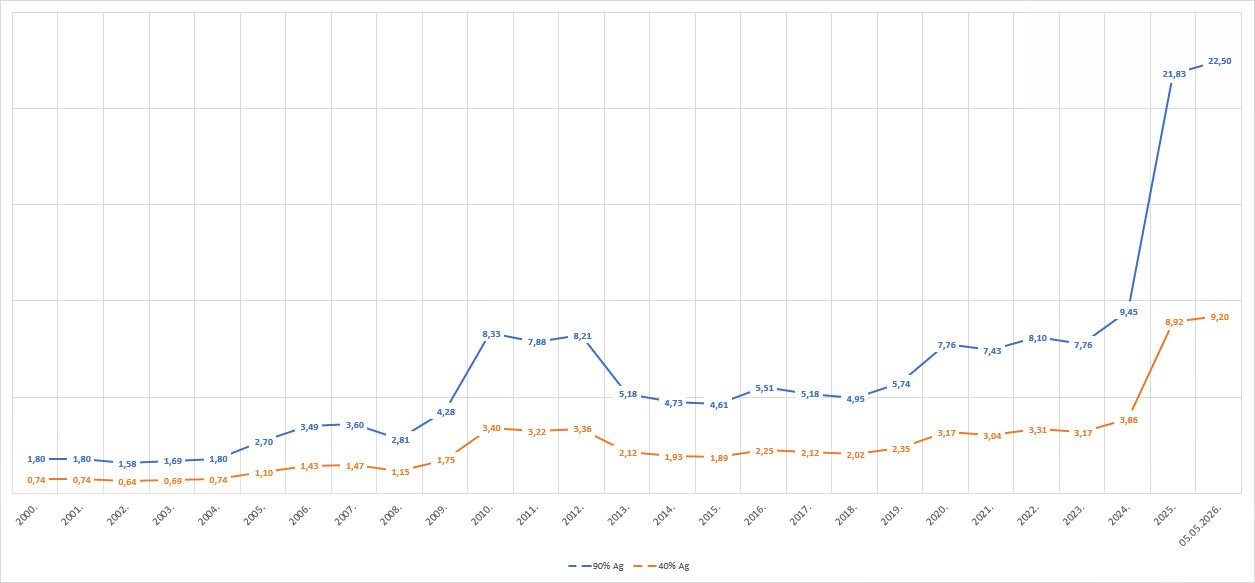
The silver content had a major influence on this. As the price of silver rose, many people kept the coins or later melted them down for the metal. The U.S. Mint increased production to meet demand, but this did not significantly change the situation. The coins left the mint, but did not remain in circulation.
Even after switching to a copper-nickel composition in 1971, the half dollar did not become a common coin in American pockets. The 50-cent denomination was already losing its practical role in everyday payments at that time, and the habit of saving Kennedy half dollars continued even after the minting of silver coins was suspended.
Largest and smallest emissions
If looking at the basic design with Kennedy's portrait and the presidential coat of arms, the largest circulation mintage was achieved in 1971, when a total of 457,261,424 pieces were minted. That year, silver had already been phased out of the regular issue, and the mint attempted to revive the half-dollar denomination.
The year 1964 is also extremely important, as a total of 433,460,212 pieces were minted for circulation then, along with nearly four million proof pieces. It is also the only regular year of this series in which the circulating Kennedy half dollar was struck in 90% silver.
The lowest mintage of a base type in regular business strikes refers to the 1970-D, with 2,150,000 pieces. However, these specimens were not released into regular circulation, but were available only in mint sets. The same applies to the year 1987, when the coins were not struck for general circulation, but only for sets.
From 2002 to 2020, the Kennedy half dollar was not minted for regular circulation in the classical sense, but mainly for collectors, in rolls, bags, and sets, sold above face value. It is only since 2021 that minting for wider distribution has been recorded again.
Kennedy half dollar mintages by year
The table shows total emissions by year for the base type with Kennedy's portrait and the presidential coat of arms. For years with special commemorative issues, additional notes are also provided. The 1776–1976 commemorative issue is not the base type with the coat of arms on the obverse, but a commemorative issue featuring Independence Hall.
Mint marks are: (P) – Philadelphia (no mint mark or letter P); (D) – Denver (letter D) and (S) – San Francisco (letter S).
| Year: | Metal | Circulating supply: | Mint sets: | Proof sets: |
|---|---|---|---|---|
| 1964. | 90% silver | 277,254,766 (P) + 156,205,446 (D) | — | 3,950,762 (P) |
| 1965. | 40% silver | 65,879,366 (P) | 2,360,000 (P) | — |
| 1966. | 40% silver | 108,984,932 (P) | 2,261,583 (P) | — |
| 1967. | 40% silver | 295,046,978 (P) | 1,863,344 (P) | — |
| 1968. | 40% silver | 246.951.930 (D) | — | 3,041,506 (S) |
| 1969. | 40% silver | 129,881,800 (D) | — | 2,934,631 (S) |
| 1970. | 40% silver | — | 2,150,000 (D) | 2,632,810 (S) |
| 1971. | copper-nickel alloy | 155,640,000 (P) + 302,097,424 (D) | — | 3,244,183 (S) |
| 1972. | copper-nickel alloy | 153,180,000 (P) + 141,890,000 (D) | — | 3,267,667 (S) |
| 1973. | copper-nickel alloy | 64,964,000 (P) + 83,171,400 (D) | — | 2,767,624 (S) |
| 1974. | copper-nickel alloy | 201,596,000 (P) + 79,066,300 (D) | — | 2,617,350 (S) |
| 1977. | copper-nickel alloy | 43.598.000 (P) + 31.449.106 (D) | — | 3,251,152 (S) |
| 1978. | copper-nickel alloy | 14.350.000 (P) + 13.765.799 (D) | — | 3,127,788 (S) |
| 1979. | copper-nickel alloy | 68,312,000 (P) + 15,815,422 (D) | — | 3,677,175 (S) |
| 1980. | copper-nickel alloy | 44,134,000 (P) + 33,456,449 (D) | — | 3,547,030 (S) |
| 1981. | copper-nickel alloy | 29,544,000 (P) + 27,839,533 (D) | — | 4,063,083 (S) |
| 1982. | copper-nickel alloy | 10,819,000 (P) + 13,140,102 (D) | — | 3,857,479 (S) |
| 1983. | copper-nickel alloy | 34,139,000 (P) + 32,472,244 (D) | — | 3,279,126 (S) |
| 1984. | copper-nickel alloy | 26,029,000 (P) + 26,262,158 (D) | — | 3,065,110 (S) |
| 1985. | copper-nickel alloy | 18.706.962 (P) + 19.814.034 (D) | — | 3,962,138 (S) |
| 1986. | copper-nickel alloy | 13,107,633 (P) + 15,336,145 (D) | — | 2,411,180 (S) |
| 1987. | copper-nickel alloy | — | 2,890,758 (P) + 2,890,758 (D) | 4,407,728 (S) |
| 1988. | copper-nickel alloy | 13,626,000 (P) + 12,000,096 (D) | — | 3,262,948 (S) |
| 1989. | copper-nickel alloy | 24,542,000 (P) + 23,000,216 (D) | — | 3,220,194 (S) |
| 1990. | copper-nickel alloy | 22,780,000 (P) + 20,096,242 (D) | — | 3,299,559 (S) |
| 1991. | copper-nickel alloy | 14,874,000 (P) + 15,054,678 (D) | — | 2,867,787 (S) |
| 1992. | copper-nickel alloy | 17,628,000 (P) + 17,000,106 (D) | — | 2,858,981 (S) |
| 1993. | copper-nickel alloy | 15,510,000 (P) + 15,000,006 (D) | — | 2,633,439 (S) |
| 1994. | copper-nickel alloy | 23,718,000 (P) + 23,828,110 (D) | — | 2,484,594 (S) |
| 1995. | copper-nickel alloy | 26.496.000 (P) + 26.288.000 (D) | — | 2,010,384 (S) |
| 1996. | copper-nickel alloy | 24,442,000 (P) + 24,744,000 (D) | — | 2,085,191 (S) |
| 1997. | copper-nickel alloy | 20,882,000 (P) + 19,876,000 (D) | — | 1,975,000 (S) |
| 1998. | copper-nickel alloy | 15,646,000 (P) + 15,064,000 (D) | — | 2,078,494 (S) |
| 1999. | copper-nickel alloy | 8,900,000 (P) + 10,682,000 (D) | — | 2,557,897 (S) |
| 2000. | copper-nickel alloy | 22,600,000 (P) + 19,466,000 (D) | — | 3,082,944 (S) |
| 2001. | copper-nickel alloy | 21.200.000 (P) + 19.504.000 (D) | — | 2,235,000 (S) |
| 2002. | copper-nickel alloy | — | 3,100,000 (P) + 2,500,000 (D) | 2,268,913 (S) |
| 2003. | copper-nickel alloy | — | 2,500,000 (P) + 2,500,000 (D) | 2,076,165 (S) |
| 2004. | copper-nickel alloy | — | 2,900,000 (P) + 2,900,000 (D) | 1,789,488 (S) |
| 2005. | copper-nickel alloy | — | 3,800,000 (P) + 3,500,000 (D) + 1,160,000 (P, Satin Finish) + 1,160,000 (D, Satin Finish) | 2,275,000 (S) |
| 2006. | copper-nickel alloy | — | 2,400,000 (P) + 2,000,000 (D) + 847,361 (P, Satin Finish) + 847,361 (D, Satin Finish) | 1,934,965 (S) |
| 2007. | copper-nickel alloy | — | 2,400,000 (P) + 2,400,000 (D) + 895,628 (P, Satin Finish) + 895,628 (D, Satin Finish) | 1,384,797 (S) |
| 2008. | copper-nickel alloy | — | 1,700,000 (P) + 1,700,000 (D) + 745,464 (P, Satin Finish) + 745,464 (D, Satin Finish) | 1,377,424 (S) |
| 2009. | copper-nickel alloy | — | 1,900,000 (P) + 1,900,000 (D) + 784,614 (P, Satin Finish) + 784,614 (D, Satin Finish) | 1,477,967 (S) |
| 2010. | copper-nickel alloy | — | 1,700,000 (P) + 1,800,000 (D) + 583,897 (P, Satin Finish) + 583,897 (D, Satin Finish) | 1,103,950 (S) |
| 2011. | copper-nickel alloy | — | 1,750,000 (P) + 1,700,000 (D) | 1,098,835 (S) |
| 2012. | copper-nickel alloy | — | 1,800,000 (P) + 1,700,000 (D) | 794.002 (S) |
| 2013. | copper-nickel alloy | — | 5,000,000 (P) + 4,600,000 (D) | 821.031 (S) |
| 2014. | copper-nickel alloy | — | 2.500.000 (P) + 2.100.000 (D) + 197.608 (P, 50th anniversary) + 197.608 (D, 50th anniversary) | 767.977 (S) |
| 2015. | copper-nickel alloy | — | 2,300,000 (P) + 2,300,000 (D) | 711.952 (S) |
| 2016. | copper-nickel alloy | — | 2,100,000 (P) + 2,100,000 (D) | 621.384 (S) |
| 2017. | copper-nickel alloy | — | 1,800,000 (P) + 2,900,000 (D) + 225,000 (S, Enhanced Uncirculated) | 592.890 (S) |
| 2018. | copper-nickel alloy | — | 1,900,000 (P) + 1,900,000 (D) | 535.221 (S) |
| 2019. | copper-nickel alloy | — | 1,700,000 (P) + 1,700,000 (D) + 50,000 (D, SP PL) | 638,704 (S) + 100,000 (S, Enhanced Reverse Proof) |
| 2020. | copper-nickel alloy | — | 2,300,000 (P) + 3,400,000 (D) | no data (S) |
| 2021. | copper-nickel alloy | 5,400,000 (P) + 7,700,000 (D) | — | no data |
| 2022. | copper-nickel alloy | 4,800,000 (P) + 4,900,000 (D) | — | no data (S) |
| 2023. | copper-nickel alloy | 30,200,000 (P) + 27,800,000 (D) | — | no data (S) |
| 2024. | copper-nickel alloy | 15,700,000 (P) + 21,900,000 (D) | — | no data (S) |
| 2025. | copper-nickel alloy | 14,200,000 (P) + 19,800,000 (D) | — | no data (S) |
Commemorative and special editions
Although this overview covers the basic design featuring Kennedy's portrait and the presidential seal, it is important to mention that commemorative editions also exist.
The most famous is the Bicentennial edition, minted in 1975 and 1976, with the dual date 1776–1976. On the reverse of that edition is not the presidential coat of arms, but a depiction of Independence Hall. This edition commemorates the 200th anniversary of American independence and is distinct in design from the regular type.
The year 2014 marked the 50th anniversary of the Kennedy half dollar. Special collector's editions were issued at that time, including a gold specimen with the dual date 1964–2014, as well as silver editions from various mints. These editions are not part of the regular circulating series, but are important for collectors following the entire Kennedy half dollar series.
Particularly interesting are certain collector editions, such as the 1998-S matte finish specimen, the 2017-S enhanced uncirculated issue, the 2018-S reverse proof issue, and the 2019-S enhanced reverse proof specimen.
Matte finish, Enhanced Uncirculated, and Enhanced Reverse Proof are not separate circulating types, but special collector coin finishes.
- Matte finish denotes a frosted, satin finish;
- Enhanced Uncirculated enhanced non-circulating quality with accentuated details; a
- Enhanced Reverse Proof special proof edition with a reversed relationship of frosted and glossy surfaces and additionally enhanced contrast.
What is important for collectors?
For collectors, three groups of Kennedy half dollars are the most important.
The first group consists of silver specimens from 1964. These are the only regular circulation Kennedy halves made of 90% silver and are therefore in steady demand, not only among numismatists but also among those who track the value of precious metals.
The second group consists of 40% silver pieces from the 1965–1970 period. They are less valuable than the 1964 issues, but they are still silver coins, making them an interesting and accessible form of American silver coinage.
The third group consists of collector and smaller issues, notably the 1970-D, 1987-P, and 1987-D, issues from 2002 to 2020 that were not intended for regular circulation, special proof issues, and individual variants. Among the variants, the 1964 „Accented Hair” proof is often mentioned, as well as the rare 1964 SMS (Special Mint Set) specimens, which are among the most sought-after and expensive special issues of this series.
It is important to emphasize that a large mintage does not always mean high availability in fine condition. With Kennedy half dollars, many specimens were saved, but at the same time, large parts of the early silver issues ended up melted down. Therefore, when evaluating, one must always look not only at the year and mint mark, but also at the condition, strike quality, surface preservation, potential varieties, and inclusion in special sets.

One of the most famous American coins
The Kennedy half dollar is one of the most famous modern American coins. It was created as an immediate reaction to the death of President John F. Kennedy, and from day one it held a strong symbolic value. In a numismatic sense, it is interesting because in a single series it shows the transition of American circulating currency from silver to base metal.
The first edition from 1964 belongs to the classic silver coins. The issues from 1965 to 1970 represent a transitional phase with 40% silver, and from 1971 the series enters the copper-nickel coin period. Despite large mintages, the Kennedy half dollar never became a common everyday circulation coin. People kept it as a keepsake, as silver, or as a collector's item.
That is precisely why this series holds a special place in American numismatics. It is not just a sequence of years, mints, and issues, but also a story of politics, emotion, a changing monetary system, and a collecting habit that has lasted for more than sixty years.
Author: Zlatko Viščević with AI assistance
Photos: Numex.hr, Wikipedia