


Money in leper colonies was a special type of currency (tokens, vouchers, or special coins and banknotes) that circulated exclusively within leprosariums, or sanatoriums for leprosy patients. The reason for its introduction was the fear that ordinary money could transmit the infection and thus endanger the healthy population. Today, it is known that leprosy is not easily transmitted by casual touch or via objects, but exclusively through prolonged, close, and constant contact with the infected, and not by using everyday objects they touched.
Leper colonies began to appear as early as the Middle Ages as places for the isolation of the sick. They were often called lazarets, after the Order of Saint Lazarus, whose patron saint was precisely the saint of hospitals and lepers. Such institutions were built mostly in remote and isolated areas and were equipped for long-term stays and the quarantine of patients.
The isolation system was applied until the discovery of an effective treatment for the disease. At the First International Leprosy Conference, held in Berlin in 1897, Gerhard Armauer Hansen recommended the isolation of the sick as a preventive measure. Certain experts also proposed the introduction of special limited-use currency within the colonies. Such a practice persisted until 1981, when the World Health Organization established an effective therapy for treating leprosy. Special currency in leper colonies was used approximately from 1901 to the mid-1950s.
The original reason for introducing this money was to protect healthy people. However, in 1938, Dr. Gordon Alexander Ryrie in Malaysia proved that paper money was not contaminated with the leprosy bacterium. Following this, all banknotes intended for the colonies in that country were publicly burned.
The first special money
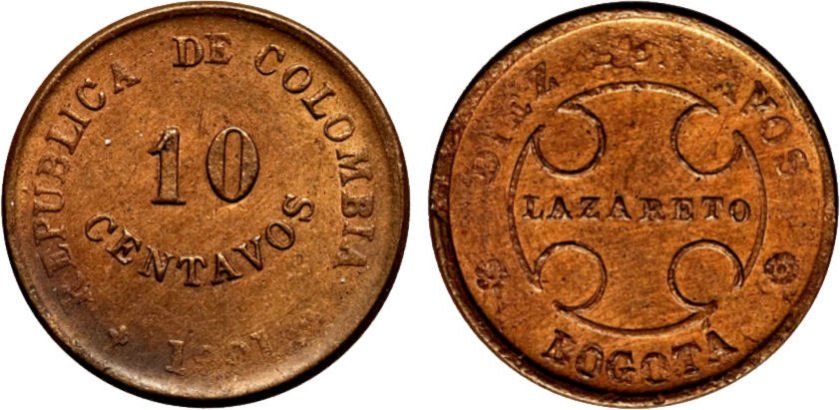
The oldest known example of special money dates back to 1901 and was intended for three leper colonies in Colombia: Agua de Dios, Caño de Loro, and Contratación. Five coin denominations were issued: 2.50, 5, 10, 20, and 50 centavos. These coins were issued shortly after the 1897 Berlin Leprosy Congress.
Panama
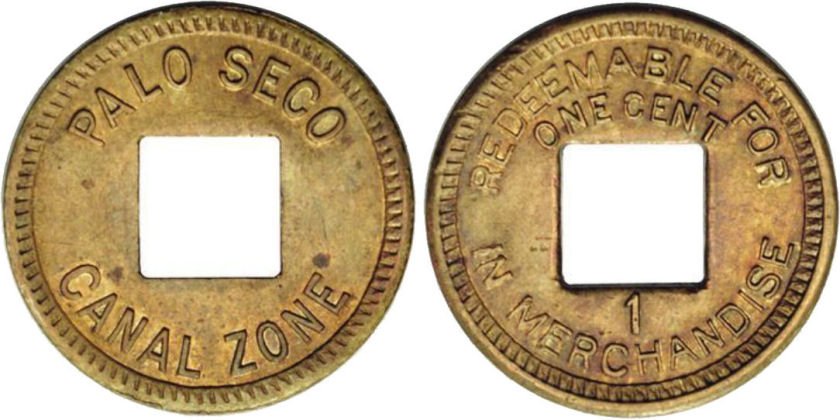
Between 1919 and 1952, special money was used in the Palo Seco leper colony in the Panama Canal Zone. The coins were minted in the United States and included denominations of 1 cent, 5, 10, 25, and 50 cents, and 1 dollar.
Philippines
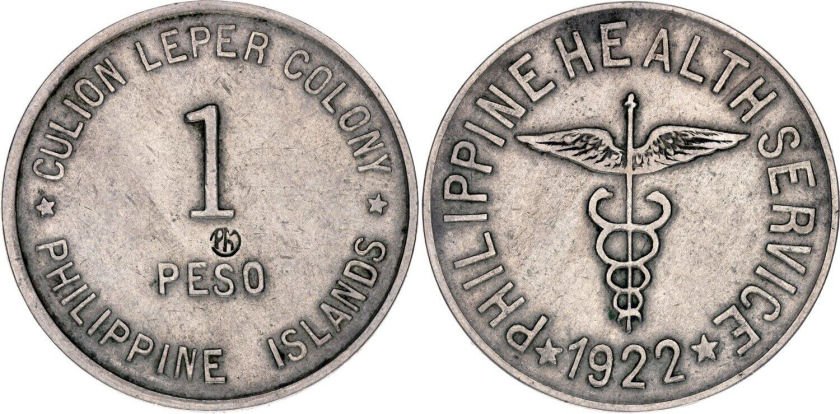
From 1913 to 1930, special coins were minted in Manila for the Culion colony, which was administered by the then-American colonial government in the Philippines. During the Japanese occupation in World War II, in 1942, emergency paper money was also issued within the colony. This money was only withdrawn when leprosy became a curable disease, and the island of Culion itself was declared free of leprosy in 2006.
Japan
In 1919, special coins were minted in Japan for the Tama Zenshōen sanatorium, and later for other sanatoriums as well. The unique feature of the Japanese system was that the money was not issued by state institutions, but by the sanatoriums themselves. Upon admission to the sanatorium, a patient's money was exchanged for special currency, which further strengthened the system of segregation. In some institutions, this money also served as a form of social assistance for poor patients. The system was mostly abolished in Japan by 1955.
Malaysia
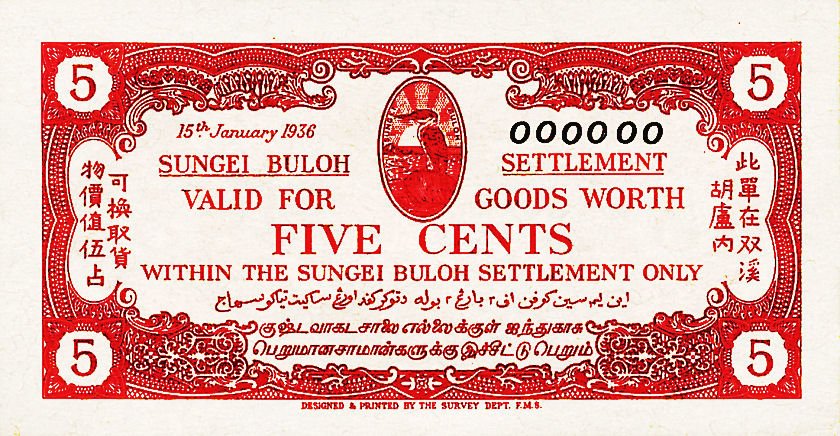
In 1936, 5 and 10 cent as well as 1 dollar banknotes were issued in the Sungei Buloh settlement. The director of the colony, Dr. Gordon Alexander Ryrie, sent the banknotes for analysis, after which it was proven that they did not transmit leprosy. All the special banknotes were subsequently burned at the stake in 1938.
Other countries
Special money for leper colonies is also known in other countries, including Brazil, China, Costa Rica, Korea, Nigeria, Thailand, and Venezuela.
Today, such money represents a rare and interesting segment of the history of medicine and numismatics, testifying to the fears, misconceptions, and measures that marked the fight against one of the most stigmatized diseases in history.
Edited: Zlatko Viščević
Photos: Heritage Auctions [www.ha.com], Katz Auction [www.katzauction.com].