



In the world of numismatics, where money is studied not only as a medium of payment but also as an object of cultural and historical value, the linguistic characteristics of money also play a significant role; the inscriptions on the money; the script used; the language; and the official name of the money itself. Thus, in numismatics, attention is paid to the name of the monetary unit (currency) itself, the names of the monetary values (denominations), and even the colloquial names used in everyday speech.
It is very common for some coins or banknotes to have their own specific names in everyday speech, and sometimes a particular denomination has its own special name. Most people are probably familiar with terms such as: som, banka, kila, cigla, medo, jezer(ač), rudar, konj, seljanka, stoja, cener, ljubičasta, etc. Likewise, currencies have their own „folk“ names: zelembaći, orlići, markice, švicarci...
As synonyms for money, terms such as the following are often used: dough, cash, moolah, bread, bucks, loot...
One of the more interesting synonyms for money is this last one – “lova”, which has an interesting etymology.
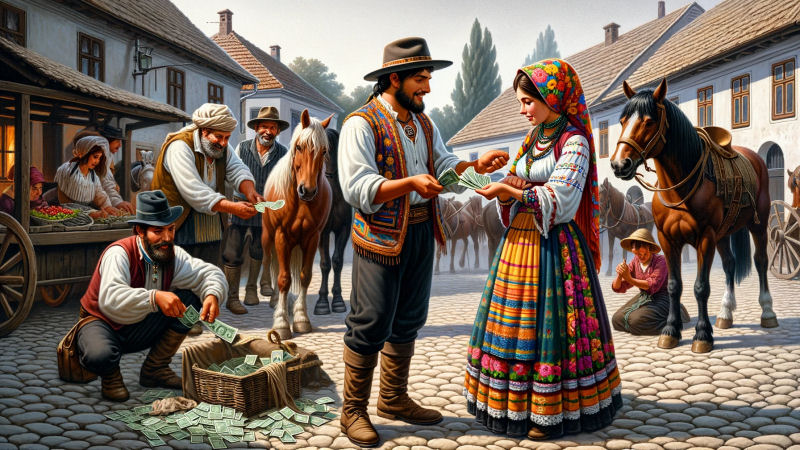
Few people know that the word “lova” as a synonym for money comes from the Romani language. In the Romani language, “lova” means money, and in a broader context, wealth.
This word is associated with the Lovari Roma, native Croatian Roma who have been settled in Croatia since the 14th century. The Lovari were heavily focused on trade, especially in horses, and engaging in commercial activity influenced them getting their name from money (“lovi”). At one time, the Lovari were known not only for their trading skills, but also for being the only Roma group that traditionally lived in solid housing units.
This etymological connection between the word “lova” and the Roma culture of the Lovara provides an interesting insight into historical and cultural exchange and contributes to the understanding of how linguistic expressions can become an integral part of wider societal use. In the numismatic context, this information further enriches the understanding of the cultural and historical context in which money is used and perceived.
Author: Zlatko Viščević