



In 2026, Zimbabwe introduced a new series of ZiG banknotes featuring the motifs of the African “Big Five” (buffalo, elephant, rhinoceros, leopard, and lion), which effectively made the first series from 2024 a short-lived and numismatically interesting issue. The new release brings a different visual identity, improved security features, and yet another chapter in the turbulent monetary history of this African nation.
A short first run as a numismatic rarity
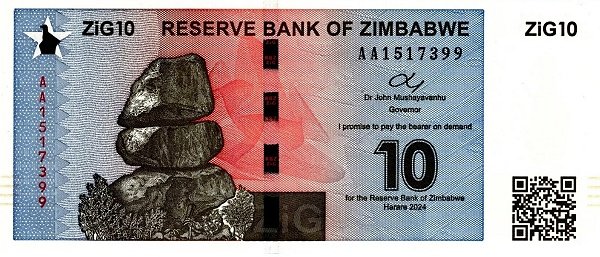
The first series of Zimbabwean ZiG banknotes from 2024 can already be viewed as one of the more interesting short-lived issues of modern African numismatics. Although multiple denominations were initially announced, only two banknotes entered actual circulation: 10 ZiG i 20 ZiG-a. Just two years later, Zimbabwe introduced a completely redesigned series, which practically made the first issue a closed edition.
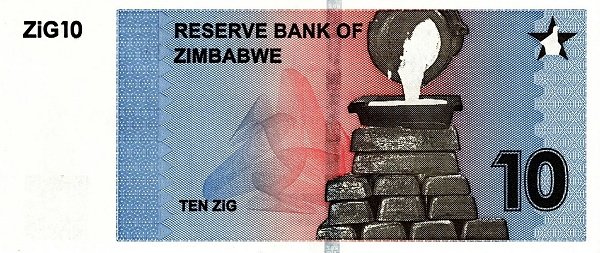
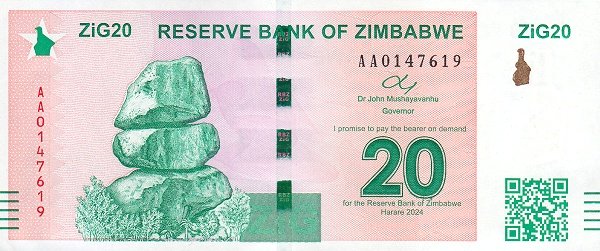
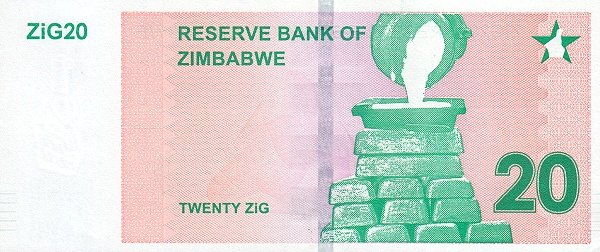
New series of Zimbabwe Gold banknotes, known as “Big5 Zig“, was issued on April 7, 2026. The issue features motifs of the African “Big Five”, improved security features, and a more durable substrate, after the first banknotes were criticized for rapid wear, fading, and tearing.
Of particular interest to numismatists is the fact that this is not just about a new design, but rather a rare case where a modern currency received a new series of banknotes after only a short period, while the previous one remained limited to only two issued denominations.
From the introduction of the ZiG to the new series
The ZiG currency, or Zimbabwe Gold, was introduced in April 2024 as a new attempt to stabilize Zimbabwe's monetary system. Zimbabwe has been known for decades for monetary crises, hyperinflationary issues, and frequent changes of the domestic currency, so any new currency issue from that country is of special interest among numismatists.
When introducing the ZiG, eight banknote denominations were announced, ranging from 1 to 200 ZiGs. However, in practice, it turned out differently. The denominations of 1, 2, and 5 ZiGs were issued as coins, while the banknotes of 50, 100, and 200 ZiGs were postponed. Thus, only the banknotes of 10 ZiG i 20 ZiG-a.
That fact has a special collector's value today. The first series of ZiG is not a large and unfinished series with many variants, but a very short issue of only those two denominations.
Why was a redesign necessary?
The reason for the rapid introduction of the new series was not only aesthetic. The first banknotes from 2024 met with major criticism due to poor craftsmanship. In everyday use, they reportedly wore out quickly, faded, and tore more easily than expected from modern banknotes.
Such problems are not only of a technical nature. With banknotes, user trust is just as important as the face value. If money wears out quickly, it sends a bad message about the stability and seriousness of the entire currency system.
Because of this, the new “BiG5 ZiG” series has a dual role. On the one hand, it brings a new visual identity, and on the other hand, it strives to eliminate the practical shortcomings of the first edition.
Three subpoenas immediately, two later
In the first phase of the new series, banknotes in denominations of were put into circulation 10 ZiGs, 20 ZiGs, and 50 ZiGs. This marked the first issuance of the 50 ZiG banknote, which had been announced back in 2024, but did not enter circulation at that time.
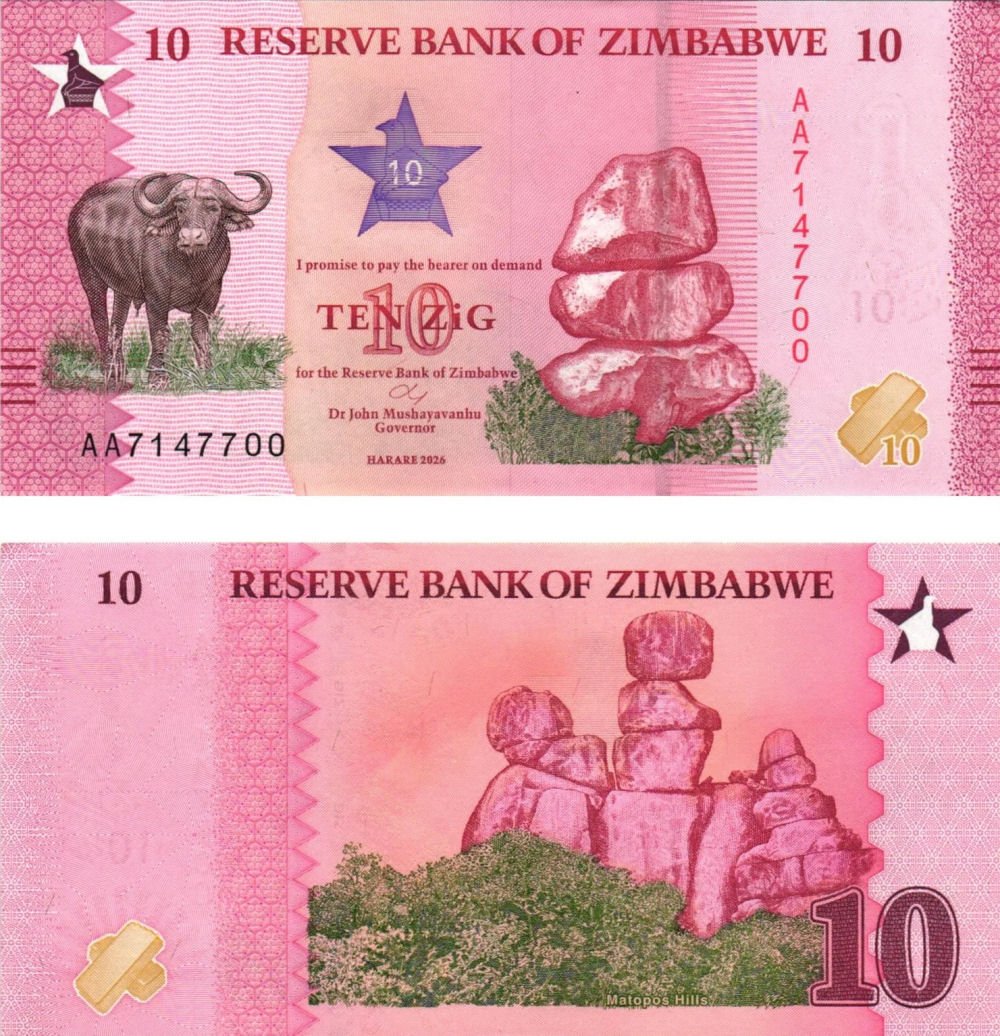
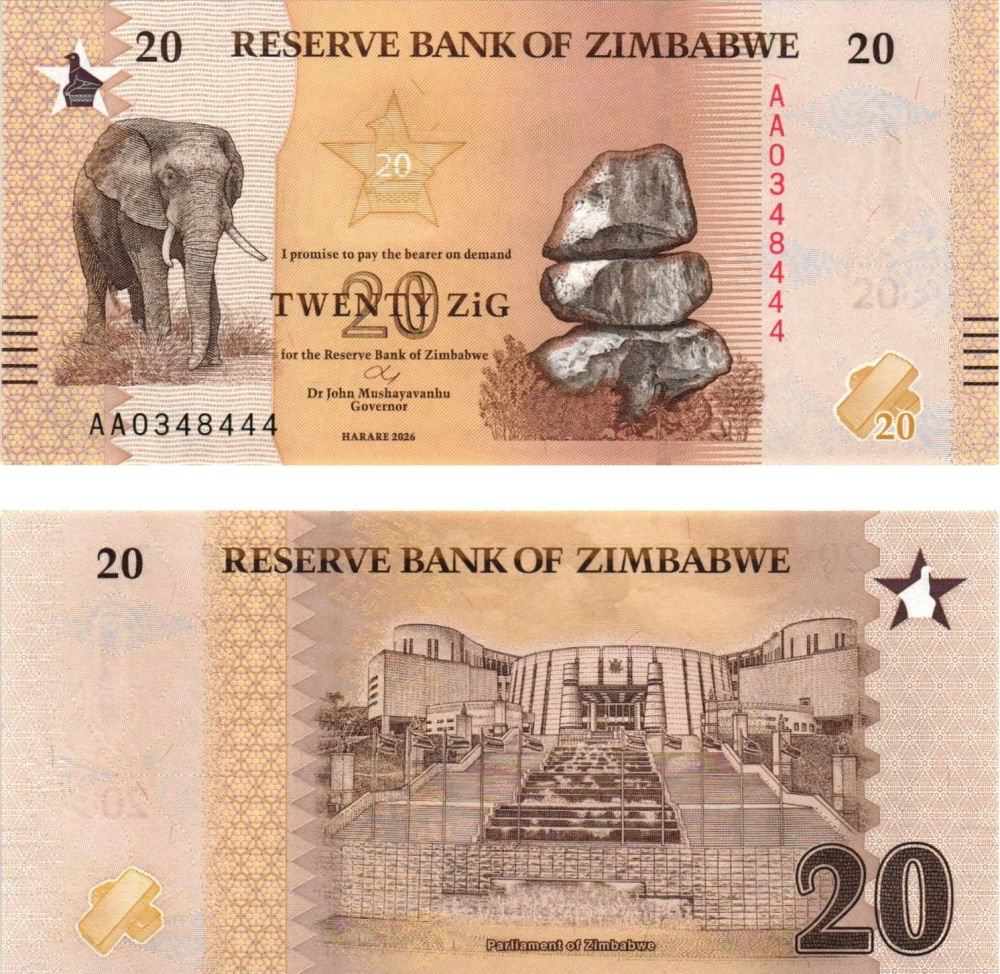
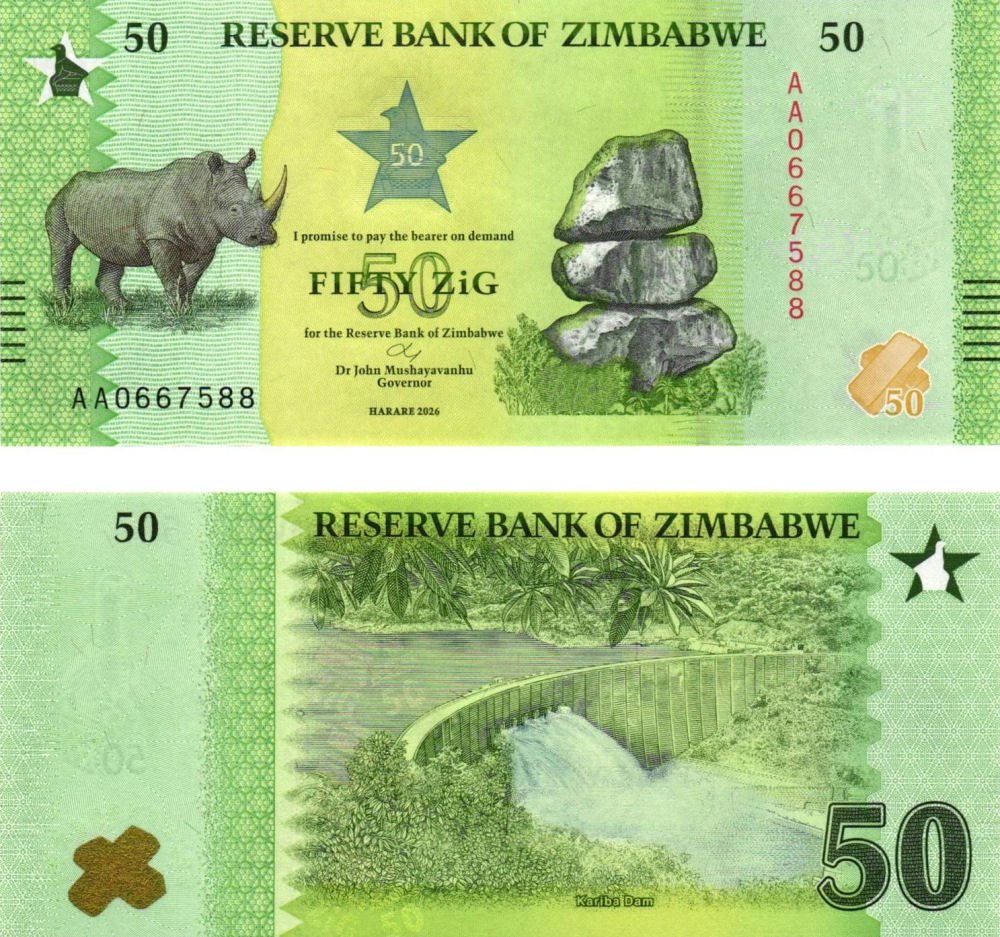
Banknotes of 100 ZiG-a i 200 ZiG They are officially planned, but their release into circulation has been left for a later period. According to available data, the introduction of higher denominations will depend on the needs of cash transactions and the monetary circumstances in the country. The 100 denomination is supposed to feature a leopard, and the 200 denomination, a lion.
The Big Five on Zimbabwean currency
As previously stated, the name “BiG5 ZiG” refers to the African Big Five: the buffalo, elephant, rhino, leopard, and lion. These are motifs strongly associated with African natural heritage, tourism, and national parks.
For Zimbabwe, that choice is logical. The country has a rich wildlife and famous national parks, and the motifs of large animals give the banknotes a clear and easily recognizable theme. Compared to the first series of the ZiG, which was more uniform in design, the new series allows for easier differentiation of denominations and is more attractive to collectors.
In notaphily, thematically unified series are often more appealing than issues without a clear design concept. Therefore, “BiG5 ZiG“ has an advantage at first glance: it is a series that can be collected as a whole, rather than just as a string of separate denominations.
Old banknotes remain valid, but are gradually going out of circulation
An important detail for numismatists is that the banknotes from 2024 have not been officially demonetized. They still remain legal tender and can be used alongside the new series.
However, there is a significant difference between formal validity and actual circulation. When old banknotes enter the banking system, they are no longer returned to circulation, but are gradually withdrawn. This method of withdrawal means that over time, the number of copies available in good condition will decrease.
Precisely because of that, stretch marks banknotes 10 ZiG i 20 ZiG-a they could become more sought-after among collectors than their age (or rather, youth) would suggest. This applies especially to uncirculated specimens, as problems with paper and print quality likely reduced the number of truly well-preserved pieces.
Security features and new technical solutions
The new “BiG5 ZiG” series introduces more modern security features. Among them are embossed printing, a magnetic security thread, a watermark featuring the Zimbabwe Bird, a latent image of the ZiG denomination, a see-through register, and optically variable elements.
Banknotes also feature tactile markings for the blind and visually impaired. Such elements are now standard in better-designed banknotes, as they allow for easier differentiation of denominations by touch.
Additional security details are provided for higher denominations. The 100 ZiG banknote featuring a leopard will have an element that changes color from gold to green, while the 200 ZiG banknote featuring a lion will include a gold bullion motif with an optically variable effect. These elements simultaneously serve a security and symbolic role, as they recall the gold backing of the currency.
The Gold Standard and the Question of Trust
ZiG was conceived as a currency backed by a combination of gold, foreign exchange reserves, and other hard assets. This is important because Zimbabwe has a long history of problems with its domestic money, and public trust in a currency is hard to regain.
According to the source material, the reserves backing the ZiG increased from the currency's introduction in 2024 to early 2026. Nevertheless, the US dollar continues to play a strong role in everyday transactions in Zimbabwe.
For economists, the monetary background is important, but it does not have to be decisive for numismatic value. Often, it is precisely unstable, short-lived, or reformed currencies that are the most interesting to collect, because behind them lies a turbulent historical story.
What could be most interesting to collectors?
In ZiG's code, three groups of materials can be singled out that deserve attention.
The first are the banknotes from 2024, specifically the 10 ZiG and 20 ZiG. They make up the entire first series of banknotes and are already being gradually withdrawn from circulation. Well-preserved specimens could be the most interesting part of the whole story.
The second group consists of the first banknotes of the new “BiG5 ZiG” series from 2026, especially the 50 ZiG, because that denomination did not exist in actual circulation in the first series of banknotes.
The third group consists of the future 100 and 200 ZiG banknotes. Since they have been announced but not yet put into circulation, their actual issuance will be important to monitor. If they are issued in smaller quantities or at a specific monetary moment, they could generate greater interest among collectors.
Modern African notaphily has got another interesting series
Zimbabwean banknotes have long held a special place among collectors. The most famous are the hyperinflationary banknotes with huge denominations, but modern issues also deserve attention. They demonstrate the state's attempts to restore confidence in the domestic currency and create a more stable monetary system.
The 2026 “BiG5 ZiG” series is interesting because it combines several elements: a short-lived first series, a new thematic concept, motifs of the African “Big Five,” a “golden” monetary story, and enhanced security features.
For collectors of African banknotes, as well as those who follow contemporary world currencies, this is an issue that definitely needs to be monitored. Especially because the numismatic importance here is based not only on the design, but also on the circumstances of creation, the withdrawal of the first series, and the continuation of one of the most unusual monetary stories in the modern world.
Author: Zlatko Viščević with AI assistance
Photos: Banknote Museum, Numex – Coins, Banknotes & Militaria Store [www.numex.hr]