Banknotes

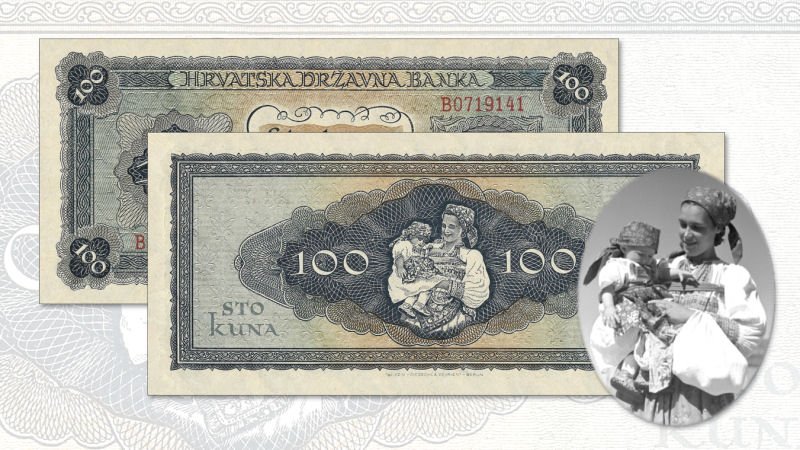
Ethnographic motif on the 100 Kuna banknote from 1943.

The ethnographic motif on the 100 Kuna banknote from 1943 represents the main visual element of the reverse side, located in its central part. It consists of the depiction of a woman with a little girl in her arms, dressed in folk costumes characteristic of certain settlements in the Zagreb sub-mountain region (Prigorje). At the time the banknote was created, those settlements

Ethnographic motif on the 100 Kuna banknote from 1943. Read more »
Numismatics that gladdens the heart and doesn't hurt the pocket: The beauty of carefree collecting of affordable coins and banknotes

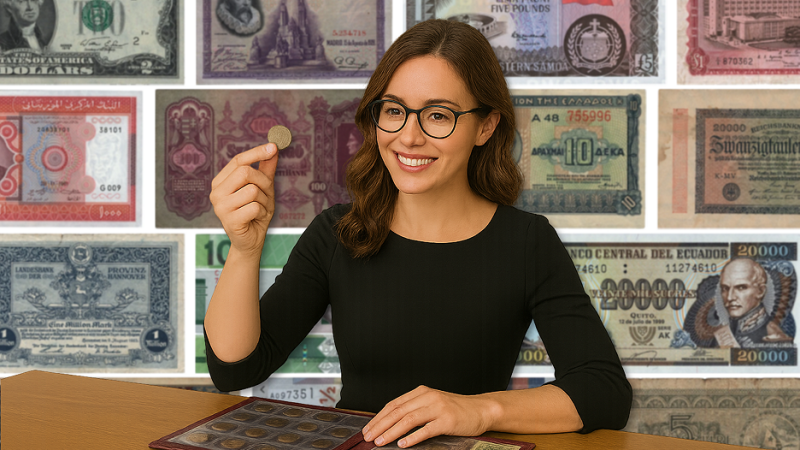
In the world of numismatic collecting, a pattern is increasingly observed where collectors fall into frustration after an initial enthusiasm. After filling their collections with basic, easily accessible specimens, a feeling arises that this is nothing special and that a “real collection” exists only when it

Numismatics that gladdens the heart and doesn't hurt the pocket: The beauty of carefree collecting of affordable coins and banknotes Read more »

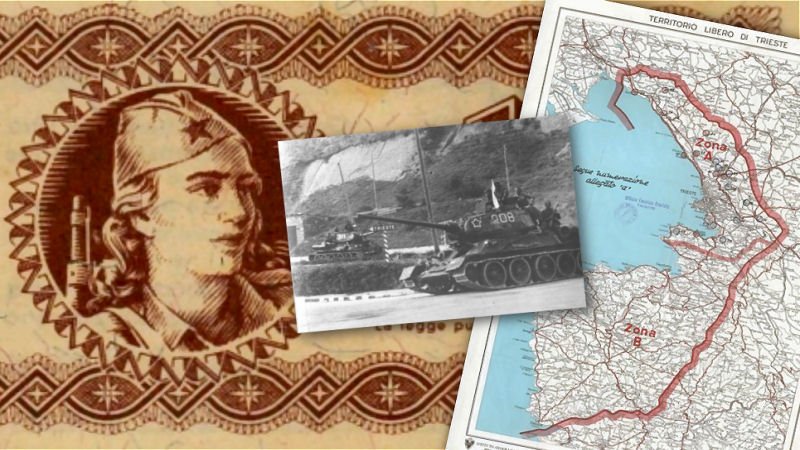
“Jugolire” – paper money of the Economic Bank for Rijeka, Istria and the Slovenian Littoral

Following the end of World War II and before the signing of the peace treaty with Italy, Zone “B” – which included Rijeka, part of Istria, and the Slovenian Littoral – was placed under the administrative control of the Military Administration of the Yugoslav Army (VUJA). In accordance with the international rights belonging to occupying authorities,

“Jugolire” – paper money of the Economic Bank for Rijeka, Istria and the Slovenian Littoral Read more »

Milivoj Rodić – Partisan on the first post-war Yugoslav banknote

In the height of World War II, while the fighting was still ongoing, the visual identity of the future new state was being crafted in Italy. In April 1944, the prominent artist and partisan Đorđe Andrejević-Kun, upon the proposal of Ivan Milutinović, the then commissioner for the national economy in the National Committee for the Liberation of Yugoslavia (NKOJ),

Milivoj Rodić – Partisan on the first post-war Yugoslav banknote Read more »

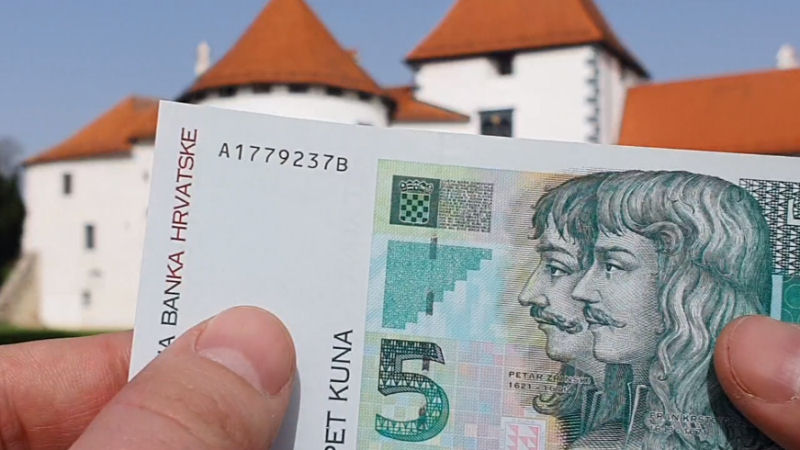
Overview of the banknote: Croatia 5 Kuna 1993, Petar Zrinski and Fran Krsto Frankopan

In today's video, we are talking about the smallest Croatian circulating banknote until the introduction of the euro, the National Bank of Croatia 5 kuna banknote dated October 31, 1993. This banknote belongs to the first series of kuna banknotes and was withdrawn from circulation in 2007 when it was replaced by a new series with better security features

Overview of the banknote: Croatia 5 Kuna 1993, Petar Zrinski and Fran Krsto Frankopan Read more »

Report from the Zagreb collectibles fair (Vukovarska), March 9, 2024.

Another traditional collectors' fair was held in Zagreb, gathering enthusiasts, collectors, and dealers of numismatics, philately, phaleristics, badges, postcards, and other similar items. This fair has been held for many years now and has been marked by ups and downs. But lately

Report from the Zagreb collectibles fair (Vukovarska), March 9, 2024. Read more »

Ivor Altarasa Penda's guest appearance on the show “On the Edge of Science” on the topic “What Does Money Say?”

Our colleague Ivor Altaras Penda was a guest on the popular HRT show, “Na rubu znanosti” (At the Edge of Science). On the show, he spoke about money, and the main topic was “What does money say?”. Related to this topic, the show discussed the images, symbols, and text on

Ivor Altarasa Penda's guest appearance on the show “On the Edge of Science” on the topic “What Does Money Say?” Read more »

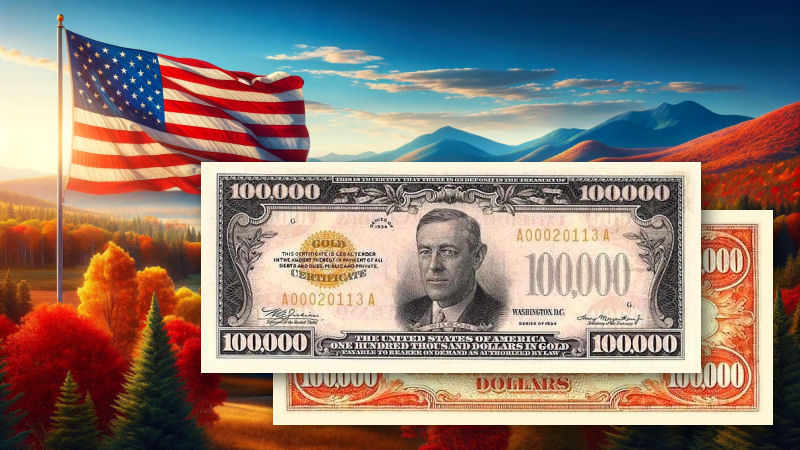
The largest US banknote of all time – the 100,000 dollar bill from 1934.

The 1934 US 100,000 dollar bill represents one of the most intriguing specimens in American numismatics. This rare banknote is a monetary monument and a reflection of a time when great economic uncertainty prevailed in the US, and it also represents the banknote with the highest nominal value ever issued in

The largest US banknote of all time – the 100,000 dollar bill from 1934. Read more »

Scroll to Top