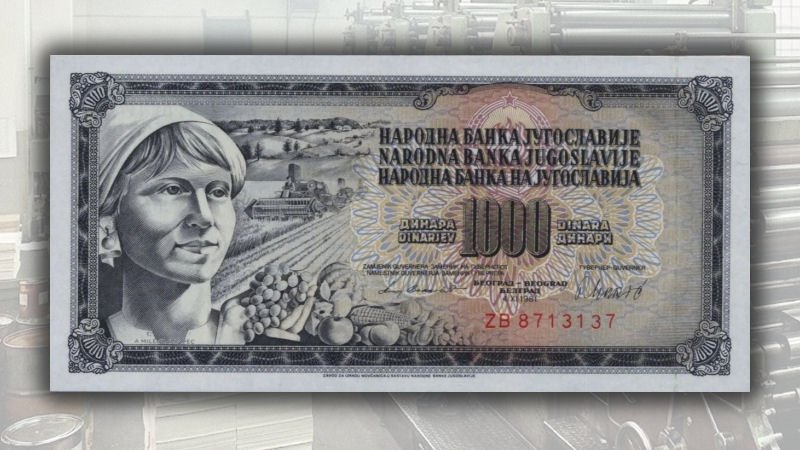


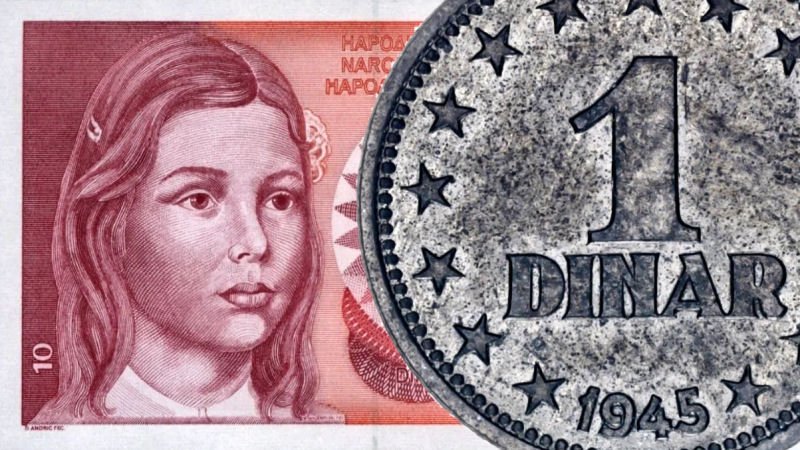
Exchange rate of the Yugoslav dinar 1945-1990.

The history of the exchange rate of the Yugoslav dinar from the end of the Second World War to 1990 reflects profound changes in monetary policy, the economic system, and the country's international position. In a numismatic sense, understanding the exchange rate relations is crucial for the proper interpretation of the timing of the issuance of certain nominal values of banknotes and coins, especially

Exchange rate of the Yugoslav dinar 1945-1990. Read more »

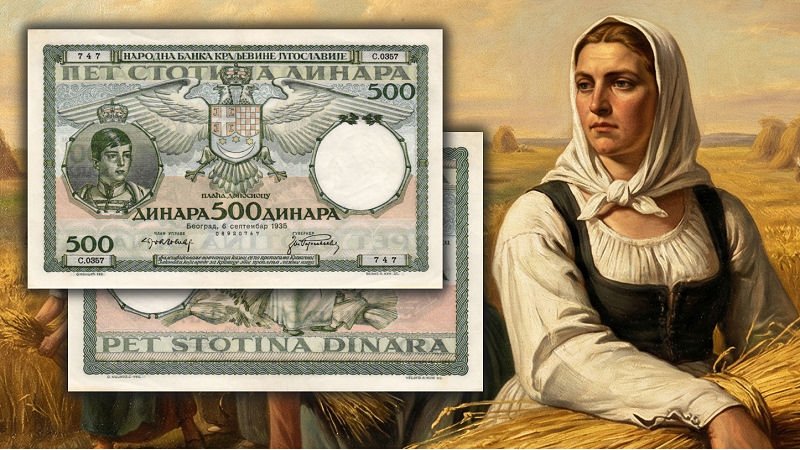
500 dinar banknote of the Kingdom of Yugoslavia from 1935.

The 500 dinar banknote of the Kingdom of Yugoslavia from 1935 represents one of the most artistically successful and iconographically complete issues of interwar Yugoslav notaphily. The entire composition is executed in a subtle palette of green, olive, and brown tones, with discreet pink transitions in the background, giving it a refined, almost painterly

500 dinar banknote of the Kingdom of Yugoslavia from 1935. Read more »

The Chemistry of Money

Here we broadcast a recorded lecture in which Assoc. Prof. Tomislav Portada, PhD, talks about the chemistry of money. Although the appearance of coins and banknotes, their issues, circulations, and preservation are often discussed, here we look at money from a different angle – a chemical perspective. In the lecture you will find out: The lecture combines

The Chemistry of Money Read more »

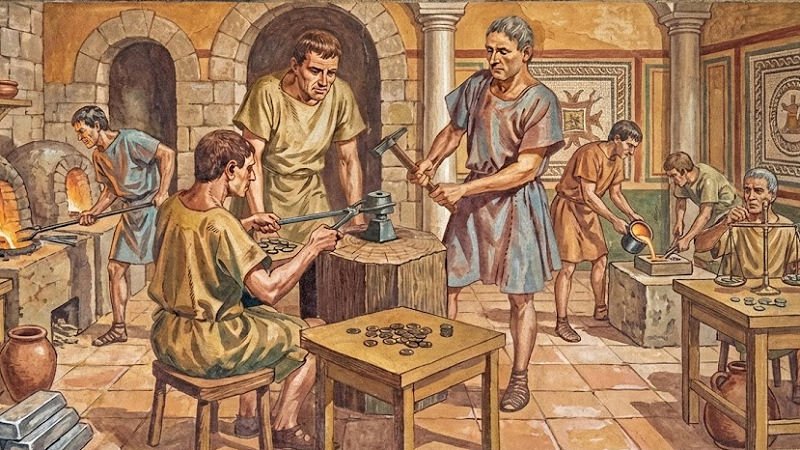
Manual coin minting

From antiquity, practically until the end of the 16th century, money was produced by manual minting, that is, using a striking technique in which each individual piece was created separately. The process required precise preparation, coordination among multiple people, and a high degree of craftsmanship. Minting took place through clearly defined phases.

Manual coin minting Read more »

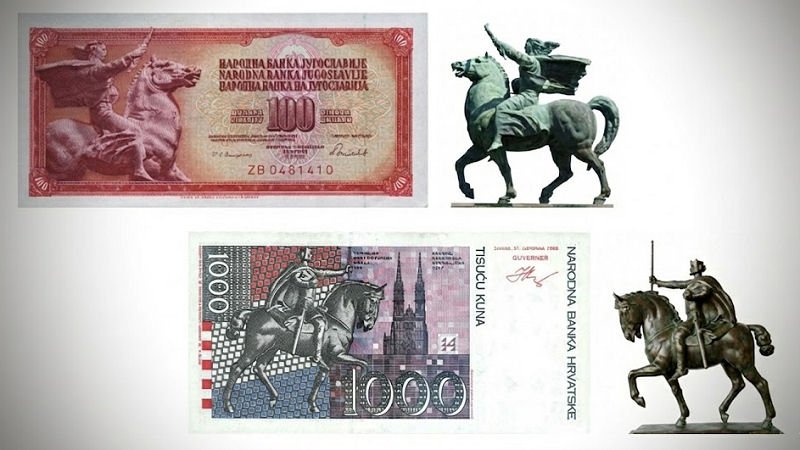
Horses inside out

Banknotes often depict motifs of special importance to the issuing country. Prominent historical figures, recognizable locations, objects of cultural and artistic importance, flora and fauna, architectural and artistic works, as well as monuments, appear on them. When we talk about monuments, we also mean public sculptures.

Horses inside out Read more »

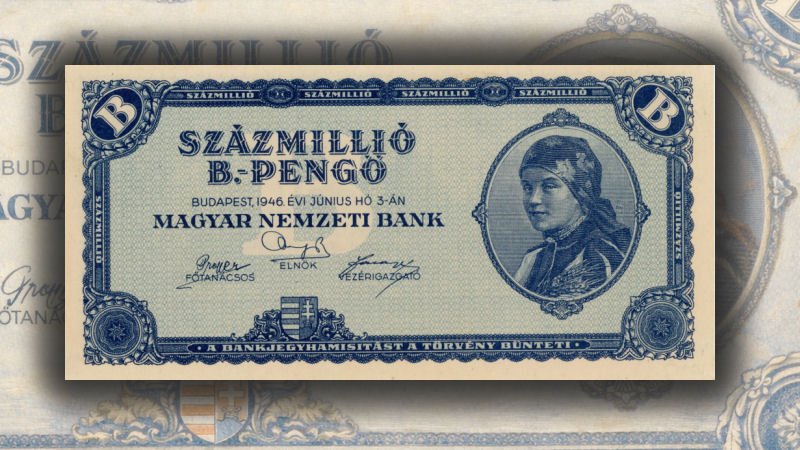
The banknote with the highest denomination in history: Hungary's 100 quintillion pengő from 1946.

In numismatics, there are numerous records, and one of them is a banknote recorded in the „Guinness Book of Records“, which is the banknote with the highest denomination ever issued – 100 quintillion pengő (10²⁰). This exceptional, almost surreal denomination of the banknote was issued in 1946 in Hungary.

The banknote with the highest denomination in history: Hungary's 100 quintillion pengő from 1946. Read more »

When a person thinks they've seen everything in numismatics – behold, a horse's head!

Numismatics has long ceased to be a world exclusively of regular circles, dignified profiles of rulers, elegant artistic design, and refined symbolism. Today's numismatist, whether they like it or not, must come to terms with the fact that the boundaries of a „coin“ have been stretched to the point where we can sometimes justifiably wonder if we are looking at

When a person thinks they've seen everything in numismatics – behold, a horse's head! Read more »

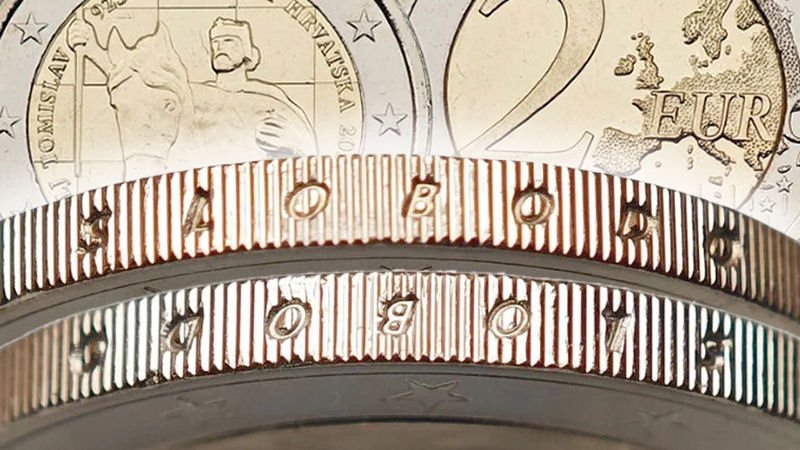
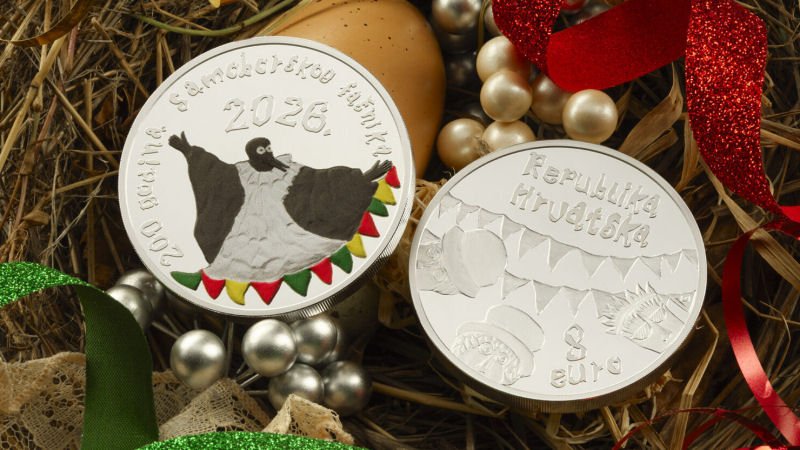
New numismatic edition in honor of the 200th anniversary of the Samobor Carnival

The Croatian National Bank, in cooperation with the Croatian Mint, presents a new commemorative numismatic issue dedicated to the 200th anniversary of the Samobor Carnival, one of the oldest and most famous carnival events in Croatia. This is an edition that, in a modern yet symbolically powerful way, conveys the spirit of satire, free speech, and

New numismatic edition in honor of the 200th anniversary of the Samobor Carnival Read more »

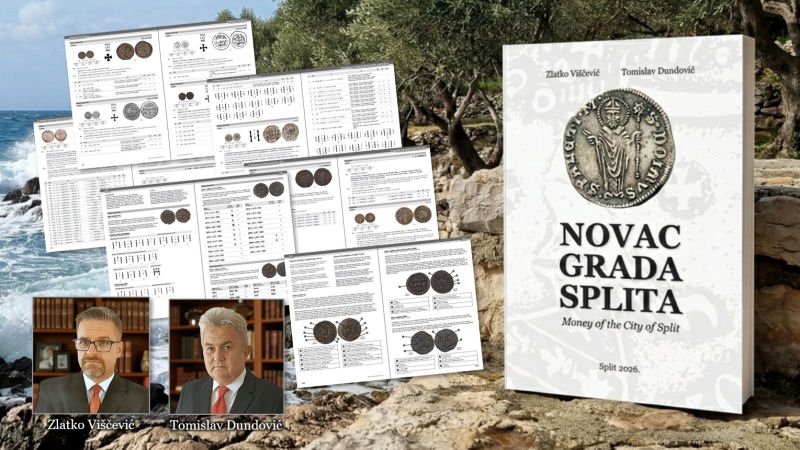
New catalog “Money of the City of Split” – the first independent book on Split's municipal money

Croatian numismatics will soon be enriched by another extremely important edition. Following the great success and sold-out book „Slavonian Banovci,“ authors Zlatko Viščević and Tomislav Dundović will soon present a new book – the numismatic catalog „Money of the City of Split.“ This is the first independent numismatic catalog dedicated exclusively

New catalog “Money of the City of Split” – the first independent book on Split's municipal money Read more »

Replacement banknotes

Replacement banknotes represent a special and often insufficiently known segment of notaphily, which interestingly connects the technical process of money printing with collecting practice. Although at first glance they do not differ from regular specimens, their role in the monetary system and the way they are marked make them particularly interesting to researchers

Replacement banknotes Read more »

Glagolitic script on currency

Literacy is one of the fundamental elements of every nation's identity, and in the Croatian case, it historically developed through three scripts: Glagolitic, Cyrillic, and Latin. A particularity of Croatian cultural history is the fact that all three scripts also developed their own national variants: the Croatian (angular) Glagolitic script and the Croatian Cyrillic script (arvatica).

Glagolitic script on currency Read more »

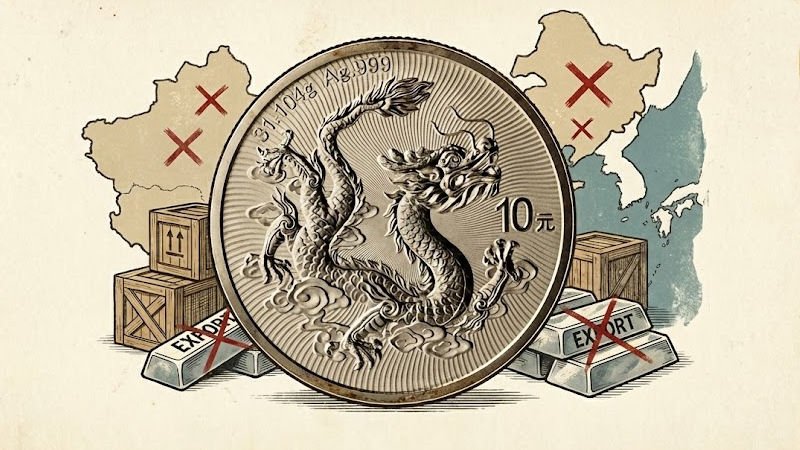
China's silver export restrictions: What does it mean for the precious metals market and numismatics?

In early 2026, the global silver market could enter a new, significantly more volatile phase. Namely, China has announced that starting January 1, 2026, it will introduce mandatory state licenses for all silver exports. Although this decision seems technical at first glance, its consequences could

China's silver export restrictions: What does it mean for the precious metals market and numismatics? Read more »

Scroll to Top